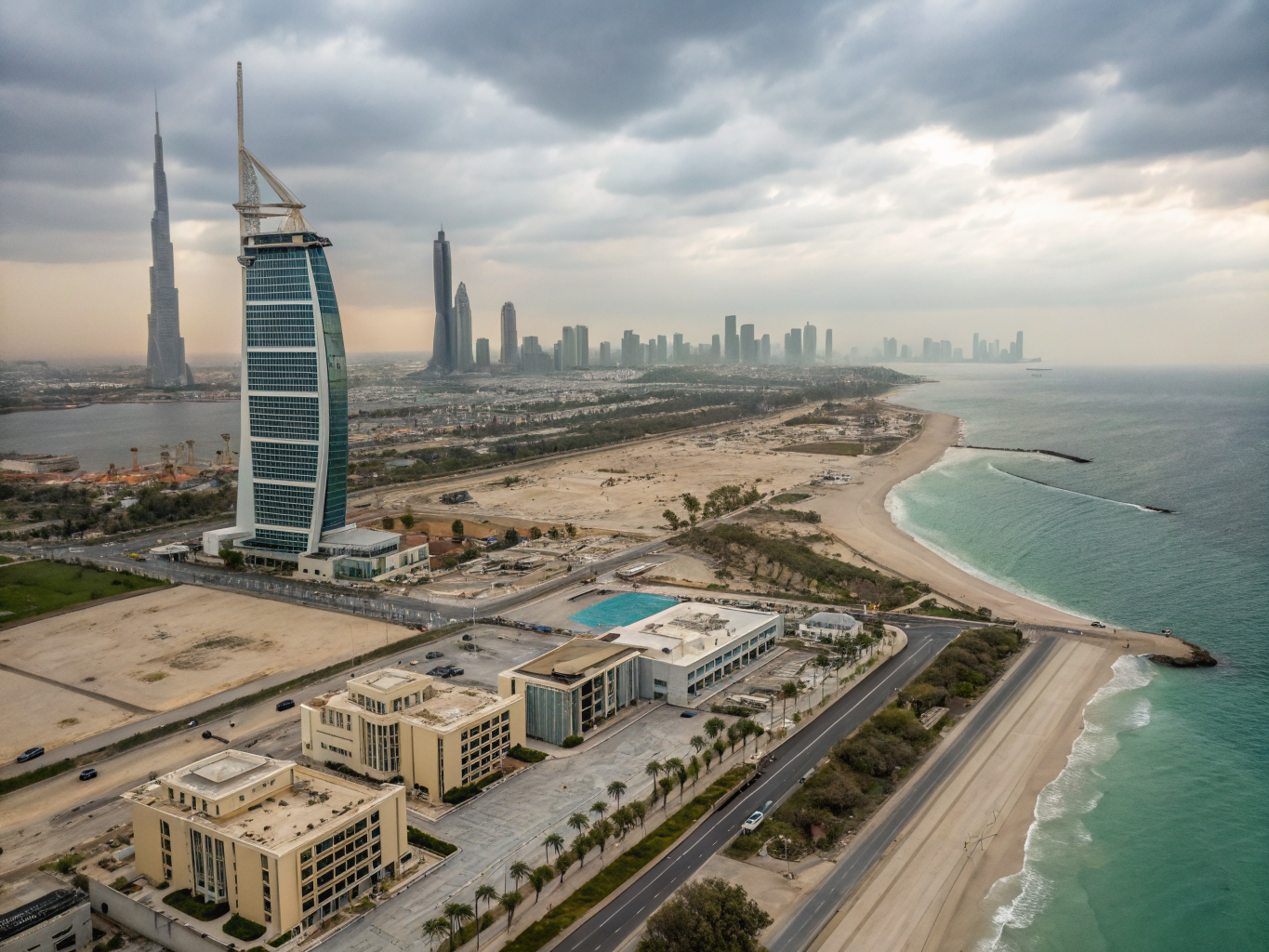
Choosing between Ras Al Khaimah and Dubai for your UAE real estate investment is one of the most consequential decisions international investors face today. Both emirates offer compelling opportunities, yet their market dynamics, pricing structures, and growth trajectories differ significantly. This guide breaks down the key distinctions to help you align your investment strategy with your financial goals and risk appetite.
Understanding the Dubai Real Estate Market
Dubai remains the UAE’s flagship real estate destination, commanding premium prices and attracting the highest concentration of foreign buyers. The emirate’s established infrastructure, world-class amenities, and decades-long track record make it the default choice for risk-averse investors.
Market Characteristics:
- Price positioning: Dubai properties command premium valuations across all segments—studios, villas, and commercial spaces
- Buyer demographic: Established expat communities, multinational corporate relocation, ultra-high-net-worth individuals (UHNWI)
- Infrastructure: Comprehensive metro system, international airport hub, 5-star hospitality and retail ecosystems
- Rental yields: Typically 4–6% gross yield depending on location and property type
- Legal certainty: Well-established RERA framework with transparent transaction history and predictable regulatory enforcement
- Secondary market depth: Highly liquid market with abundant resale opportunities and established price benchmarks
Dubai’s appeal lies in stability, global recognition, and consistent capital appreciation. However, this premium comes at a cost—entry barriers are higher, and new investors competing for deals face greater price discovery challenges.
The Emerging RAK Real Estate Market
Ras Al Khaimah has emerged as the growth frontier for value-conscious investors. Over the past five years, RAK has shifted from a largely domestic market to an increasingly international one, driven by competitive pricing, developer incentives, and strategic positioning within the UAE economic corridor.
Market Characteristics:
- Price advantage: Properties in RAK typically 30–50% below comparable Dubai offerings, depending on location and finish
- Developer incentives: Flexible payment plans, post-handover settlement options, and competitive pricing to attract early-stage buyers
- Golden Visa alignment: RAK properties qualify for long-term residency visas, attracting investors seeking visa stability alongside asset growth
- Rental yields: 5–7% gross yields in many micro-markets, outpacing Dubai in early-stage developments
- Infrastructure growth: New coastal developments, industrial hubs, and hospitality projects reshaping the emirate’s economic profile
- Market momentum: Growing list of international agents, transparent transaction databases, and increasing foreign buyer participation
RAK attracts entrepreneurial investors willing to take on execution risk in exchange for higher potential returns and entry-level pricing.
Key Investment Comparison Points
1. Capital Appreciation Potential
- Dubai: Moderate appreciation (2–4% annually) reflecting mature market dynamics and high baseline valuations
- RAK: Higher appreciation potential (4–7% annually) as market consolidation and infrastructure completion drive value discovery
Early investors in RAK projects (particularly waterfront and mixed-use developments) have benefited from above-average gains as the market matures.
2. Entry Capital Requirements
- Dubai: Minimum AED 500,000–750,000 for entry-level studio or one-bedroom
- RAK: Minimum AED 250,000–400,000 for comparable units, lowering portfolio diversification barriers
For investors with limited capital, RAK provides pathways to multiple properties and geographic risk reduction.
3. Rental Income Stability
- Dubai: Renters are abundant; demand remains constant due to corporate relocations and expat communities
- RAK: Tenant pool is growing but smaller; rental marketing requires more effort, though yields compensate
4. Golden Visa & Residency Benefits
Both emirates offer Golden Visa programs tied to real estate investment (minimum thresholds vary). RAK’s lower property prices make visa-linked investment more achievable for middle-income investors. Dubai’s visa programs attract ultra-premium buyers seeking lifestyle amenities alongside residency.
Golden Visa Considerations for Real Estate Investors
The UAE’s long-term residency visas—available through property ownership—represent a non-financial but critical investment dimension:
- RAK advantage: Lower minimum investment thresholds enable first-time visa applicants to secure residency without excessive capital commitment
- Dubai advantage: Premium positioning attracts visa holders already planning extended UAE tenure, reducing market timing risk
- Tax implications: Both emirates offer tax-neutral environments for real estate investment; visa status does not alter tax treatment
For families and entrepreneurs, the visa pathway often exceeds financial returns in value calculation, particularly if UAE residency aligns with business or lifestyle plans.
Investment Returns & Market Trends for 2026
Rental Yield Outlook
Dubai’s mature rental market has stabilized yields in the 4–6% range, while RAK continues benefiting from supply-demand imbalances as new projects come online. Investors prioritizing cash flow should compare micro-location yields rather than emirate-level aggregates.
Capital Appreciation Catalysts
- RAK: Major infrastructure projects (industrial zones, logistics hubs, leisure developments) expected to accelerate value discovery through 2026
- Dubai: Premium micro-locations (waterfront, high-end clusters) continue outpacing broader market, but bargain opportunities are scarce
Market Liquidity
Dubai’s secondary market remains highly liquid with transparent pricing. RAK’s liquidity is improving but less mature—investors should factor 2–4 weeks longer into exit timelines for non-core properties.
FAQ: RAK vs Dubai Real Estate Investment
Q: Is RAK real estate a good long-term investment?
A: RAK offers compelling value for long-term investors (5+ years) who can tolerate execution risk during the development phase. Early entrants into major projects have seen 40–80% appreciation; however, market maturation will eventually normalize gains. Investment success depends heavily on location selection and developer credibility.
Q: Can I get a Golden Visa with a RAK property investment?
A: Yes. RAK properties meet the emirate’s residency visa requirements with lower minimum thresholds than Dubai, making it more accessible for middle-income applicants. Visa validity and renewal terms align with property ownership status.
Q: Which emirate offers better rental yields in 2026?
A: RAK currently offers 5–7% gross yields in competitive micro-markets, outpacing Dubai’s 4–6% average. However, Dubai properties attract more stable, longer-term tenant profiles, reducing vacancy risk. Your yield comparison should include tenant turnover and maintenance costs.
Q: Is Dubai real estate more expensive because it’s a better investment?
A: Dubai commands premium pricing due to market maturity, liquidity, and global brand recognition—not necessarily superior returns. Capital appreciation potential is actually higher in RAK, though with greater execution risk. Price and value are not synonymous.
Q: What should I prioritize: Dubai’s stability or RAK’s growth potential?
A: Align your choice with your investment timeline and risk tolerance. Stability seekers prioritize Dubai’s established market; growth-focused investors accept RAK’s execution risk for higher return potential. Many portfolios benefit from exposure to both—Dubai for defensive anchoring and RAK for alpha generation.
Conclusion: Making Your Investment Decision
The Dubai vs. RAK choice is not binary. Dubai remains the premium choice for wealth preservation and lifestyle alignment; RAK offers the growth profile for capital appreciation and income yield optimization. Your optimal strategy depends on:
- Capital available: Limited budgets favor RAK’s lower entry points
- Time horizon: Longer timelines (7+ years) justify RAK’s execution risk
- Risk appetite: Conservative investors anchor in Dubai; aggressive investors construct RAK-heavy portfolios
- Visa objectives: Golden Visa seekers should evaluate both emirates’ residency thresholds
- Exit flexibility: Dubai’s liquid secondary market eases repositioning; RAK requires longer hold periods
The strongest investors often deploy both markets—establishing a Dubai anchor for stability while generating higher returns from RAK’s growth narrative. Work with experienced local advisors to assess specific micro-locations and developer credibility within each emirate, as execution and location selection ultimately determine outcomes across both markets.