Why UAE Property Inheritance Matters for Foreign Owners
UAE has become a prime investment destination for international buyers—from Gold Visa holders to expat professionals. Whether you own a villa in Dubai’s Jumeirah, an apartment in Abu Dhabi’s Downtown, or a freehold plot in Ras Al Khaimah, understanding inheritance rights is critical for long-term planning.
Foreigners can legally inherit UAE real estate, but the process differs significantly from purchasing. Navigating inheritance laws requires knowledge of both federal and local emirates’ regulations, court procedures, and documentation requirements. This guide clarifies your rights, obligations, and the practical steps your heirs must follow.
Key Facts: UAE Inheritance Law for Foreigners
No Inheritance Tax
One of the UAE’s strongest advantages: there is no inheritance tax on property transfers within the UAE. Unlike many Western countries (US, UK, etc.), heirs do not pay a percentage of the estate’s value to the government upon inheritance. This applies equally to citizens and foreign owners.
Federal Law & Emirate Variations
The UAE follows a dual legal structure:
- Federal Law No. 5 of 1985 (UAE Civil Code) governs general inheritance principles across all emirates.
- Each emirate (Dubai, Abu Dhabi, Sharjah, Ajman, etc.) may have local additions or specific procedures for property transfer through inheritance courts.
Dubai and Abu Dhabi publish inheritance guidelines through their respective land departments and courts, which differ slightly in processing timelines and required documents.
Property Ownership Eligibility
Foreigners in designated freehold zones (Dubai’s Jumeirah, Downtown, Arabian Ranches; Abu Dhabi’s Al Reem Island; Ras Al Khaimah’s coastal areas, etc.) can hold property in their own name. Upon death, that property enters the inheritance process and passes to eligible heirs according to applicable law.
Inheritance Rules for Foreign Property Owners
Applicable Law: Personal or UAE Law?
For non-Muslim foreigners, the court may apply:
- The national law of the deceased (law of origin country) for succession, OR
- UAE federal law, depending on which applies to the specific property/estate and what the deceased opted into.
For Muslim foreigners, Islamic inheritance principles (Sharia law) typically apply, which prescribe fixed shares for spouse, children, parents, and siblings.
It is essential to clarify your preferred succession law in a UAE-registered will, which significantly simplifies the process for your heirs.
Who Can Inherit?
Under UAE law, eligible heirs typically include:
- Spouse
- Children (biological, legally adopted)
- Parents
- Siblings (if no children/parents)
- Extended family (depending on who survived)
Foreign heirs have the same inheritance rights as UAE national heirs, provided they follow the legal process. Heirs do not need to be UAE residents or hold residency visas to inherit property.
Step-by-Step Inheritance Procedure for UAE Property
Step 1: Obtain a Death Certificate
The process begins with the death certificate issued by the emirate’s vital statistics office. This is the foundational document for all subsequent steps.
Step 2: Initiate Probate Through the Inheritance Court
Heirs must file a probate petition at the Court of First Instance (Inheritance Division) in the emirate where the property is located:
- Required documents: Original death certificate, will (if exists), passport copies of all heirs, property deed (title certificate from DLD).
- Timeframe: Court hearings typically occur within 2–4 weeks of filing, though this varies by emirate and case complexity.
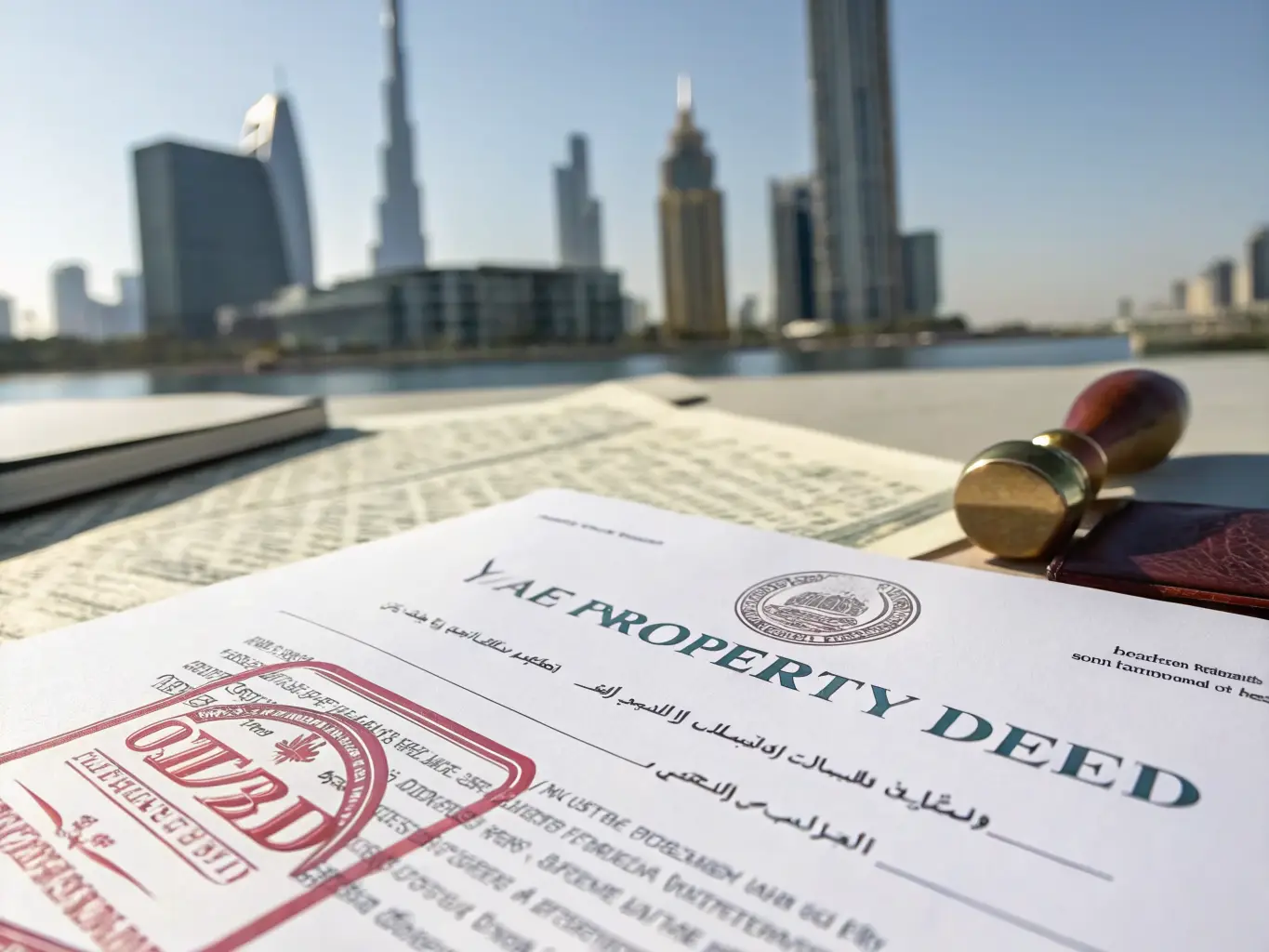
- Court role: The court confirms the heirs’ identities, validates the will (if present), and issues a Probate Certificate (also called “Certificate of Inheritance” or “Deed of Inheritance”).
Step 3: Obtain the Probate Certificate
Once the court approves, heirs receive the Probate Certificate, an official document listing all heirs and their respective shares of the estate. This certificate is essential for the next step.
Step 4: Register the Inheritance at Dubai Land Department (DLD) or Local Authority
The heirs (or their representative) must:
- Visit Dubai Land Department (or the equivalent authority in the relevant emirate).
- Submit the Probate Certificate, original property deed, heirs’ passports, and completed transfer forms.
- Pay the transfer fee (typically 4% of the property’s registered value for transfers between relatives; some emirates offer reduced rates for inheritance).
- DLD processes the request and issues a new property deed in the heirs’ name(s).
Timeline: DLD typically completes inheritance registrations within 1–2 weeks from submission.
Step 5: Update Mortgage or Encumbrance Records (If Applicable)
If the property has an outstanding mortgage, heirs must notify the lender and update loan documents. Some Islamic banks or mortgage providers require the new owners to formally accept loan terms.
Step 6: Property is Officially Transferred
Once DLD completes the registration, the property is legally owned by the heirs according to their shares. Heirs can now:
- Sell the property.
- Rent it out.
- Transfer it to another owner.
- Refinance (if mortgaged).
- Lease it to tenants.
Costs & Fees Associated with Inheritance
While there is no inheritance tax in the UAE, heirs should budget for:
- Court filing fees: AED 300–500 per petition (varies by emirate).
- DLD transfer fee: Typically 4% of the property’s registered value for inheritance transfers (or reduced to 2% in some cases, depending on emirate regulations).
- Legal representation: Optional but recommended; legal fees average AED 2,000–5,000 for straightforward cases.
- Authentication & notarization: AED 100–300 for document certification.
- Title insurance or title search: Optional, AED 500–1,000.
Example: For a property valued at AED 1,000,000, transfer fees would typically be AED 40,000 (4%), plus court and miscellaneous costs of AED 3,000–8,000.
Planning Strategies: Avoid Complications
Register a UAE-Compliant Will
A will drafted under UAE law significantly simplifies inheritance:
- Specify exactly how you wish your property divided among heirs.
- Nominate an executor to manage the estate.
- Reduce court proceedings and disputes.
- Wills are registered at Dubai Court or your emirate’s court and cost AED 200–500.
Without a will, the court applies default inheritance shares based on surviving relatives, which may not reflect your wishes.
Designate Guardianship for Minor Heirs
If you have children under 21 who will inherit, appoint a legal guardian in your will to represent their interests until they reach adulthood.
Use Trusts or Nominee Structures (With Caution)
Some foreign investors use trusts or corporate nominees for tax purposes in their home country. Ensure your arrangement is transparent to UAE courts; failure to disclose beneficial ownership can complicate inheritance and expose heirs to legal challenges.
Keep Documentation Updated
Maintain copies of:
- Original property deed (title certificate).
- Will (if registered).
- Mortgage documents (if applicable).
- Insurance policies on the property.
Provide heirs or executor with location of these documents and contact information for your legal representative or property manager.
FAQ: Common Questions About UAE Property Inheritance
Q: Can a foreign heir inherit my UAE property without a visa?
A: Yes. Heirs do not need to hold an active residency visa to inherit. However, they will need to physically visit the emirate or hire a legal representative to complete the registration at DLD. Obtaining a visit visa to handle inheritance proceedings is straightforward.
Q: How long does the entire inheritance process take?
A: Typically 4–8 weeks, including court hearings (2–4 weeks) and DLD registration (1–2 weeks). Complex estates or contested wills can extend this timeline to 3–6 months or longer.
Q: Do I need to be Muslim to inherit property in the UAE?
A: No. Non-Muslims can inherit UAE property. The applicable law (UAE civil code or your home country’s law) will determine the distribution, but the right to inherit is not restricted by religion.
Q: Will my heir need to pay income tax on inherited property if they sell it?
A: The UAE has no income tax for individuals. However, heirs should confirm tax obligations in their country of residence, as some nations tax worldwide income, including capital gains from inherited property sold.
Q: Can I bypass the court and transfer my property directly to my child during my lifetime?
A: Yes, you can execute a gift deed during your lifetime, which transfers ownership immediately. This avoids the inheritance court process but is treated as a gift for legal purposes. Consult a local attorney about gift taxation in your home country.