Key facts
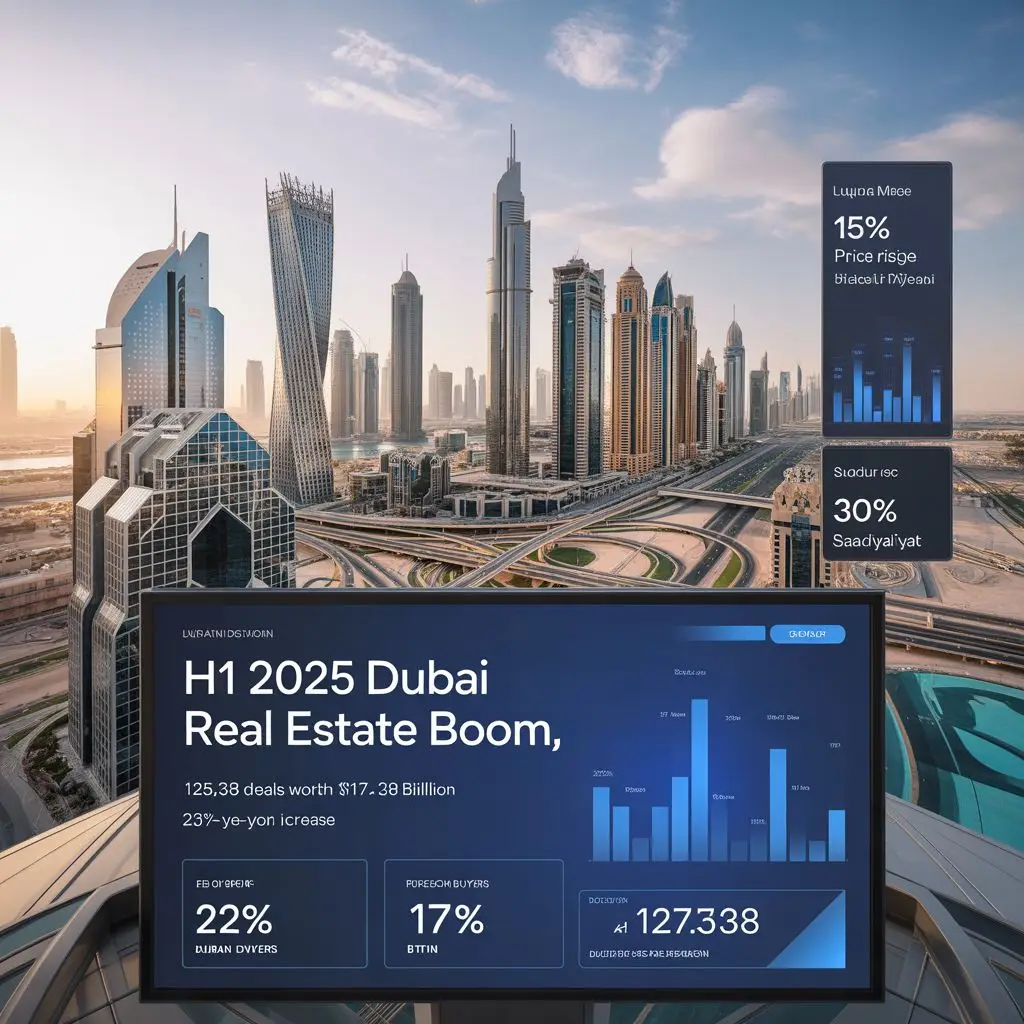
- Dubai H1 2025: 125,538 transactions worth $117.3B, +25% YoY
- Market mix: Off-plan 56.5% vs Secondary 43.5% (secondary share rising → maturity signal)
- Buyer nationalities (overseas): India 22%, UK 17%, China 14%, Saudi 11%, Russia 9%
- Price/market moves: Dubai apartments +15%, Ras Al Khaimah sales +39%, Abu Dhabi prices +18% (Saadiyat cited at +30%)
- New investors: 94,717 total; 59,075 first-timers; 45% of new buyers are UAE residents
- Preferences: waterfront + branded projects + flexible payment plans + strong management
What’s the real story
1) Secondary share rising = market is “thickening”
When secondary (ready) transactions increase their share, it usually indicates:
- more buyers want immediate use (living or leasing now)
- more owners feel comfortable exiting and recycling capital
- resale liquidity improves, which attracts larger investors
2) Off-plan still leading = buyers are buying structure and terms
Off-plan dominance typically reflects:
- payment plans as a key product feature
- buyers underwriting future value + handover timelines
- continued confidence in major developers and masterplans
3) Investor profile is global — but not purely foreign
The “45% of new buyers are UAE residents” line matters: it implies
- resident-driven demand is meaningful (not only offshore capital)
- leasing demand and end-user upgrades support the cycle
Why it matters for investors
If you’re reading this like an investor, the strategy usually shifts from “Dubai up” to “where exactly”:
- Liquidity first: choose areas/projects where resale activity is proven
- Delivery risk management: off-plan wins when developer track record is strong
- Rental logic: slowing price growth typically increases focus on yield and tenant depth
- Quality moat: branded + well-managed projects often keep demand in both sales and rentals
- Supply timing: track upcoming deliveries by micro-district (oversupply kills momentum fast)
Mini-FAQ
Does a big off-plan share mean speculation?
Not automatically. In the UAE, off-plan is also a financing product (payment plans + staged cashflow), so it can be driven by both investors and end-users.
Is the market “maturing”?
A rising secondary share and a large first-time buyer cohort are typical maturity signals—more participants, more exits, more resale liquidity.
What’s the key risk to watch next?
Micro-market oversupply and weak-quality inventory. In strong cycles, everything sells; in normal cycles, only the best holds.
Ultra-quotable version
H1 2025 reinforced the UAE’s real estate momentum: Dubai logged 125,538 transactions worth $117.3B (+25% YoY), with off-plan still leading but the secondary market expanding—an important maturity signal. International capital remains a major driver, while a large wave of first-time investors and resident buyers shows the market isn’t relying on one buyer type. The next “hot spots” will be decided by liquidity, delivery quality, and rental fundamentals—not headlines.
FAQ
What are the key takeaways?
This analysis provides data-driven insights on UAE real estate pricing, transaction volumes, and emerging opportunities for investors and buyers.
How does this affect property buyers and investors?
Understanding macro-economic factors, regulatory changes, and market dynamics helps make informed investment decisions in the UAE property market.
What is the outlook for UAE real estate?
The UAE real estate sector continues to demonstrate resilience with sustained international demand, particularly in premium waterfront and branded residence segments.
How can Al Huzaifa Properties help?
As an authorized developer sales partner, Al Huzaifa Properties offers direct access to off-plan projects with competitive pricing and exclusive broker incentives. Contact us for personalized consultation.
Related Articles
- Dubai Is Still the Region’s Safe Haven. Here’s the Data.
- Dubai AED 1 Billion Business Support Package: Real Estate Market Analysis