Key takeaways
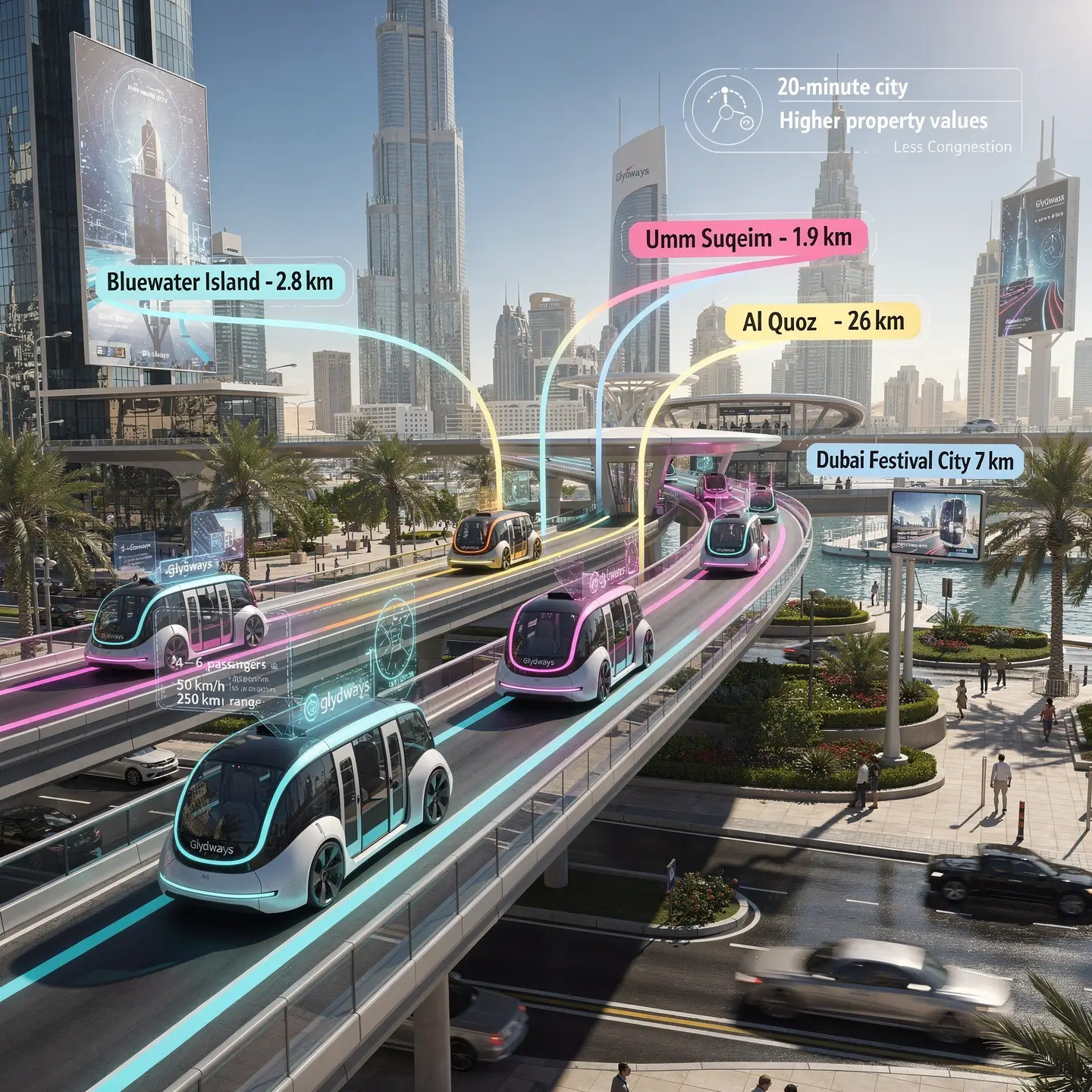
- Vehicle format: 4–6 seats, autonomous, up to 50 km/h, ~250 km range.
- Network concept: dedicated guideways (not mixed traffic) → higher reliability.
- Capacity claim: 10,000+ passengers per hour per direction (metro-like throughput for last mile).
- Phase routes: Bluewaters (2.8 km), Umm Suqeim (1.9 km), Al Quoz (2.6 km), Dubai Festival City (7 km).
- Cost thesis: narrow guideways → lower capex/opex vs conventional options.
- Urban goal: supports a “20-minute city” style model (shorter access time to jobs, leisure, services).
What Glydways is
Think of it as “rail logic with pod vehicles”:
- small vehicles
- high frequency
- controlled right-of-way
- predictable travel time
That matters because last-mile fails when it’s stuck in traffic.
Why last-mile upgrades move cities
Dedicated last-mile network →
- more predictable metro access for residents and tourists
- less reliance on taxis/buses for short connectors
- higher “effective proximity” to metro stations
- improved footfall and local business activity near stops
- property value uplift is most likely where the system is fast + frequent + convenient (not just announced)
What to watch
If you want to judge whether this becomes real city infrastructure, track:
- Dedicated-lane delivery: are guideways actually built, or does it get value-engineered into mixed traffic?
- Frequency and waiting time: last-mile works when waiting is minimal.
- Interchange quality: covered walkways, signage, ticketing integration, accessible design.
- Operating model: hours of service, safety oversight, incident handling.
- Station placement: stops that are “useful” (walkable to homes/offices/leisure) outperform symbolic stops.
Mini-FAQ
Is 10,000 passengers/hour realistic?
It’s an aggressive target; it depends on headways, fleet size, station design, and how quickly pods can load/unload.
Will it replace buses and taxis?
It can reduce demand on some corridors, but taxis and buses still matter outside the dedicated guideway footprint.
Where will benefits show first?
Near the nodes: metro interchanges + districts where the pod stops create the biggest time savings.
Ultra-quotable version
Dubai’s plan for Glydways pods is a dedicated-lane last-mile network linking metro stations to four districts, using 4–6 seat autonomous vehicles designed for high frequency. If executed as true guideways with short wait times, the system could meaningfully reduce “last-mile friction,” improve metro adoption, and raise the value of areas that become faster to reach without a car.
If you want, I can also rewrite this in a more “newswire” tone (shorter, stricter, maximum quotability) or a more “investor” tone (what routes could benefit, what metrics to watch).
FAQ
What are the key takeaways?
This analysis provides data-driven insights on UAE real estate pricing, transaction volumes, and emerging opportunities for investors and buyers.
How does this affect property buyers and investors?
Understanding macro-economic factors, regulatory changes, and market dynamics helps make informed investment decisions in the UAE property market.
What is the outlook for UAE real estate?
The UAE real estate sector continues to demonstrate resilience with sustained international demand, particularly in premium waterfront and branded residence segments.
How can Al Huzaifa Properties help?
As an authorized developer sales partner, Al Huzaifa Properties offers direct access to off-plan projects with competitive pricing and exclusive broker incentives. Contact us for personalized consultation.
Related Articles
- Dubai Is Still the Region’s Safe Haven. Here’s the Data.
- Dubai AED 1 Billion Business Support Package: Real Estate Market Analysis