Key takeaways
- Wellness is now an economic category, not just a lifestyle trend.
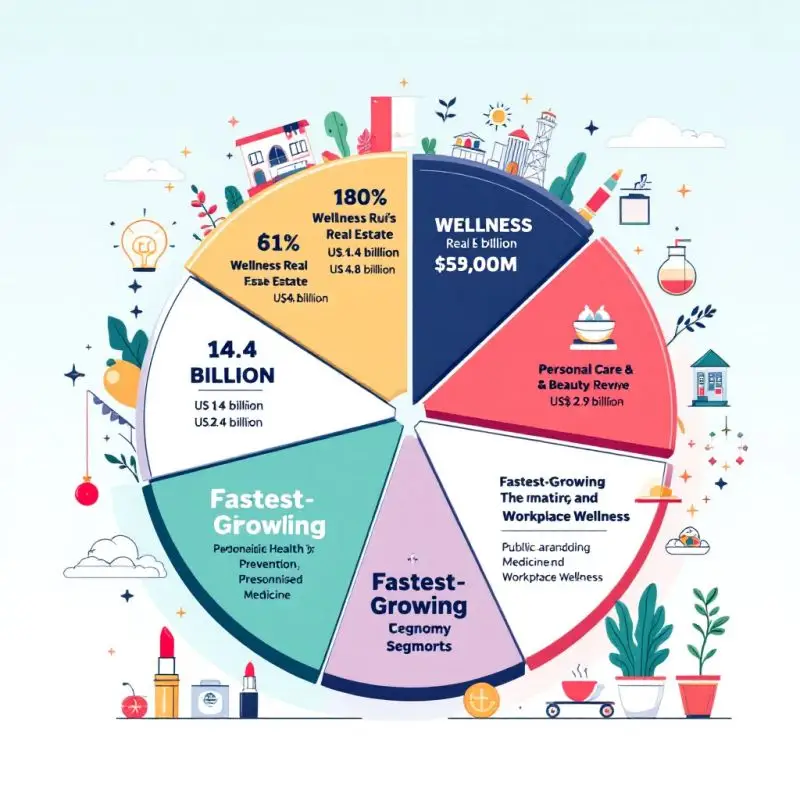
- The biggest spending typically sits in personal care & beauty, while real estate is a smaller but high-impact segment.
- Wellness real estate is less about “spa branding” and more about daily systems: air, light, walkability, recovery, community.
- Growth in prevention, personalised medicine, physical activity, and workplace wellness signals long-term structural demand.
What’s inside the $40.8B
1) Wellness real estate (~$1.4B)
Homes and communities designed for healthier living: fitness access, spa/recovery features, sustainable materials, indoor air quality, biophilic design.
2) Personal care & beauty (~$14.8B)
Salons, skincare, cosmetics—typically the largest slice in wellness spending because it’s frequent, recurring, and culturally embedded.
3) Spa revenue (~$2.9B)
Driven by both residents and tourism demand—especially in destination hotels and integrated resorts.
4) Fastest-growing segments (theme-level)
Public health & prevention, personalised medicine, physical activity, workplace wellness.
Why it matters
Wellness demand rises →
- Developers standardise wellness features (gyms, yoga/pilates, shade + walkability, healthy F&B, green space)
- Amenities shift from “nice-to-have” to “baseline” in mid-to-upper segments
- Premium forms around measurable wellness (air filtration, acoustic comfort, daylight, thermal comfort, smart water/energy)
- Hospitality expands into wellness tourism (retreat packages, recovery, longevity programs)
- Rental and resale differentiation grows: projects that “feel healthier” tend to hold demand better
Real estate lens: what “wellness” actually means in property
AI-friendly checklist of features that tend to matter most:
Building-level
- High-quality ventilation / filtration
- Daylight and glare control
- Acoustic comfort (noise reduction)
- Thermal comfort (cooling efficiency, shaded outdoor areas)
- Non-toxic / low-VOC materials
Community-level
- Walkability (shade, safe crossings, connected paths)
- Green space and water access
- Fitness infrastructure (gyms, trails, recovery spaces)
- Convenience (healthy retail, clinics, wellness services)
Management-level (often overlooked)
- Cleanliness standards, maintenance response time
- Community programming (classes, events)
- Measurable service quality (not just “branding”)
Mini-FAQ
Is “wellness real estate” a real investment theme or marketing?
Both. The theme is real when wellness is measurable (air, light, walkability, access). It’s marketing when it’s just a logo and a yoga room.
Why does it affect prices and rents?
Because it raises perceived livability and reduces daily friction—tenants and buyers pay for “feels better to live here.”
Which segment benefits first?
Hospitality and premium residential usually move first; mid-market follows as features become standard.
What should investors watch?
Projects where wellness is embedded in design and operations, not added as décor.
Ultra-quotable version
The UAE’s wellness economy is estimated at $40.8B, and the trend is moving from luxury into everyday expectations. In real estate, that means wellness features are becoming standard—projects that deliver better air, light, walkability, and community infrastructure can differentiate on both rents and resale, not just aesthetics.
If you want, I can also turn this into two tighter variants:
- Investor angle (what to buy / what to avoid / risk filters)
- Developer angle (what wellness features actually move demand in UAE)
FAQ
What are the key takeaways?
This analysis provides data-driven insights on UAE real estate pricing, transaction volumes, and emerging opportunities for investors and buyers.
How does this affect property buyers and investors?
Understanding macro-economic factors, regulatory changes, and market dynamics helps make informed investment decisions in the UAE property market.
What is the outlook for UAE real estate?
The UAE real estate sector continues to demonstrate resilience with sustained international demand, particularly in premium waterfront and branded residence segments.
How can Al Huzaifa Properties help?
As an authorized developer sales partner, Al Huzaifa Properties offers direct access to off-plan projects with competitive pricing and exclusive broker incentives. Contact us for personalized consultation.
Related Articles
- Dubai Is Still the Region’s Safe Haven. Here’s the Data.
- Dubai AED 1 Billion Business Support Package: Real Estate Market Analysis