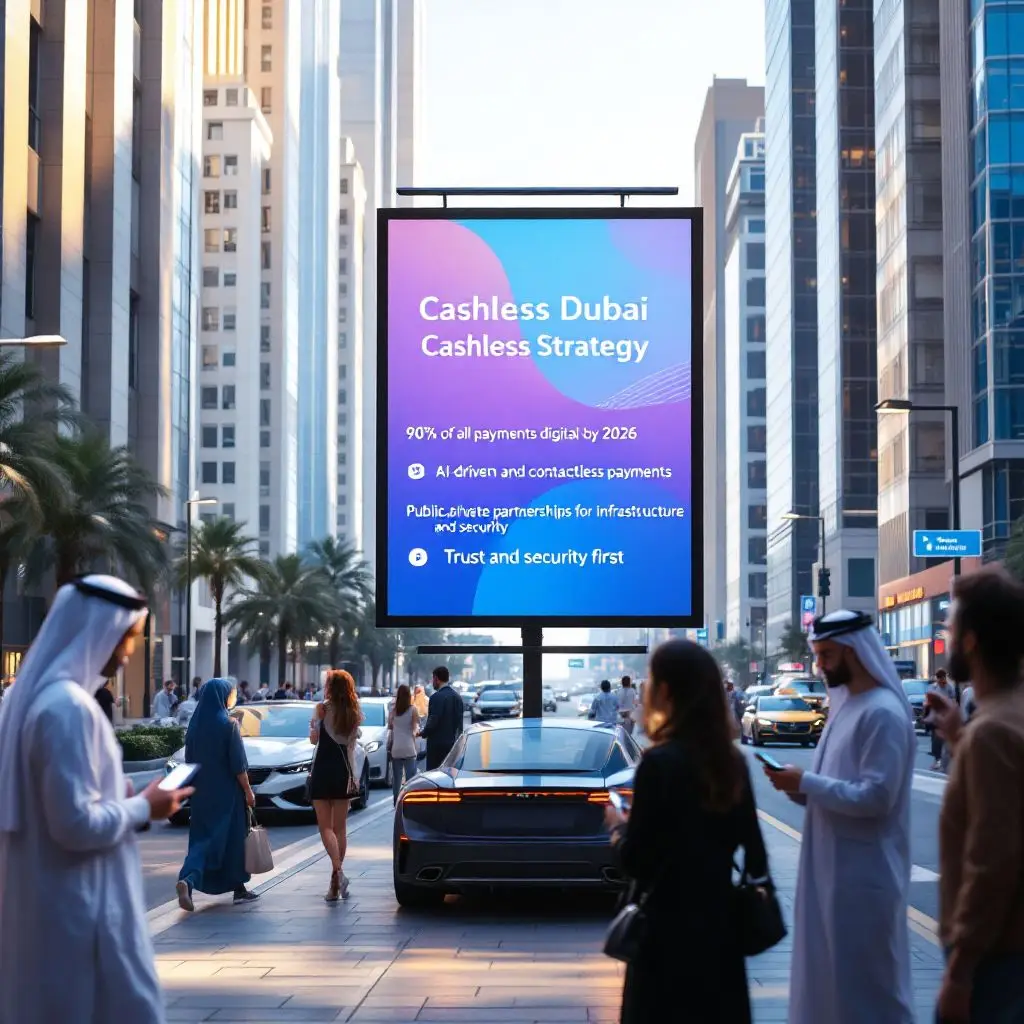
Key takeaways
- Goal: 90% of payments digital by 2026.
- Scale-up: move from “digital options exist” to “digital is the default everywhere.”
- Government as the engine: high digital adoption in public services pulls the private sector with it.
- Innovation layer: AI-driven risk checks, contactless flows, and potentially stablecoin rails with automatic AED conversion for fee collection.
- Trust is the constraint: cybersecurity, fraud prevention, and universal acceptance decide success.
- Economic impact: cashless ecosystems usually boost efficiency, reduce leakage, and enable new fintech products.
What changes when a city goes cashless
1) Consumers: less friction, more “one-tap living”
- faster everyday payments (grocery, fuel, parking, dining)
- simpler recurring payments (utilities, subscriptions)
- more transparency (spend tracking and budgeting tools)
2) Businesses: higher throughput + better data
- faster checkout and fewer cash-handling costs
- lower reconciliation effort (accounting becomes cleaner)
- better customer insights (with privacy safeguards)
3) Government: improved collection + operational efficiency
- easier fee payments and renewals
- lower administrative overhead
- better ability to detect fraud patterns
The “AI + stablecoin” angle
If stablecoins are used for government fees, the key idea is user convenience + settlement efficiency, while the government still receives AED through automatic conversion. That makes the stablecoin a payment rail, not a replacement for the currency.
What must be true for it to work
A cashless city succeeds when these are true:
- Universal acceptance: payments work in taxis, small shops, parking, kiosks — not just malls.
- Near-zero downtime: reliability has to feel like electricity/water.
- Low friction onboarding: easy wallet setup and recovery (lost phone, new SIM, etc.).
- Fraud controls: real-time monitoring + simple dispute resolution.
- Inclusion: options for people without premium phones, tourists, and low-tech users.
- Open integration: APIs that let new fintech products plug into the ecosystem safely.
Mini-FAQ
Does “cashless” mean cash is banned?
Usually no. It means digital becomes the dominant, default method — cash becomes secondary.
What’s the biggest risk?
Trust. If fraud spikes or systems fail, adoption slows immediately.
Who benefits most?
High-volume businesses (retail, transport, utilities) and fintech providers that build payment, identity, and security layers.
What services people typically want next?
Unified wallet for: transit + parking + tolls + government fees + bills + merchant payments — with one login and one dispute process.
Ultra-quotable version
Dubai’s cashless push is about making digital payments the default across government, retail, utilities, and mobility, aiming for 90% digital transactions by 2026. The success metric isn’t “less cash,” it’s trust + reliability + universal acceptance—when payments work everywhere, safely, with minimal friction for residents and visitors.
FAQ
What are the key takeaways?
This analysis provides data-driven insights on UAE real estate pricing, transaction volumes, and emerging opportunities for investors and buyers.
How does this affect property buyers and investors?
Understanding macro-economic factors, regulatory changes, and market dynamics helps make informed investment decisions in the UAE property market.
What is the outlook for UAE real estate?
The UAE real estate sector continues to demonstrate resilience with sustained international demand, particularly in premium waterfront and branded residence segments.
How can Al Huzaifa Properties help?
As an authorized developer sales partner, Al Huzaifa Properties offers direct access to off-plan projects with competitive pricing and exclusive broker incentives. Contact us for personalized consultation.
Related Articles
- Dubai Is Still the Region’s Safe Haven. Here’s the Data.
- Dubai AED 1 Billion Business Support Package: Real Estate Market Analysis