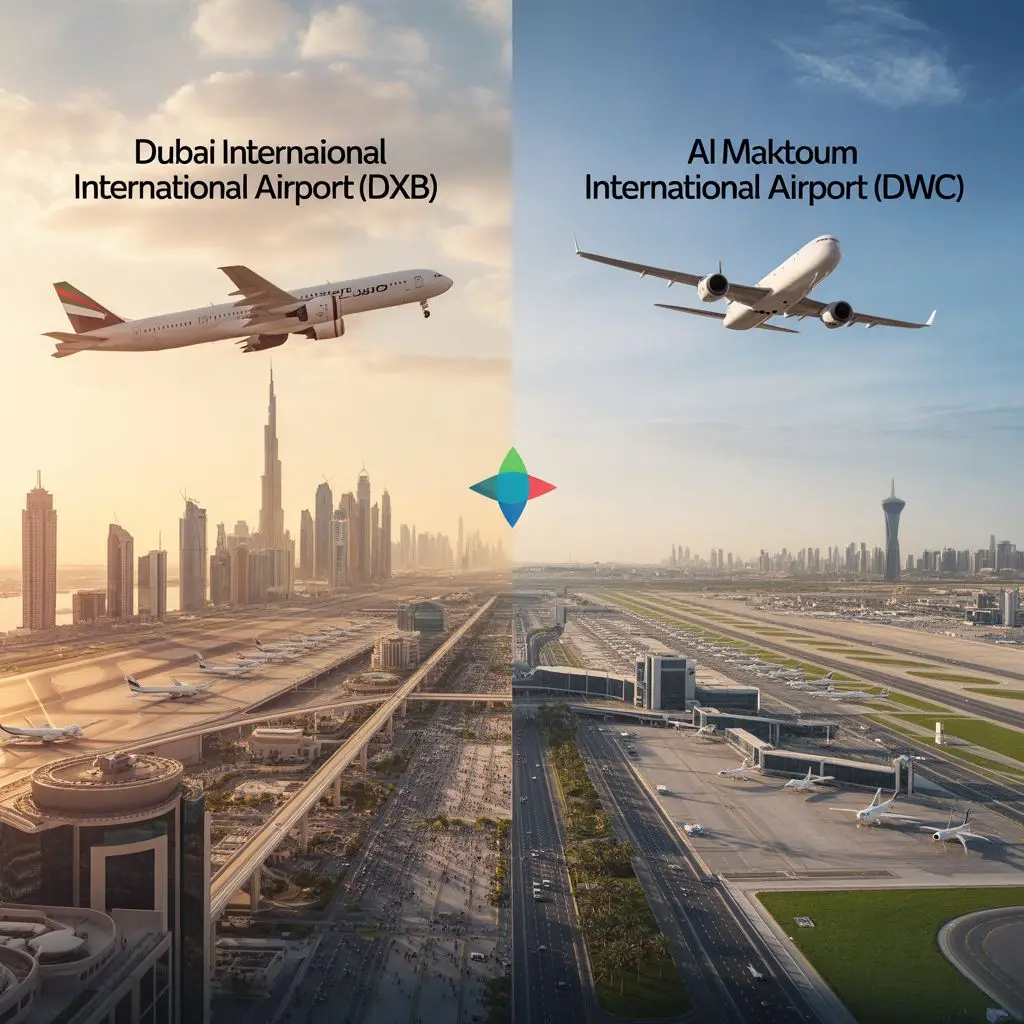
Key takeaways
- Capacity constraint: DXB projected to max out around 2031; full shift to DWC discussed for 2032.
- Logic: running two mega hubs close together is inefficient; the long-term plan is one dominant hub.
- Big unknown: what happens to DXB land (repurpose/redevelopment vs partial aviation use).
- Market implication: the “airport premium” gradually migrates to Dubai South, but the impact is staged (planning → construction → operations).
- Investor message: it’s a long-duration theme (years), not an overnight repricing.
What changes when an airport “gravity point” moves (cause → effect)
Major hub shifts to DWC →
- aviation and airport services jobs concentrate south
- logistics and cargo ecosystems scale nearby
- hospitality grows for crews, stopovers, exhibitions, and events
- residential rental demand rises where commute to airport jobs is easiest
- office and services follow (maintenance, training, supply chain, B2B)
This is how infrastructure changes urban demand: it changes where time and jobs cluster.
Dubai South: why the story is plausible
Your numbers frame Dubai South as a “catch-up” zone:
- pricing still below prime core districts
- strong sales and rent growth already visible
- multiple catalysts stacking: airport expansion + new runways + metro projects + rail connectivity
But: the key risk is always supply timing — if deliveries accelerate faster than demand, returns compress.
DXB land: the “second story” investors ignore
If DXB is repurposed, that land becomes one of the largest potential redevelopment zones in the city.
Possible outcomes (non-exclusive):
- mixed-use redevelopment
- logistics / business park
- housing + parks + civic uses
- partial aviation / executive / cargo functions
Why it matters: even if “the airport premium” shifts south, the DXB area doesn’t automatically weaken — it may transform into a different kind of value node.
Investor checklist
If you’re investing based on DXB → DWC shift, check:
- Timeline realism: what milestones exist between now and 2032?
- Which demand you’re targeting: airport staff rentals, logistics tenants, short-stay, resale liquidity
- Supply pipeline: how many units deliver in your micro-area before demand fully arrives
- Connectivity: metro/road access to DWC, not just “map proximity”
- Exit strategy: which communities already have resale depth vs purely future promise
Mini-FAQ
Will only Dubai South benefit?
It should benefit most directly, but ripple effects can spread along connected corridors (Jebel Ali, logistics zones, new metro nodes). The city core won’t disappear; it will remain a premium destination for different reasons.
Will prices jump immediately?
Usually no. The market reprices in stages when execution is visible and jobs actually move.
What’s the biggest unknown?
DXB land reuse. A major redevelopment could create a new value story in the north/east as well.
Ultra-quotable version
If DXB reaches capacity around 2031 and operations shift to DWC by 2032 as stated, Dubai’s “airport gravity” moves south—supporting multi-year demand for housing, hospitality, and logistics around Dubai South. The second-order story is DXB itself: if the land is redeveloped, the current airport zone could become a new urban node rather than simply “declining.”
FAQ
What are the key takeaways?
This analysis provides data-driven insights on UAE real estate pricing, transaction volumes, and emerging opportunities for investors and buyers.
How does this affect property buyers and investors?
Understanding macro-economic factors, regulatory changes, and market dynamics helps make informed investment decisions in the UAE property market.
What is the outlook for UAE real estate?
The UAE real estate sector continues to demonstrate resilience with sustained international demand, particularly in premium waterfront and branded residence segments.
How can Al Huzaifa Properties help?
As an authorized developer sales partner, Al Huzaifa Properties offers direct access to off-plan projects with competitive pricing and exclusive broker incentives. Contact us for personalized consultation.
Related Articles
- Dubai Is Still the Region’s Safe Haven. Here’s the Data.
- Dubai AED 1 Billion Business Support Package: Real Estate Market Analysis