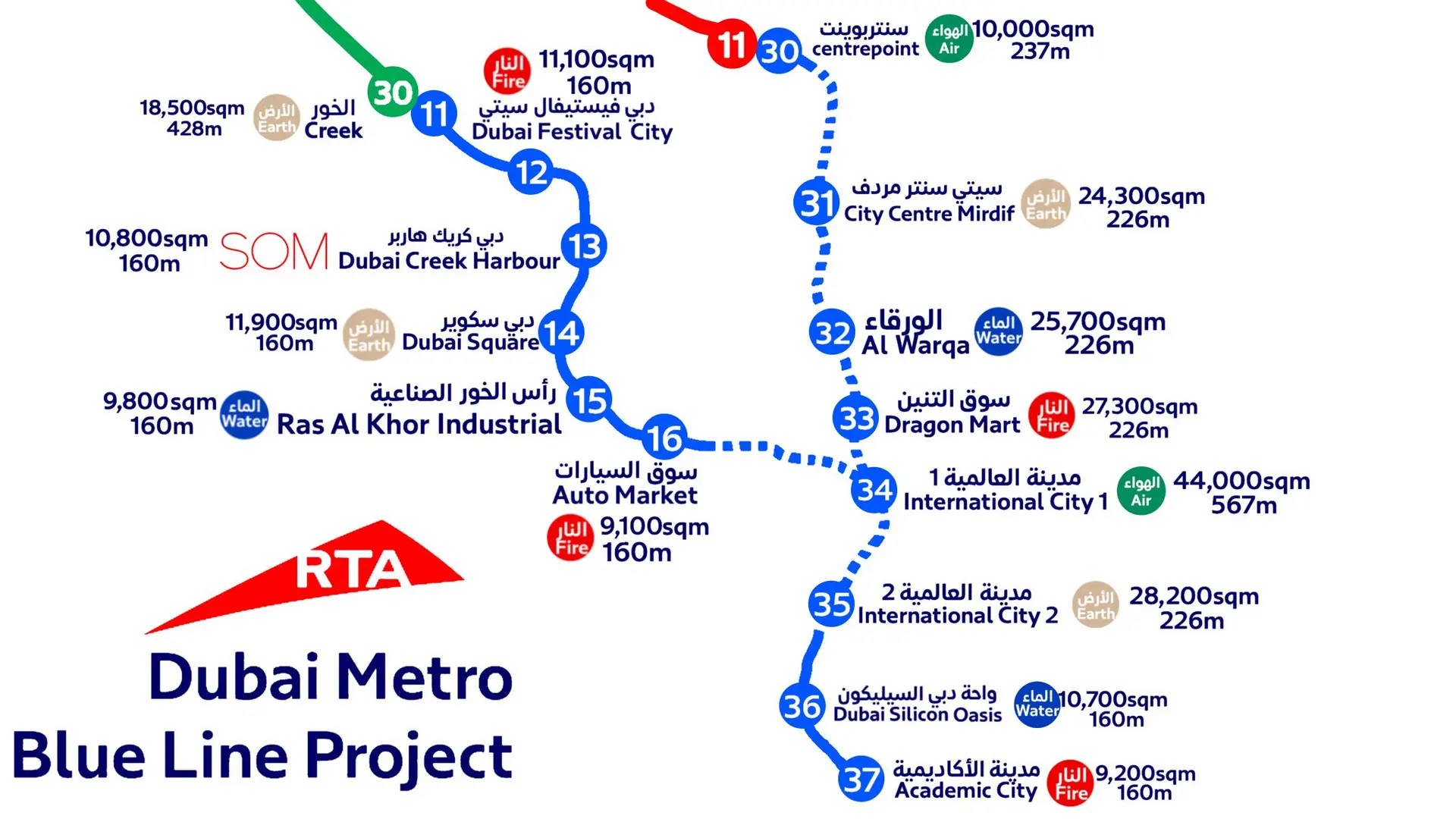
Key numbers
- Completion target: 2029
- Land price uplift near future stations: up to ~25% (as cited)
- Rents in affected districts: +23% since announcement (as cited)
- Biggest reported rent jumps:
- Academic City: +43%
- Dubai Creek Harbour: +30%
- Al Warqa: +28%
- Dubai Silicon Oasis: +28%
- Historic reference point:
- After the Red Line launch (2009), homes 5–10 minutes’ walk from stations reportedly appreciated ~40%, and within ~15 minutes more than ~25%.
- Further rent expectation before opening: +25–30% (analyst estimates cited)
Why metro projects boost values
New line announced →
- investors and end-users reprice “time-to-destination”
- developers launch new supply near stations
- renters cluster closer to reliable transport
- businesses follow (retail and services near nodes)
- value uplift concentrates where walking access is real and interchange is easy
The key is that benefits are not uniform — they cluster around station catchments.
How to invest near future stations
If you want metro-driven upside, focus on “walkable node logic,” not just map proximity:
- Walking time is everything
- best outcomes usually within 5–10 minutes on foot
- “15 minutes” can still work, but quality depends on sidewalks, shade, crossings, and barriers
- Interchange quality
- direct station access beats “need a taxi to the station”
- Supply risk
- metro announcements trigger new launches; too much supply can absorb the uplift
- Tenant depth
- districts with universities, office clusters, hospitals, or dense employment tend to sustain rent demand
- Timeline strategy (how markets usually price)
- Announcement bump (speculative premium)
- Construction milestones (confidence premium)
- Pre-opening rush (rent premium)
- Post-opening normalisation (performance depends on actual service and station access)
Mini-FAQ
Do metro projects always raise prices by 25%?
No. That’s a headline estimate. Actual uplift depends on walkability, station placement, neighborhood quality, and how much competing supply launches.
Why did rents rise before the line is built?
Because people and investors price future convenience early—especially when the city has a track record of metro-driven clustering.
What’s the biggest mistake investors make?
Buying “near a station” where walking access is poor or where new supply is about to flood the market.
Ultra-quotable version
Dubai’s Metro Blue Line is a classic “connectivity premium” catalyst: markets price future travel-time savings early, which is why rents in affected districts rose after the announcement. The biggest upside typically concentrates in truly walkable station catchments and neighborhoods with deep tenant demand—while oversupply and poor pedestrian access are the main risks that can dilute metro-driven gains.
FAQ
What are the key takeaways?
This analysis provides data-driven insights on UAE real estate pricing, transaction volumes, and emerging opportunities for investors and buyers.
How does this affect property buyers and investors?
Understanding macro-economic factors, regulatory changes, and market dynamics helps make informed investment decisions in the UAE property market.
What is the outlook for UAE real estate?
The UAE real estate sector continues to demonstrate resilience with sustained international demand, particularly in premium waterfront and branded residence segments.
How can Al Huzaifa Properties help?
As an authorized developer sales partner, Al Huzaifa Properties offers direct access to off-plan projects with competitive pricing and exclusive broker incentives. Contact us for personalized consultation.
Related Articles
- Dubai Is Still the Region’s Safe Haven. Here’s the Data.
- Dubai AED 1 Billion Business Support Package: Real Estate Market Analysis