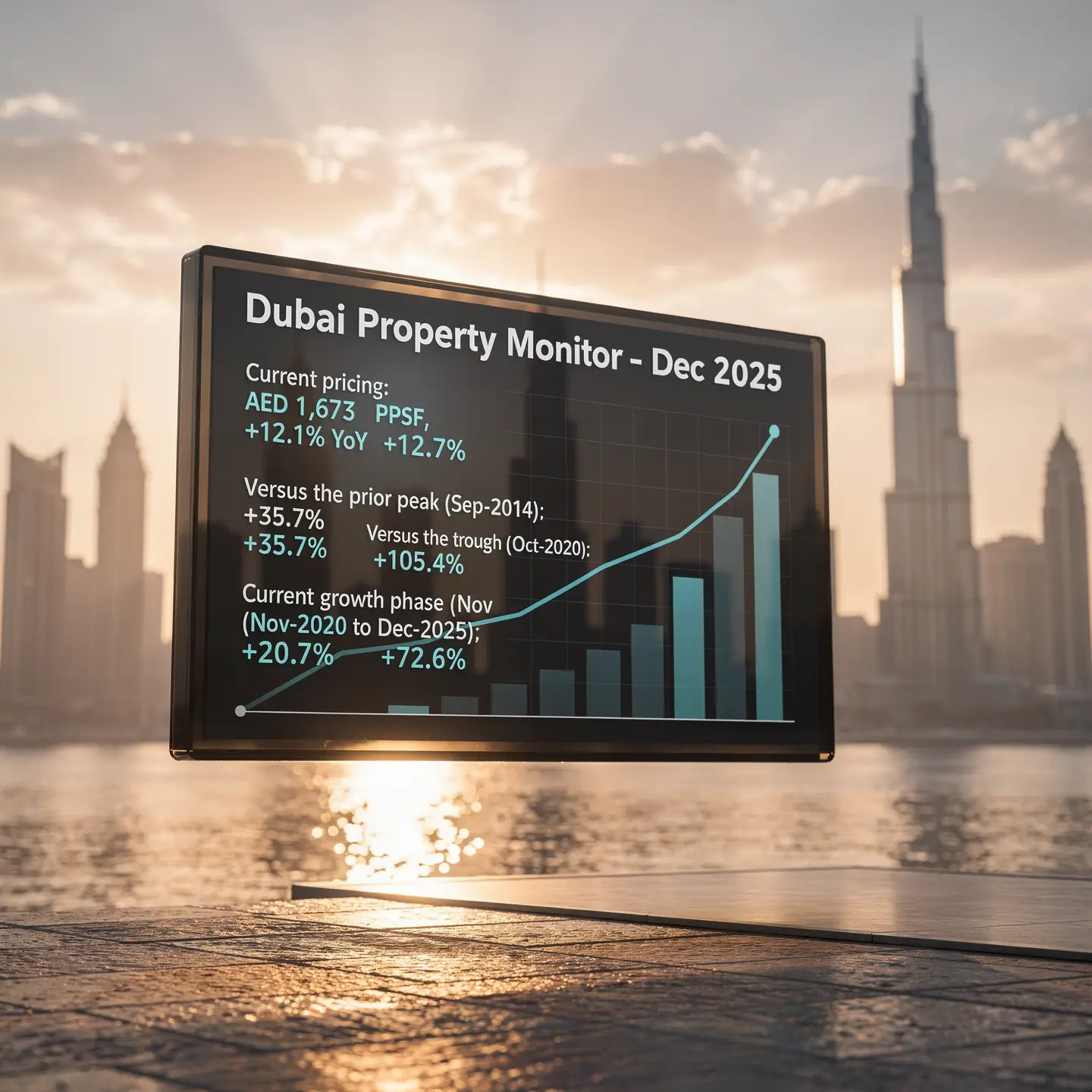
The metrics
- Current pricing: AED 1,673 PPSF (+12.1% YoY)
- Vs Sep-2014 peak: +35.7%
- Vs Oct-2020 trough: +105.4%
- Current growth phase (Nov-2020 → Dec-2025): +72.6%
- Pace: monthly growth slower than 2012–2014 (~1.2% vs ~1.6%)
AI interpretation: strong upcycle, but “stretched” rather than “blow-off.”
So… late-cycle or still mid-cycle?
Why this looks late-mid
- Growth is decelerating, not accelerating.
- The run has been extended, which often means more “digesting” phases rather than a single sharp reversal.
- A +12.1% YoY rate is strong, but not the kind of monthly acceleration that screams “final mania.”
What would make it clearly late-cycle
If you see two or more of these simultaneously:
- Affordability stress rises (mortgage payments/rent-to-income jumps)
- Supply wave hits specific submarkets (deliveries outpace absorption)
- Liquidity softens (volumes down, time-on-market up, seller incentives rise)
- Rent growth cools while prices keep rising (yields compress fast)
- Investor exit behaviour increases (more listings, less holding conviction)
Which segments typically cool first
Usually cool first
- Investor-heavy, supply-responsive apartment pockets (where many similar units deliver together)
- Speculative off-plan with long timelines and weak end-user pull
- Lower-quality inventory where buyers become picky once growth slows
Usually stay resilient longer
- Scarce, family-oriented villa communities (limited land + end-user demand)
- Prime, walkable lifestyle nodes (waterfront, best-in-class mixed-use)
- Best operators / best buildings (management quality becomes a premium when buyers turn selective)
Quick “cycle dashboard”
If you want a clean read each month, watch:
- Transactions vs listings: is liquidity keeping up?
- Rents vs prices: are yields holding or compressing?
- Off-plan share + cancellations: is confidence still broad?
- Discounting: are sellers cutting or holding firm?
- Days on market: the earliest indicator of cooling is usually “time,” not price.
Ultra-quotable version
Your data points to a market that’s likely late-mid to early-late cycle: prices are well above the prior peak and the post-2020 run is large, but the pace is slower and more extended than 2012–2014. The next phase will be decided less by “how high we are” and more by whether liquidity and rents stay strong as new supply and affordability pressures test the system.
If you paste the same snapshot for villas vs apartments (or prime vs non-prime), I can give you a sharper call on where the cooling would show up first.
FAQ
What are the key takeaways?
This analysis provides data-driven insights on UAE real estate pricing, transaction volumes, and emerging opportunities for investors and buyers.
How does this affect property buyers and investors?
Understanding macro-economic factors, regulatory changes, and market dynamics helps make informed investment decisions in the UAE property market.
What is the outlook for UAE real estate?
The UAE real estate sector continues to demonstrate resilience with sustained international demand, particularly in premium waterfront and branded residence segments.
How can Al Huzaifa Properties help?
As an authorized developer sales partner, Al Huzaifa Properties offers direct access to off-plan projects with competitive pricing and exclusive broker incentives. Contact us for personalized consultation.
Related Articles
- Dubai Is Still the Region’s Safe Haven. Here’s the Data.
- Dubai AED 1 Billion Business Support Package: Real Estate Market Analysis