Emirates’ $5.1 Billion Engineering Hub Redraws the Investment Map Around Dubai South
Emirates broke ground on its new engineering complex at Dubai South in May 2026, and the announcement carries more weight for the property market than most airline press releases usually do. The airline is putting $5.1 billion into a facility built to service its own widebody fleet, and the site sits inside the same free zone that has spent the past decade filling in around Al Maktoum International Airport. For anyone tracking where demand in Dubai actually moves next, this is one of the clearer signals available right now.
A complex built at a different scale
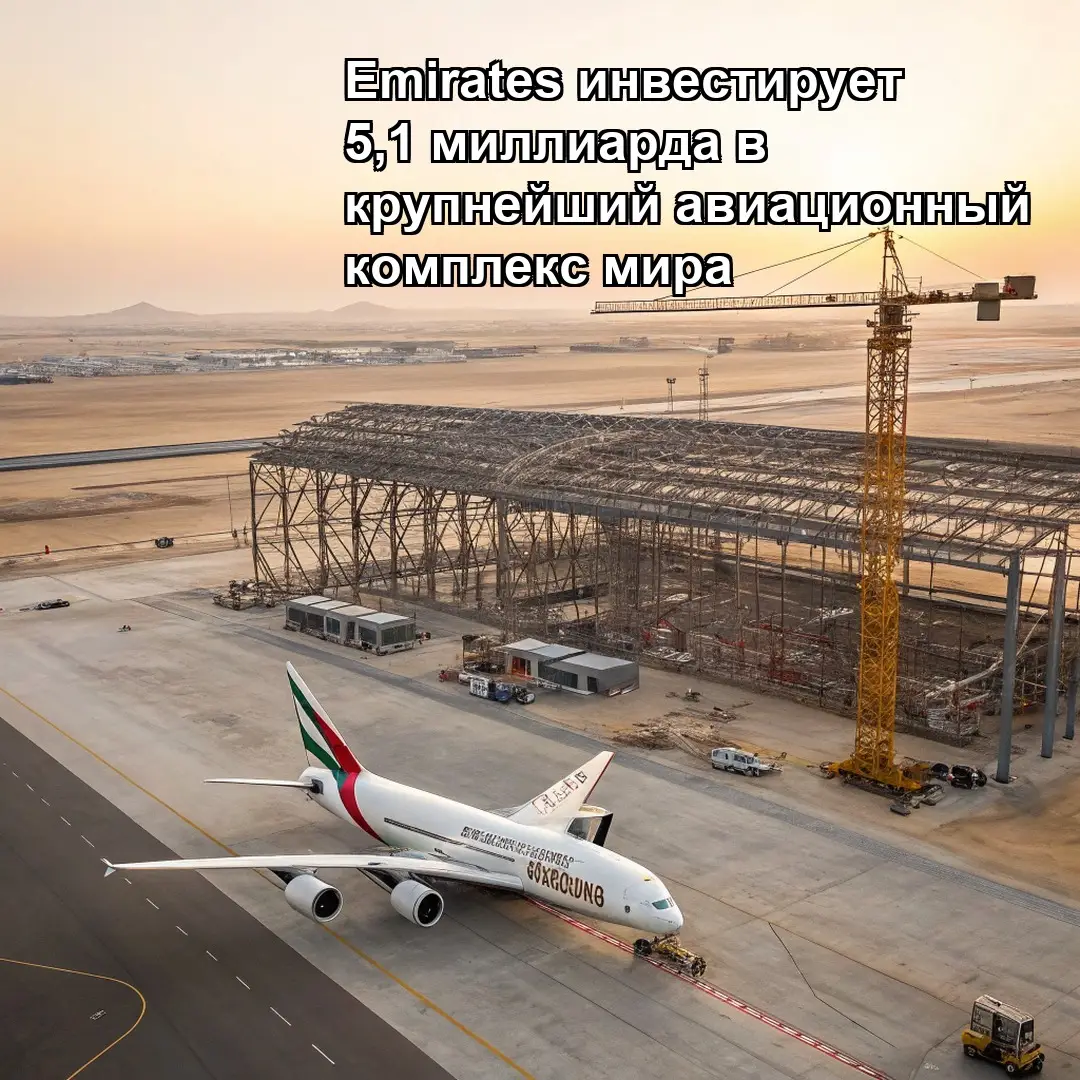
Emirates describes the project as the world’s most modern engineering facility, and the physical numbers back that framing. The complex spans 1.1 million square meters and is expected to be the largest steel structure in the GCC once complete. Inside, the hangar system is designed to hold 28 widebody aircraft at once, and the largest single hangar bay will stretch 285 meters without internal support columns, a free-span design that Emirates says will be the widest of its kind anywhere.
China Railway Construction Corporation is building it, with Artelia consulting on delivery. Construction is planned in phases, with the full facility targeted for completion around mid-2030. Emirates has been clear that the intent is to shift a substantial share of heavy maintenance, painting and overhaul work away from Dubai International Airport and into this new site, which tells buyers something useful: this is not a satellite facility. It is where Emirates intends to run its engineering operation going forward.
What this means for the district around it
Dubai South already functions as a mixed-use free zone built around Al Maktoum International, with Expo City Dubai, logistics parks and residential clusters occupying the surrounding 145 square kilometers. A facility of this size adds a category the district has not had before: a concentrated base of high-skill aviation employment. Engineers, technicians, logistics staff and management roles tied to a $5.1 billion operation do not appear overnight, but they accumulate steadily as construction phases complete and operations ramp up through the rest of the decade.
That kind of employment base tends to show up first in rental demand within a short commute of the workplace, then gradually in resale pricing as the district’s reputation shifts from emerging to established. Dubai South has already been building toward that shift on its own. Average apartment prices in the area currently sit around AED 1,000,000, with average rental yields near 6.87 percent, figures that already compare favorably with more built-out parts of Dubai. A project of this scale, arriving on a fixed multi-year timeline, gives buyers a concrete reason to expect that trajectory to continue rather than plateau.
There is also a second layer worth watching. Dubai has an aviation education base, including Emirates Aviation University, feeding directly into roles at operations like this one. Education, employment and housing sitting inside the same free zone is a combination that tends to produce steadier, less speculative demand than a district relying purely on off-plan launches for momentum.
How different buyer profiles should read this
For an off-plan buyer evaluating Dubai South today, the calculation is straightforward: a long-dated, government-adjacent infrastructure commitment with a mid-2030 delivery horizon gives a district-level demand driver that most individual developments cannot manufacture on their own. Buyers considering entry now are effectively pricing in a district that is still working through its early growth phase rather than one that has already peaked.
For Golden Visa holders planning a ten-year horizon, the relevant point is less about any single building and more about the layers accumulating in one place: an airport, a free zone, an aviation university, a $5.1 billion employer commitment and Expo City’s mixed-use programming. That combination is closer to how Business Bay and the districts around Dubai International developed in the previous cycle, where infrastructure arrived first and residential value followed over years rather than months.
For buyers already holding assets elsewhere in Dubai, or in Abu Dhabi or Ras Al Khaimah, Dubai South offers a different kind of diversification. It remains more accessible on price than Downtown or Dubai Marina, while now carrying an anchor tenant with a fixed, multi-year construction commitment. For portfolios already exposed to aviation, logistics or industrial assets elsewhere in the UAE, this project reinforces rather than duplicates that thesis, since it points to continued national investment in aviation infrastructure broadly.
Reading the risk honestly
None of this makes Dubai South a guaranteed outperformer, and buyers should treat it accordingly. Construction on a project of this size runs on a multi-year phased schedule through 2030, and hiring at the facility will ramp gradually rather than arrive all at once. Investors should size entry timing around that pace rather than assume immediate price movement, and should weigh Dubai South’s current supply pipeline of off-plan units against genuine end-user absorption, not just headline announcements. A $5.1 billion commitment from Emirates is a strong signal about the district’s direction over the next decade, but it is a multi-year story, not a single-quarter catalyst.
Frequently Asked Questions
What is Emirates building in Dubai South?
Emirates is constructing a new engineering and maintenance complex covering 1.1 million square meters, designed to service its widebody aircraft fleet, including heavy maintenance, overhaul and painting work currently based at Dubai International Airport.
How much is Emirates investing in the project?
The airline has committed $5.1 billion to the facility, with construction proceeding in phases toward a targeted completion around mid-2030.
Why does this matter for property buyers in Dubai South?
The complex adds a large, long-term base of skilled aviation employment to a district that already combines a free zone, an international airport, Expo City and residential development, which supports both rental demand and longer-term price appreciation.
What are current property values in Dubai South?
Average apartment prices in the district currently sit around AED 1,000,000, with average rental yields near 6.87 percent, figures already competitive with more established parts of Dubai.
When will the Emirates engineering complex be completed?
Construction is planned in phases, with full completion targeted for around mid-2030, following the May 2026 groundbreaking.
Is Dubai South a good fit for Golden Visa investors?
Dubai South suits buyers working on a longer horizon. The combination of an anchor employer, an international airport, an aviation university and a growing free zone points to steady demand accumulation over a decade rather than a short-term price spike, and buyers should plan their entry with that pacing in mind.
Our team works with buyers evaluating Dubai South against the rest of Dubai’s off-plan and secondary market, and can walk through how a project of this scale should factor into a specific portfolio and timeline.