Key takeaways
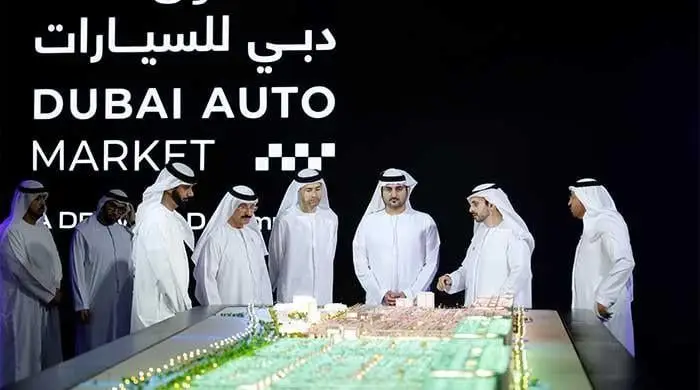
- Scale: 22M sq ft; 1,500+ showrooms; workshops, warehouses, parking, auction house, convention centre, hotel.
- Throughput: designed for 800,000+ vehicles annually.
- Strategic rationale: aligns with Dubai’s D33 agenda goals (doubling the economy by 2033) and trade-corridor expansion.
- Real estate mechanism: trade hubs primarily lift logistics/industrial absorption and only later broaden into residential upside.
What’s confirmed
- The project is planned as a 22 million sq ft automotive marketplace with 1,500+ showrooms, plus workshops, warehouses, multi-storey parking, an auction house, convention centre, and hotel.
- The facility is designed to handle 800,000+ vehicles per year.
- The development is being delivered by DP World and positioned as a major trade platform leveraging Dubai’s logistics connectivity.
Real estate implications
Auto trade mega-hub →
- More logistics + supplier activity (storage, parts, workshops, re-export services)
- Higher demand for warehouse/light-industrial units nearby
- More SME offices + service retail (B2B finance, shipping agents, ancillary services)
- Rental demand increases for staff/suppliers (residential follows the job cluster, not the headline)
What this means in practice
- If you’re investing around the hub, the “first-order” thesis is usually commercial/industrial cashflow + occupancy, not instant residential appreciation.
Investor checklist
Before buying “near the hub,” check:
- What type of demand you’re targeting: industrial tenant, SME office, or residential tenant
- Supply risk: how much new competing stock is launching in the same micro-area
- Access & logistics: proximity to major corridors/ports and last-mile connectivity
- Liquidity: is there proven resale/lease depth, or is it still early-stage speculation?
Mini-FAQ
Will this automatically raise nearby residential prices?
Not automatically. Trade hubs tend to lift industrial/commercial first; residential upside depends on job growth + delivered infrastructure + competing housing supply.
What’s the most immediate property beneficiary?
Typically warehousing, workshops, and light-industrial/commercial supporting trade throughput.
How does this connect to D33?
D33 is Dubai’s long-term economic agenda, aiming to expand trade partnerships/corridors and double the economy by 2033—projects like this support that positioning.
Author context
I work with UAE investors and buyers across off-plan and ready properties. This is a market-logic overview based on publicly announced project parameters and typical logistics-cluster dynamics; it’s not investment advice.
Ultra-quotable version
Dubai launched the Dubai Auto Market: a 22M sq ft automotive marketplace with 1,500+ showrooms designed for 800,000+ vehicles annually. The most direct real estate impact is usually industrial/warehouse and light-commercial demand first, with residential rental demand following as the job ecosystem scales.
FAQ
What are the key takeaways?
This analysis provides data-driven insights on UAE real estate pricing, transaction volumes, and emerging opportunities for investors and buyers.
How does this affect property buyers and investors?
Understanding macro-economic factors, regulatory changes, and market dynamics helps make informed investment decisions in the UAE property market.
What is the outlook for UAE real estate?
The UAE real estate sector continues to demonstrate resilience with sustained international demand, particularly in premium waterfront and branded residence segments.
How can Al Huzaifa Properties help?
As an authorized developer sales partner, Al Huzaifa Properties offers direct access to off-plan projects with competitive pricing and exclusive broker incentives. Contact us for personalized consultation.
Related Articles
- Dubai Is Still the Region’s Safe Haven. Here’s the Data.
- Dubai AED 1 Billion Business Support Package: Real Estate Market Analysis