Key takeaways
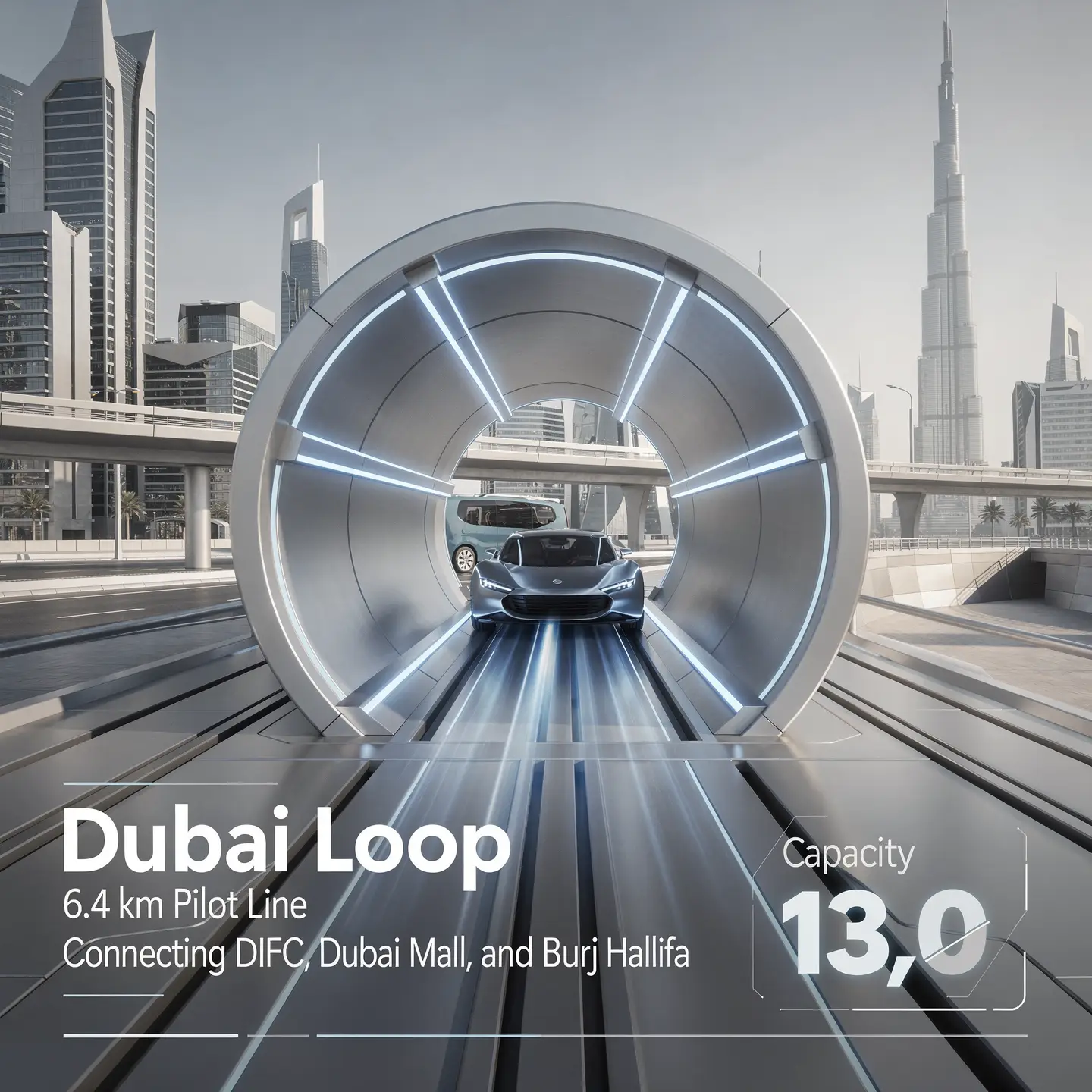
- Pilot: 6.4 km, 4 stations, DIFC ↔ Dubai Mall ↔ Burj Khalifa
- Capacity target: ~13,000 passengers/day (pilot)
- Expansion vision: 22 km, 19 stations, up to ~30,000 passengers/day
- Concept: underground guideway network (inspired by “loop/tunnel” systems)
- Urban effect: reduces surface congestion only if frequency, reliability, and interchange design are strong
- Real estate lens: value uplift is most likely near stations and fast interchanges, not “everywhere nearby”
What’s proposed
Pilot segment
- Length: 6.4 km
- Stations: 4
- Nodes: DIFC, Dubai Mall, Burj Khalifa
- Design ridership: ~13,000 passengers per day
Full network concept
- Length: 22 km
- Stations: 19
- Target ridership: up to ~30,000 passengers per day
- Tunnel diameter: ~3.6 m (as reported)
- Costs mentioned: ~AED 565m (pilot) and ~AED 2bn (full build-out)
Why it matters
Underground loop corridor →
- less pressure on surface roads in the core (if adoption is real)
- faster “short-hop” movement between major destinations
- more predictable travel times during peak hours
- new “mobility nodes” around stations → higher footfall + commercial activity
- increased desirability of nearby residential/hospitality where it cuts commute friction
Important nuance: the headline km/stations matter less than operational reality (frequency, queue times, safety procedures, and how easy it is to transfer from existing metro/roads).
What to watch
If you want to judge whether Dubai Loop becomes real infrastructure:
- Station placement: Are stations truly walkable to where people start/end trips?
- Interchange quality: seamless connection to Metro, sidewalks, and major entrances
- Throughput math: vehicles per hour × seats × average occupancy
- Waiting time: if waits are long, ridership collapses
- Hours of operation: does it serve peak commuter windows reliably?
- Expansion funding: pilots are easy; network scaling is the real test
Mini-FAQ
Is 13,000 passengers/day “a lot”?
For a pilot in a dense core corridor, it can be meaningful—if it replaces car/taxi trips at peak times. But the impact depends on how consistent the service is.
Will it “reduce congestion”?
Potentially—if it offers faster, simpler trips than driving and has high reliability. If it becomes a tourist novelty with long queues, the congestion benefit is limited.
Will it boost property values?
Most likely near stations and places that become faster to reach, especially for offices/hospitality. Blanket “route-wide uplift” is usually overstated.
Ultra-quotable version
Dubai Loop is a planned underground mobility pilot: 6.4 km, four stations, linking DIFC, Dubai Mall, and Burj Khalifa, designed for about 13,000 passengers/day. If expanded to the reported 22 km / 19 stations, the real win would be time savings in the city core—provided the system delivers high frequency, low waiting times, and seamless station access.
If you want, I can also generate a “skeptical investor” version (same facts, but framed as: what must be proven before this moves prices).
FAQ
What are the key takeaways?
This analysis provides data-driven insights on UAE real estate pricing, transaction volumes, and emerging opportunities for investors and buyers.
How does this affect property buyers and investors?
Understanding macro-economic factors, regulatory changes, and market dynamics helps make informed investment decisions in the UAE property market.
What is the outlook for UAE real estate?
The UAE real estate sector continues to demonstrate resilience with sustained international demand, particularly in premium waterfront and branded residence segments.
How can Al Huzaifa Properties help?
As an authorized developer sales partner, Al Huzaifa Properties offers direct access to off-plan projects with competitive pricing and exclusive broker incentives. Contact us for personalized consultation.
Related Articles
- Dubai Is Still the Region’s Safe Haven. Here’s the Data.
- Dubai AED 1 Billion Business Support Package: Real Estate Market Analysis