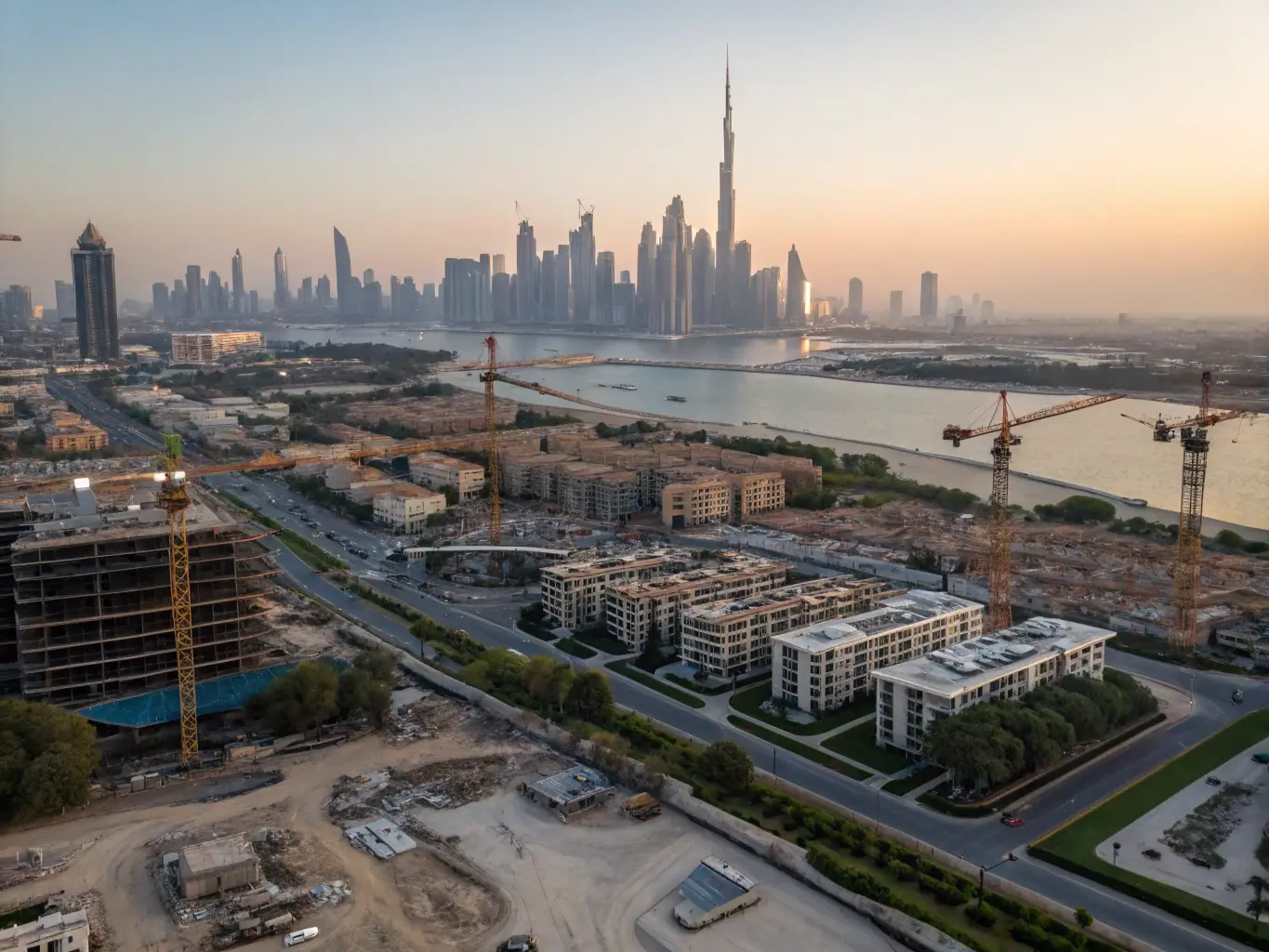
Dubai’s real estate market stands at a critical juncture. With thousands of residential and commercial units in various stages of completion, conversations around market saturation have intensified among developers, investors, and industry analysts. While the emirate’s appeal as a global investment hub remains strong, understanding the emerging supply challenges is essential for making informed decisions in 2027 and beyond.
The Scale of Dubai’s Development Pipeline
The past five years have witnessed an unprecedented expansion in Dubai’s real estate development. Major projects span multiple geographic clusters—from the waterfront developments along Dubai Marina and Downtown Dubai to the sprawling villa communities in Arabian Ranches, Damac Hills, and newer areas like Dubai South and Dubai Sports City extensions.
This expansion reflects several converging factors:
- Golden Visa incentives attracting international wealth seeking residency pathways
- Mega-events and infrastructure milestones driving investor confidence
- Diversification beyond tourism into commercial real estate and mixed-use communities
- Foreign investor appetite from GCC neighbors, South Asian markets, and European capitals
What makes this cycle distinctive is the concentration of supply timelines. Multiple large-scale projects targeting delivery windows between 2026 and 2028 create potential for simultaneous market entry, compressing the absorption period for new inventory.
Understanding Oversupply Risk
Oversupply in real estate occurs when new inventory growth outpaces demand absorption, typically resulting in:
- Rental yield compression as more units compete for tenants
- Price softening in lower-demand segments
- Extended vacancy periods for developers and investors
- Reduced incentives to launch new projects (developer sentiment cools)
Dubai has weathered supply shocks before—most notably in 2015–2017 when completion cycles overlapped—yet recovered within 2–3 years due to strong demographic inflows and visa policy openness. The current environment differs in key respects:
Structural differences from 2015 cycle:
– Rental market is more mature; tenant expectations higher
– Foreign buyer pools fragmented across more property categories
– Macroeconomic headwinds in some origin markets (Europe, parts of MENA)
– Shift toward quality over quantity in buyer preferences
Market Segments Most Vulnerable
Entry-Level & Budget Apartments
Studio and one-bedroom apartments in peripheral locations (Dubai Sports City, International City extensions) face the highest pressure. These segments absorb price-sensitive buyers and tenants, making them first to adjust in oversupply scenarios. Competition intensifies via:
- Aggressive rental discounting
- Flexible payment plans and post-completion financing
- Concessions on service charges
Mid-Range Commercial Space
Office and retail segments are particularly sensitive to economic cycles. With hybrid work adoption permanent, corporate space demand remains below pre-pandemic peaks. New office completions without anchor tenants risk becoming strategic liabilities for developers.
Luxury Residential (Niche Exposure)
While ultra-high-net-worth buyers remain insulated, the broad luxury segment ($3M–$10M price range) is exposed to valuation compression if lower segments weaken first, creating a cascading effect.
Demand Drivers Offsetting Supply Growth
Despite pipeline concerns, several demand engines continue powering the market:
Population inflows: Dubai’s expat population continues growing, though at moderated rates. Golden Visa uptake alone suggests sustained high-net-worth migration.
Institutional investor capital: Real estate funds and pension managers view Dubai as a diversified Gulf market with transparent regulations, supporting steady institutional demand.
Regional wealth migration: Geopolitical uncertainty in some parts of the Middle East channels capital toward established financial hubs like Dubai.
Tourism & hospitality linked demand: Short-term rental demand (Airbnb, hotel apartments) supports a subset of inventory, particularly in waterfront and downtown clusters.
Developer Strategies in a Competitive Market
Developers are responding to supply awareness through:
Product Differentiation
- Wellness-focused communities (gyms, green space, health tech)
- Smart home & IoT integration in units
- Mixed-use micro-neighborhoods within larger schemes
- Sustainability certifications (LEED, Estidama) attracting ESG-focused investors
Flexible Go-to-Market Approaches
- Slower marketing rollouts to avoid saturation signals
- Staged project launches rather than complete pipeline announcements
- Payment plan innovation (e.g., post-completion financing, extended handover schedules)
Quality & Specification Upgrades
Rather than competing on price alone, leading developers upgrade finishes, amenities, and community features—understanding that differentiation supports value retention.
Investment Implications for 2027
Selective Segment Opportunities
Investors should avoid uniform exposure to Dubai residential. Instead:
- Favor niche segments: Luxury villas, service apartments (hospitality-linked), co-living / student housing
- Geographic selectivity: Downtown and Marina maintain premium valuations; emerging clusters (Jumeirah Park, Parkway, Ras Al Khor) offer growth potential at lower entry costs
- Hold-and-rent thesis: Primary residences for expat families and professionals remain in demand; short-term yields may compress but occupancy stays stable
Commercial & Mixed-Use Caution
Office and retail acquisitions require strong pre-leasing evidence or end-user buyer commitments. Speculative commercial development carries elevated risk in 2027–2028.
Developer & Landlord Quality
Oversupply cycles reward quality operators:
- Established developers with financial reserves weather downturns
- Projects with strong property management command price premiums
- Communities with diverse amenities and value propositions absorb supply shocks faster
Market Outlook & Adjustment Mechanisms
If oversupply does materialize:
Soft landing scenario (50% probability): Gradual rental yield compression (2–3%), modest price adjustments in entry-level segments, sustained high-end market. Recovery timeline: 18–24 months.
Sharper correction scenario (35% probability): 10–15% price dips in oversupplied segments, extended marketing periods, developer concessions. Recovery: 2–3 years.
Resilience scenario (15% probability): Demand surprises to upside (unexpected visa policy expansion, regional geopolitical flight to safety). Minimal correction; pricing holds.
Autonomous supply-side correction mechanisms already in motion:
- Slower new project announcements (developer caution)
- Industry consolidation (smaller developers exit or merge)
- Regulatory incentives for conversion (e.g., office-to-residential retrofits)
FAQ: Oversupply & Your Dubai Investment
Q: Should I postpone buying in 2027 given oversupply risks?
A: Timing markets is notoriously difficult. If you need housing now, quality products in established communities offer value regardless. Speculation-focused investors should indeed wait for clarity; end-users and primary-residence buyers should focus on personal timelines.
Q: Which neighborhoods are safest from oversupply?
A: Downtown Dubai, Dubai Marina, and Palm Jumeirah maintain historical resilience due to brand strength and restricted supply. Newer communities (Arabian Ranches 3, Ras Al Khor) offer growth potential but carry higher sensitivity to absorption dynamics.
Q: Are rental yields still attractive post-oversupply?
A: Gross yields may compress from current 4–5% to 3–3.5% in affected segments. However, stable occupancy and long-term capital appreciation in quality properties justify investment for patient capital.
Q: How does the Golden Visa program affect supply absorption?
A: Golden Visa holders historically hold properties longer and use them as primary residences, supporting stability. However, if visa holders face residency requirement changes, absorption could accelerate unpredictably.
Q: What should I prioritize when selecting a developer?
A: Look for track record of timely delivery, financial transparency, quality finishes, and post-sale community management. Established developers with diversified portfolios weather market downturns better than single-project operators.
Conclusion
Dubai’s 2027 property market will likely experience a modest correction in oversupplied entry-level segments, while quality developments in prime locations maintain pricing power. Rather than a market crash, expect a normalizing cycle—one that rewards informed investment and penalizes speculation.
The key to navigating 2027 confidently is understanding your investment thesis: are you buying for lifestyle, long-term wealth building, or yield? Market corrections are healthy; they separate genuine value creators from noise. For serious investors, Dubai remains a compelling Gulf gateway—provided you invest selectively and with realistic timelines.
UAE-Prop’s investment advisors are available to discuss oversupply dynamics specific to your goals. CTA: Schedule a consultation