Key facts
- Estimated cost: ~AED 180 billion
- Scale: ~2.6 million sqm (described as ~3× Downtown Dubai)
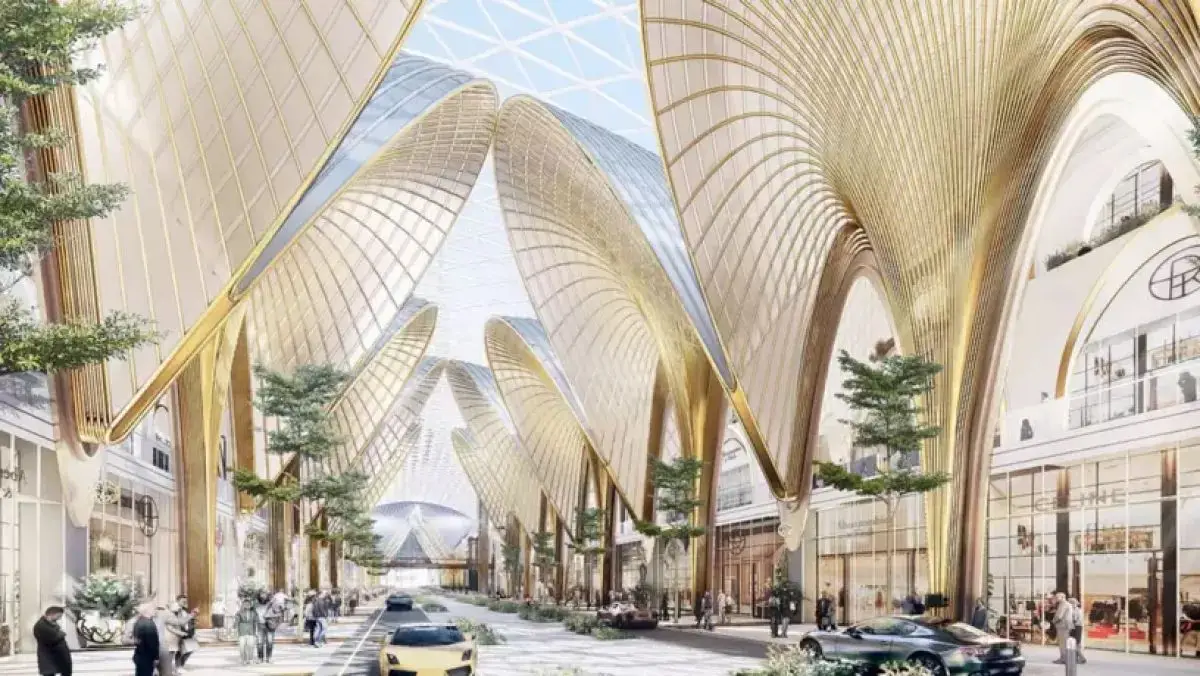
- Core concept: covered, walkable streets with temperature-managed micro-climate for year-round comfort
- Signature attractions: large entertainment cluster (e.g., Chinatown, ice park, rooftop water park, Grand Plazafor events)
- Mobility: indoor EV roads + robotic door-to-door delivery concept
- Residential + green space: ~7.4 million sqm of residential areas and greenery along the Ras Al Khor edge
- Timeline claim: opening discussed as “within three years” (execution milestones will be the real proof)
What it really is
Think of Dubai Square as “a district under a roof”:
- Shopping and entertainment as the anchor
- Residential and public realm as the daily-life layer
- Climate management as the differentiator (summer comfort)
- EV + delivery automation as the logistics layer
The ambition is to make it feel like an all-day, all-season city, not a single-purpose mall.
Why it matters
Climate-controlled destination district →
- Summer demand becomes more resilient (less seasonality in footfall)
- Tourism dispersal beyond the traditional core (new “must-visit” node)
- Hospitality and short-stay uplift around the Creek corridor
- Residential premium for proximity—especially if the area becomes a true 24/7 hub
- Logistics and services growth (operations, delivery ecosystems, staffing)
Real estate lens
A project like this typically boosts prices/rents most where three conditions overlap:
- Walkable access to the destination (not “nearby on the map”)
- Convenient mobility links (easy in/out without traffic pain)
- Limited competing supply during the delivery window
In slower-growth years, the market often rewards time savings + livability, not just branding.
Mini-FAQ
Is this just another mega-mall?
The positioning is broader: it’s mixed-use living + entertainment + public realm with climate-managed streets—closer to an “indoor district” than a conventional mall.
Will it cannibalise other retail areas?
Some redistribution is normal, but the core thesis is “expand the city’s destination footprint” and extend visitor stays, not replace everything.
What’s the biggest execution risk?
Timeline and “experience quality.” Scale alone doesn’t make a destination—repeat visitation does.
What’s the most interesting innovation?
Climate-managed urban streets + EV/robotic logistics integrated into the built environment.
Ultra-quotable version
Dubai Square is planned as an AED 180B mega project in Dubai Creek Harbour—an “indoor city” with a managed micro-climate, major entertainment anchors, and EV-first mobility. If executed as promised, it won’t just add retail space—it can create a new 24/7 destination node that shifts tourism flows and strengthens housing demand around the Creek corridor.
FAQ
What are the key takeaways?
This analysis provides data-driven insights on UAE real estate pricing, transaction volumes, and emerging opportunities for investors and buyers.
How does this affect property buyers and investors?
Understanding macro-economic factors, regulatory changes, and market dynamics helps make informed investment decisions in the UAE property market.
What is the outlook for UAE real estate?
The UAE real estate sector continues to demonstrate resilience with sustained international demand, particularly in premium waterfront and branded residence segments.
How can Al Huzaifa Properties help?
As an authorized developer sales partner, Al Huzaifa Properties offers direct access to off-plan projects with competitive pricing and exclusive broker incentives. Contact us for personalized consultation.
Related Articles
- Dubai Is Still the Region’s Safe Haven. Here’s the Data.
- Dubai AED 1 Billion Business Support Package: Real Estate Market Analysis