Key numbers
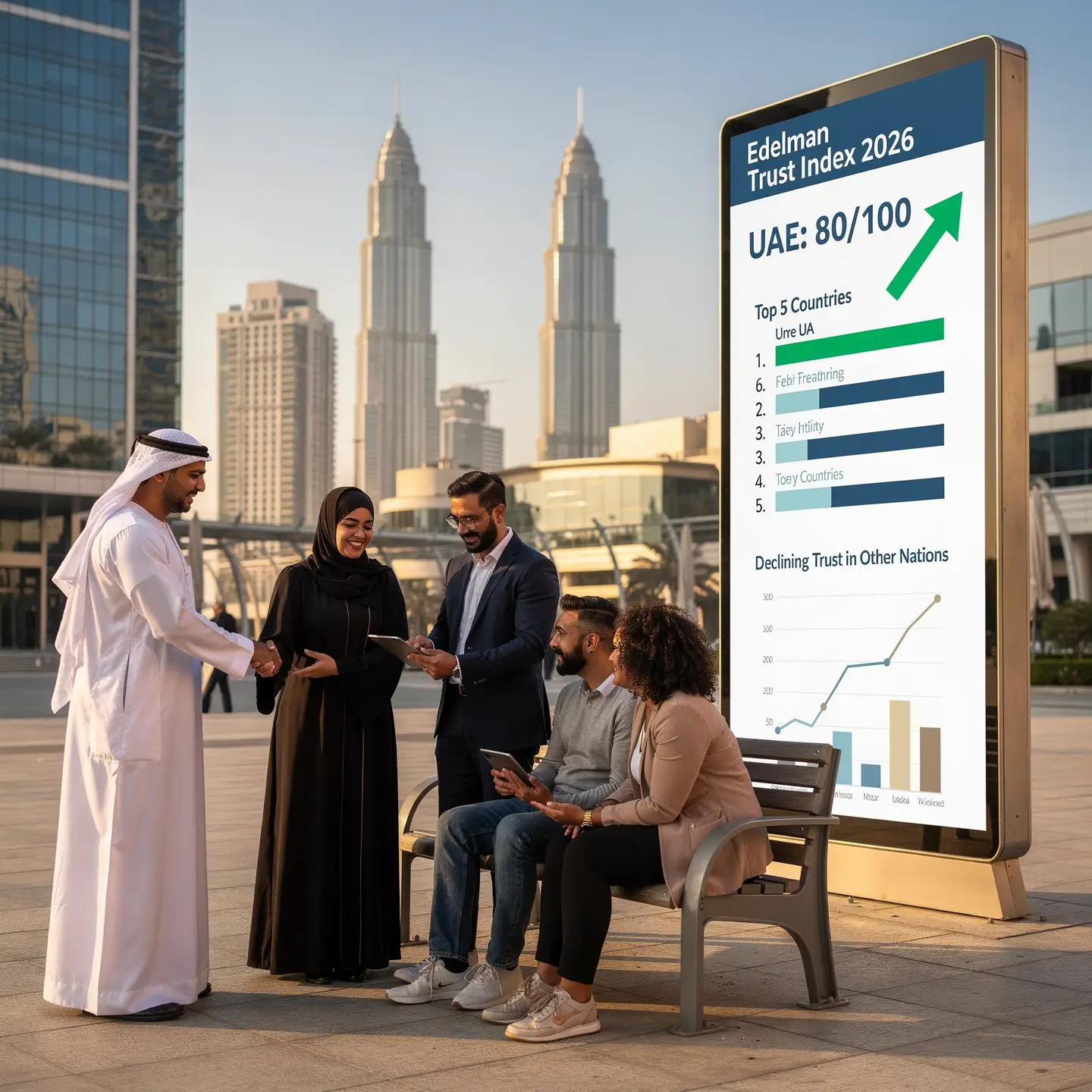
- Top Trust Index (2026): China 80, UAE 80, India 74, Indonesia 73, Saudi Arabia 73. (edelman.com)
- Lower-trust developed markets (examples in 2026 list): U.S. 47, South Korea 46, Spain 45, Germany 44, UK 44, France 42, Japan 38. (edelman.com)
- “Insularity” headline: 70% globally are hesitant or unwilling to trust someone who is different from them. (edelman.com)
- Income-based trust inequality: the Trust Index gap between high vs low income is 16 points (2026), shown as a key trend in the report. (edelman.com)
- Methodology: 33,938 respondents across 28 countries, fieldwork Oct 25 – Nov 16, 2025. (edelman.com)
What a high trust score usually reflects
Edelman’s Trust Index is an average of trust across business, government, media, and NGOs—so top performers typically share three traits:
- Predictability (low “surprise risk” in rules and services)
- Delivery (visible competence in infrastructure, safety, healthcare, digital services)
- Shared direction (a narrative that people can align around—reducing polarization) (edelman.com)
The bigger global story: trust is becoming “tribal”
The 2026 theme is that people are retreating into familiar circles. The report quantifies this as 70% having an insular trust mindset (hesitant/unwilling to trust those different from them). In that environment, countries that feel stable and functional often gain an advantage in perceived trust and attractiveness. (edelman.com)
Policy moves that build and protect trust
If you want a concrete answer to your closing question (“what policies matter most?”), these tend to be the highest-impact levers:
1) Service reliability
- Fast, consistent public services (permits, visas, healthcare access, dispute resolution)
- Clear standards, measurable KPIs, and public reporting
2) Fairness + mobility
- Policies that reduce the “rigged system” feeling (cost-of-living relief, housing access, reskilling)
- Visible pathways for people to progress (especially for lower and middle income groups) (edelman.com)
3) Transparent rule-making
- Predictable regulation, consistent enforcement
- Clear communication during changes (avoid uncertainty shocks)
4) “Trust brokering” institutions
Edelman’s framework emphasizes bridging divides—because insularity stalls progress. Policies that reward cross-group cooperation (workplace norms, education, community programs) matter more when polarization rises. (edelman.com)
5) Media & information integrity
- Anti-disinformation capacity
- Higher standards for official communications (timely, factual, consistent)
Ultra-quotable version
The UAE tops the 2026 Edelman Trust Barometer with a Trust Index of 80, tied with China, ahead of India (74) and Indonesia/Saudi (73). The standout global trend is “insularity”: 70% say they’re hesitant or unwilling to trust people who are different from them, which makes stable, high-delivery governance and predictable systems even more valuable. (edelman.com)
FAQ
What are the key takeaways?
This analysis provides data-driven insights on UAE real estate pricing, transaction volumes, and emerging opportunities for investors and buyers.
How does this affect property buyers and investors?
Understanding macro-economic factors, regulatory changes, and market dynamics helps make informed investment decisions in the UAE property market.
What is the outlook for UAE real estate?
The UAE real estate sector continues to demonstrate resilience with sustained international demand, particularly in premium waterfront and branded residence segments.
How can Al Huzaifa Properties help?
As an authorized developer sales partner, Al Huzaifa Properties offers direct access to off-plan projects with competitive pricing and exclusive broker incentives. Contact us for personalized consultation.
Related Articles
- Dubai Is Still the Region’s Safe Haven. Here’s the Data.
- Dubai AED 1 Billion Business Support Package: Real Estate Market Analysis