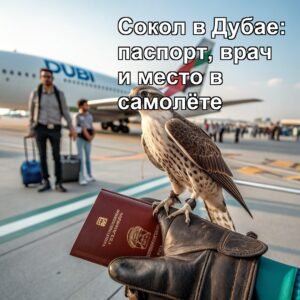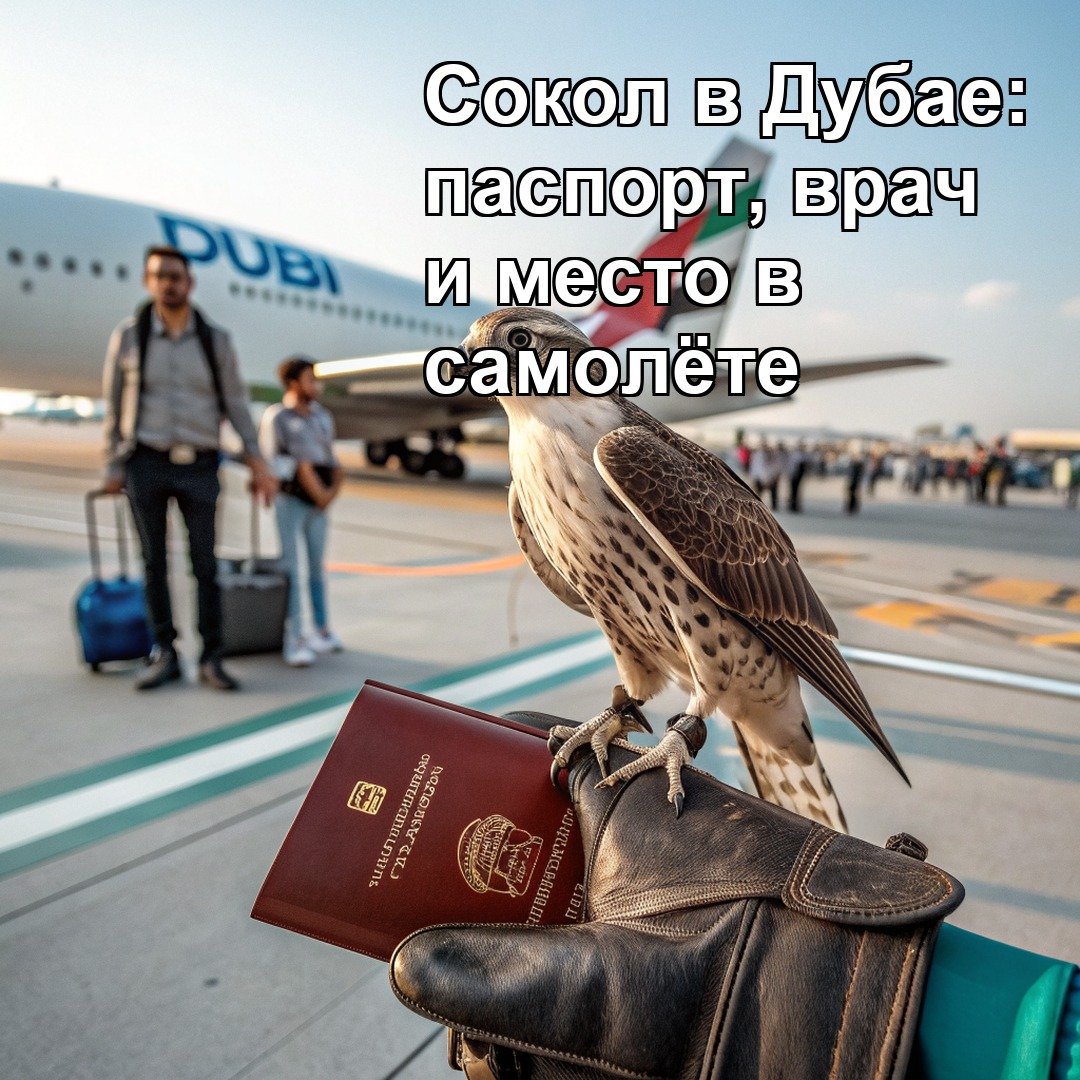
Fear of heights runs deep in falcons, so trainers cure it in the cargo hold of an aircraft. A young hunting bird rides in a cabin seat, hooded and calm, on domestic flights across the UAE, its stress trained down flight by flight until turbulence barely registers. That single fact says more about how this country treats falconry than any tourism slogan could.
The UAE issued its first falcon passport in 2002, and the document still works the way it did then: a photo page, a leg-band microchip number, an owner’s name, entry and exit stamps every time the bird leaves or returns to the country. Every falcon flying internationally with its owner carries one. Airlines allow a bird per passenger in the cabin, hooded and tethered to a perch or a gloved wrist, and airport staff who once found this unusual now process it as routine paperwork.
Why a hospital exists for a hunting bird
Abu Dhabi’s Falcon Hospital opened in 1999 and now treats somewhere between 8,000 and 11,000 birds a year, depending on the season and outbreaks of common ailments like bumblefoot and respiratory infections. It runs an endoscopy unit, an intensive care ward, and an on-site pharmacy stocked for avian medicine specifically, not adapted from general veterinary supply. A falcon with a feather infection gets the same diagnostic rigor as a falcon with a fractured wing.
Scale that against the population it serves. The UAE is home to an estimated 40,000 falcons, and demand for treatment is steady enough that private falcon clinics have opened in Dubai and Al Ain alongside the government-run hospital in the capital. That is not a hobbyist’s veterinary sideline. It is infrastructure, built and funded the way a country builds infrastructure for anything it considers essential.
A sport with a seat on the UN’s cultural registry
Falconry earned a spot on UNESCO’s Representative List of the Intangible Cultural Heritage of Humanity in 2010, one of the few living traditions on that list still practiced daily rather than preserved as ceremony. Reconciling that heritage status with a skyline of glass towers is less of a contradiction than it looks. The UAE built its wealth on a desert economy where falconry was a survival skill, hunting houbara bustard for food, before oil money turned it into a symbol the state actively protects through breeding programs, veterinary infrastructure, and export documentation.
The passport system solves a specific problem: distinguishing a captive-bred, legally owned falcon from one taken illegally from the wild. CITES, the international treaty governing trade in endangered species, requires this kind of paperwork for falcon species because wild populations, particularly the peregrine falcon, faced serious pressure from unregulated trapping and export through the late twentieth century. A passport that tracks a bird’s breeding origin and ownership history is a conservation tool wearing the shape of a travel document.
What buyers evaluating the UAE should take from this
Institutions here build systems for things worth protecting long after the initial investment has paid off, whether that is a bird, a coastline, or a piece of property. A country that tracks a falcon’s medical history with the same rigor it applies to breeding records and export permits tends to apply that same instinct to other asset classes: title registries, escrow protections, regulatory oversight on new developments. The falcon passport is a narrow example of a broader pattern our team watches for when we assess where regulatory infrastructure is mature enough to protect an owner’s interest over time, not just at the point of sale.
None of that makes falconry a real estate story. It is a cultural one, and the UAE treats it as seriously as it treats its economic diversification. What is worth noting is the consistency: a government that builds a dedicated hospital, a national veterinary specialty, and an international documentation system for a hunting bird is a government that does not treat infrastructure as optional once it decides something matters.
FAQ
Does every falcon in the UAE need a passport?
Only falcons traveling internationally with their owners are required to carry one. Birds that stay within the UAE for hunting or falconry displays do not need the document, though many owners register them regardless for medical and ownership records.
How many falcons does the Abu Dhabi Falcon Hospital treat each year?
The hospital treats an estimated 8,000 to 11,000 falcons annually, making it one of the busiest specialized avian medical facilities in the world.
Why do falcons fly in the passenger cabin instead of cargo?
Falcons are trained from a young age to tolerate air travel calmly, and airlines permit hooded, tethered birds in the cabin because cargo holds carry temperature and pressure risks unsuitable for a live raptor.
When did UNESCO recognize falconry as cultural heritage?
UNESCO added falconry to its Representative List of the Intangible Cultural Heritage of Humanity in 2010, recognizing it as a living tradition practiced across multiple countries, including the UAE.
Is falconry connected to UAE real estate or investment in any way?
Not directly. This is a cultural and heritage topic. Our team covers it because the same institutional habits, careful documentation, dedicated infrastructure, long-term protection of valued assets, are patterns worth recognizing across every sector in the UAE, including property.
Do falcons still hunt in the wild in the UAE?
Traditional falconry in the UAE historically targeted houbara bustard, and regulated hunting expeditions continue today, though many falcons are now also flown for demonstration, sport, and breeding programs rather than subsistence hunting alone.