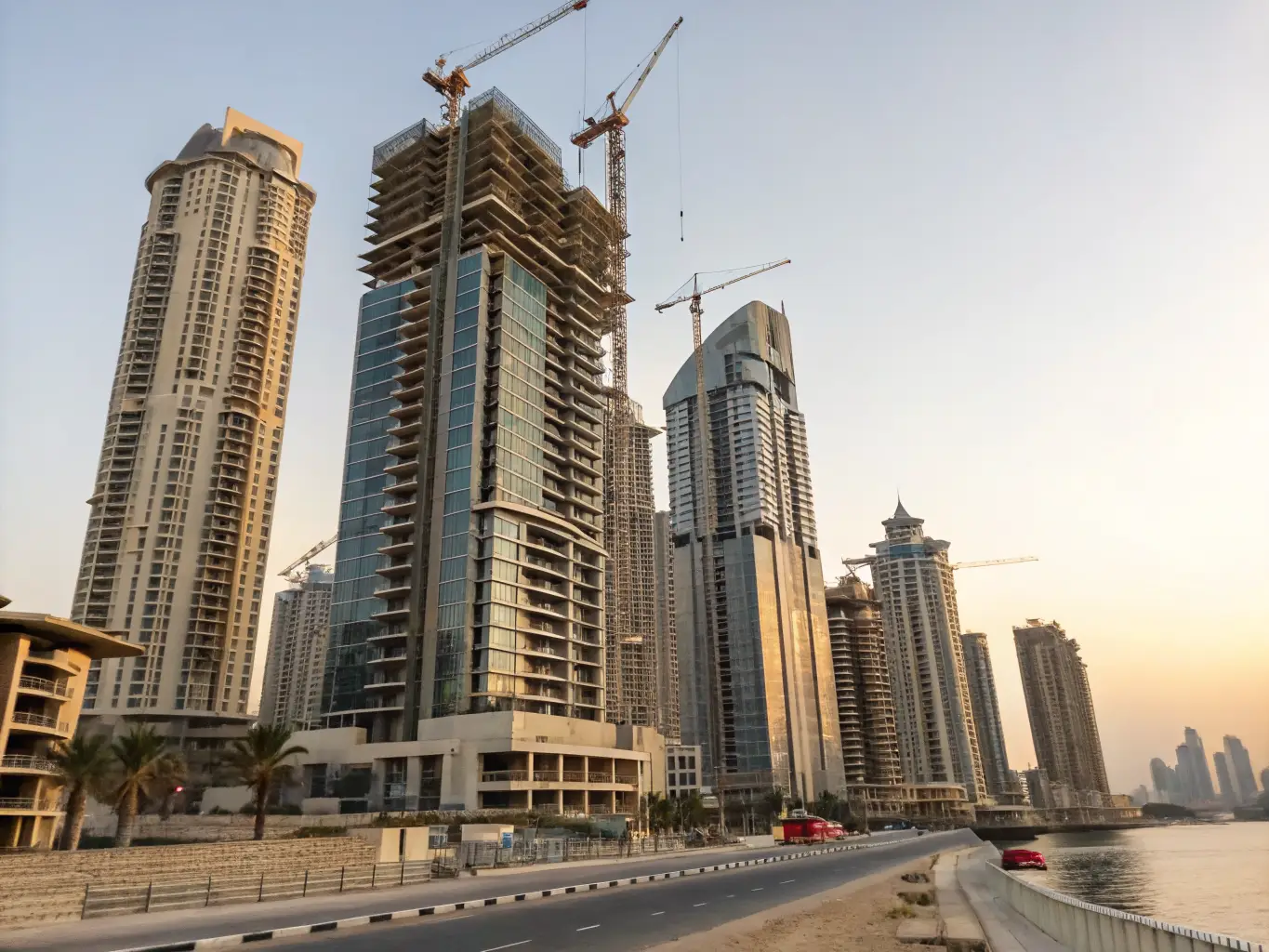
Understanding Off-Plan Property Investment in the UAE
When investing in off-plan properties across the UAE—from Dubai and Abu Dhabi to emerging markets like Ras Al Khaimah—one of the most critical decisions you’ll make is choosing the right payment plan. The payment structure you select directly impacts your cash flow, investment timeline, and overall returns.
At UAE Property, we’ve guided thousands of international investors through this decision. This guide breaks down the three most common payment structures used by developers, helping you understand which aligns best with your financial goals and investment strategy.
What Are Off-Plan Payment Plans?
Off-plan payments are installment arrangements structured by developers to allow buyers to spread the cost of a property over the construction period and beyond. Rather than paying the full purchase price upfront, you make periodic payments tied to construction milestones—or in some cases, deferred entirely until after the property is handed over to you.
Why Payment Plans Matter
- Cash flow flexibility — preserve capital for other investments
- Currency hedging — lock in prices early while spreading currency exposure
- Investment leverage — control multiple properties with lower upfront capital
- Risk distribution — reduce exposure if market conditions shift during construction
The 60/40 Payment Plan: Balanced Approach
The 60/40 plan requires 40% payment upon signing the initial contract, with the remaining 60% due at or near handover (final completion).
How 60/40 Works
Payment breakdown:
- 40% on contract signing — typically within 30–60 days of agreement
- 60% on handover — paid when the developer completes the property and issues the title deed
Advantages
- Moderate upfront commitment reduces financial strain for many investors
- Demonstrates serious intent to the developer (higher deposit builds confidence)
- Majority of capital preserved for other investments or contingencies
- Common across major UAE developments, offering investor protection under RERA guidelines
- Familiar structure with predictable payment milestones
Challenges
- Requires substantial liquid capital (40% of purchase price) at contract stage
- Second payment (60%) arrives with short notice, requiring careful cash planning
- Less negotiating power than post-handover plans (developer has more capital earlier)
- Currency exposure spread across two distinct payment windows
Best For
- Seasoned investors with strong liquidity
- Multi-property portfolios where you’re spreading investment risk
- Properties in established developments with proven delivery track records
- International investors seeking balanced payment terms
The 80/20 Payment Plan: Minimal Upfront Commitment
The 80/20 plan flips the balance: only 20% is due upon signing, with 80% deferred to handover.
How 80/20 Works
Payment breakdown:
- 20% on contract signing — typically required within 30–60 days
- 80% on handover — final payment coinciding with project completion
Advantages
- Lowest upfront capital requirement (20% only) preserves maximum liquidity
- Ideal for investors managing multiple concurrent projects
- Strong negotiating position—if issues arise pre-delivery, you’ve paid minimal amount
- Popular for large-value properties where absolute capital preservation is strategic
- Allows reinvestment of remaining 80% into additional properties or liquid assets during construction
Challenges
- Requires significant liquid funds available at handover—plan for this 18–36 months in advance
- Developer pricing may be slightly higher to offset their financing costs
- Less commonly offered than 60/40; fewer developments provide this attractive term
- Requires disciplined savings approach to ensure funds are available when due
- Concentrated currency risk at final payment date
Best For
- International investors building large portfolios
- Cash-flow-focused investors with anticipated income arriving at handover
- Investors in premium/luxury segments where capital flexibility is critical
- Portfolio diversifiers seeking exposure across multiple emirates
Post-Handover Payment Plans: Maximum Flexibility
Some developers offer payment plans that extend beyond handover, allowing buyers to pay a portion of the purchase price after receiving their keys. These rare but valuable plans structure payments across 5–10 years post-completion.
How Post-Handover Plans Work
Payment breakdown:
- 20–30% on signing — secures the property
- Remainder financed over 5–10 years post-handover — monthly or annual installments, typically interest-free through developer financing
Advantages
- Minimal impact on current cash flow—property generates rental income while you pay
- Ideal for buy-to-rent investors (rental yield covers payment obligations)
- Longest timeline to accumulate capital needed
- Often the most affordable effective price (equivalent to 0% financing)
- Aligns payment obligations with income-generating property
Challenges
- Availability limited—only select luxury and premium developments
- Tied to developer’s financial stability (if developer faces issues, financing may change)
- Less liquidity for reinvestment during multi-year payment period
- Requires rental income stability to ensure payments are met
- Long-term commitment reduces flexibility to exit or restructure
Best For
- Buy-to-rent investors planning immediate tenancy post-completion
- Long-term wealth-building portfolios
- Investors confident in UAE rental yield sustainability
- Properties in high-yield locations (Business Bay, Dubai Marina, JVC)
Comparison: 60/40 vs. 80/20 vs. Post-Handover
| Aspect | 60/40 | 80/20 | Post-Handover |
|---|---|---|---|
| Upfront deposit | 40% | 20% | 20–30% |
| Handover payment | 60% | 80% | None |
| Post-handover commitment | None | None | 5–10 years |
| Liquidity preserved | Moderate | High | Very High |
| Developer risk | Lower | Higher | Highest |
| Availability | Very common | Common | Rare |
| Ideal investor type | Balanced | Capital-focused | Rental-focused |
Key Considerations When Choosing a Payment Plan
1. Your Investment Strategy
- Capital appreciation investors may favor 80/20 to preserve capital for multiple properties
- Rental yield investors should model post-handover plans tied to expected rental income
- Portfolio builders benefit from 80/20 flexibility across multiple markets
- Owner-occupiers often find 60/40 sufficient for single-property purchases
2. Developer Track Record
Check with UAE’s Real Estate Regulatory Agency (RERA) for:
- On-time project delivery history
- Escrow account compliance and transparency
- Any regulatory sanctions, disputes, or disputes resolution outcomes
- Financial standing and parent company backing
Established developers like Emaar, Damac, Azizi, and Sobha have strong delivery records, making even 80/20 payments lower-risk compared to emerging or smaller developers.
3. Currency and Exchange Risk
If paying from a non-AED currency:
- 60/40 spreads payments and currency exposure across two windows
- 80/20 concentrates currency risk at handover (larger second payment, typically 18–36 months away)
- Post-handover extends exposure over years, creating ongoing FX volatility
- Consider forward contracts or hedging for large amounts to lock in exchange rates
4. Financing and Mortgages
- UAE banks typically finance 80% of property value post-handover
- Early 40% payments (60/40 plans) may not qualify for concurrent financing
- Banks rarely provide bridging loans for the final 80/20 payment before handover
- Confirm mortgage availability before committing to payment plan
- Some banks offer developer-linked financing packages with specific terms
FAQ: Off-Plan Payment Plans
Q: Can I negotiate the payment plan with the developer?
A: Yes, especially for large purchases (AED 2M+) or multi-unit deals. Developers often have flexibility, particularly during off-peak sales periods or in competitive markets. Our team can advocate on your behalf and leverage our relationships with major developers.
Q: What happens if the developer delays handover?
A: RERA regulations protect investors. Your funds are held in escrow accounts, and developers face penalties for delays. We recommend reviewing the contract’s force majeure and delay compensation clauses carefully before signing.
Q: Is 80/20 riskier than 60/40?
A: Not necessarily with established developers. The risk is liquidity—you must have 80% available at handover. With tier-one developers and RERA oversight, payment security is equally strong; the difference is cash flow planning, not developer risk.
Q: Can I use a mortgage to cover the 80/20 final payment?
A: Typically yes, with most UAE banks financing 80% of the property’s final appraised value post-handover. However, confirm approval before signing—some banks have stricter criteria for off-plan purchases, and approval timing must align with your handover date.
Q: Are post-handover plans available in all emirates?
A: No, they’re primarily offered in Dubai and Abu Dhabi’s luxury segments (Downtown, Marina, Jumeirah, Downtown Abu Dhabi). Availability in Northern Emirates (Ras Al Khaimah, Ajman, Fujairah) is more limited. We can source properties with post-handover plans upon request.
Conclusion
Your choice of payment plan should align with your financial position, investment goals, and risk tolerance. The 60/40 plan offers balance for traditional investors, 80/20 maximizes flexibility for portfolio builders, and post-handover plans reward patient, cash-flow-focused investors.
At UAE Property, we partner with developers offering all three structures, ensuring you have genuine choice—not just the one plan a single developer imposes. Our investment advisory team is ready to model cash flow scenarios, assess developer risk, analyze currency exposure, and recommend the optimal payment structure for your portfolio.
Ready to explore off-plan properties with the right payment plan for you? Contact our investment team today to discuss your strategy and review available opportunities across Dubai, Abu Dhabi, and beyond.