
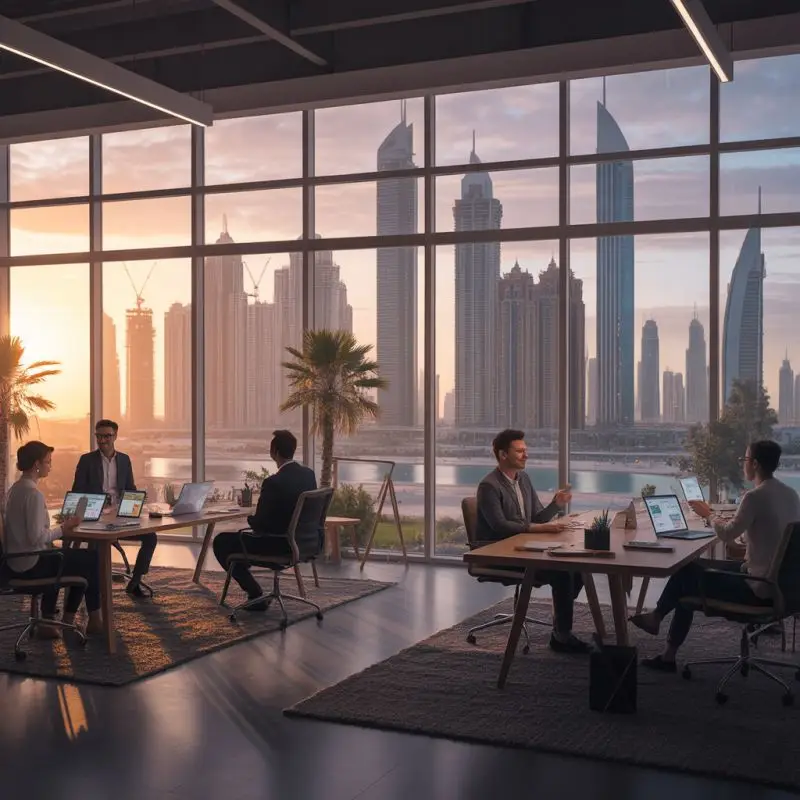
Key takeaways
- Remote Work Visa makes it easier for freelancers and founders to base in Dubai short-term or for a year.
- Nomads optimise for “zero commute”: short-term housing + workspace within the same neighborhood.
- Co-working and co-living demand rises because it matches short-stay lifestyles (community + services + flexibility).
- Rental pressure is strongest in districts that combine: lifestyle + connectivity + inventory suited to short stays (furnished, serviced).
- For investors, the opportunity is in furnished, well-managed units and flexible-use real estate, not “any apartment.”
Why it’s happening
Visa accessibility + lifestyle + infrastructure →
- more short-stay professionals choose Dubai as a base
- demand shifts toward monthly rentals and serviced inventory
- co-working grows near residential clusters
- rents rise where supply of flexible inventory is tight
- investors and developers respond with more furnished units, hotel-style management, and co-living formats
Real estate lens: where the opportunity really is
What tends to perform better
- Furnished units with professional management
- Buildings that allow short-term stays (where permitted)
- Areas with walkable access to: cafés, gyms, retail, transport, co-working
What tends to underperform
- Units with high friction for short stays (poor management, slow maintenance)
- Locations where “work + life” isn’t convenient (long commutes, weak amenities)
- Buildings with strict policies that make flexibility impossible
Investor checklist
Before buying for the “nomad” theme, confirm:
- Letting rules (short-term / monthly / operator allowed)
- True furnished demand in that micro-area (not just general rent growth)
- Service charges + management fees vs realistic nightly/monthly income
- Occupancy seasonality (summer vs winter)
- Tenant profile (solo professionals vs couples vs teams) and unit layout fit
Mini-FAQ
Do digital nomads really move rental markets?
In specific districts and building types, yes—especially where supply of furnished, flexible units is limited.
Is co-working demand linked to housing demand?
Strongly. The winning neighborhoods are those where people can live and work within a short walk or quick ride.
Is this a long-term trend?
It can be, as long as visa policy, safety, infrastructure, and community ecosystems remain attractive compared to competitor cities.
Ultra-quotable version
Dubai’s Remote Work Visa is accelerating the city’s appeal to digital nomads, and the immediate market signal is rising demand for flexible living: co-living, co-working, and furnished monthly rentals. The biggest winners are neighborhoods and buildings that enable a “work-near-home” lifestyle with strong management and low friction for short stays.