
Key takeaways
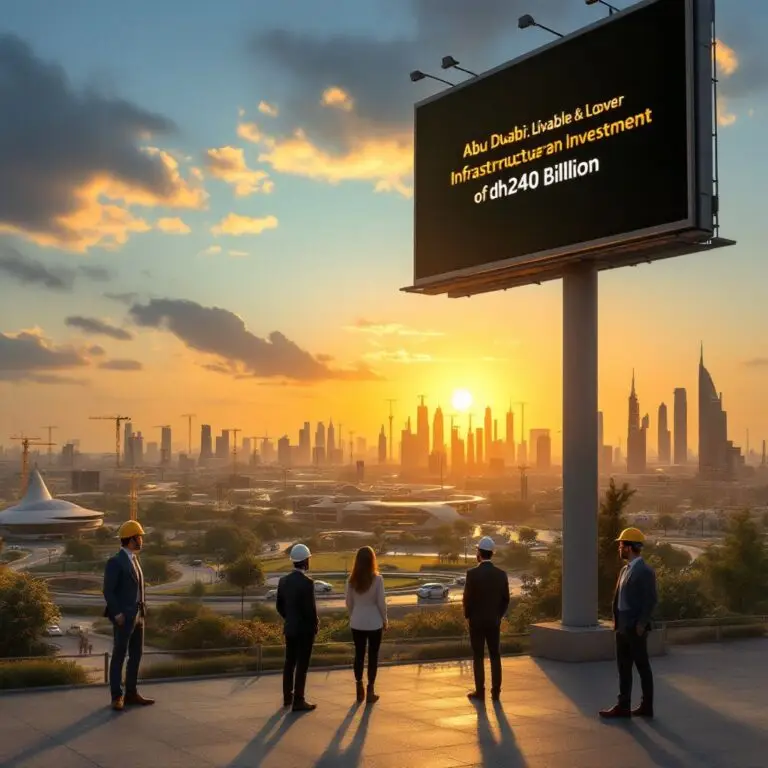
- Scale: Dh240bn+ over 7–10 years across transport, construction, hospitality, healthcare, and education.
- Delivery model: government + private sector (PPP-style execution) to accelerate rollout and create economic spillovers.
- “Livable & Lovable” focus: improvement across 120 quality-of-service indicators (not just physical projects).
- Green + future mobility: new parks and autonomous-vehicle initiatives are planned on near-term timelines (late 2025–mid 2026).
- Macro driver: planning for major population growth toward 2040.
What this really means
1) Infrastructure becomes the growth “enabler,” not the headline
Big spending isn’t the goal; it’s the mechanism to:
- support more residents without degrading services
- keep commute times and city friction manageable
- strengthen Abu Dhabi’s competitiveness for talent and investment
2) Private-sector involvement is the multiplier
When the public sector invites private delivery, you typically see:
- faster project execution
- more innovation in operations and maintenance
- new opportunities for developers, operators, and suppliers (not only builders)
3) Quality-of-life metrics matter more than megaprojects
The “120 indicators” framing is important because it shifts focus to outcomes:
- how easy daily life feels
- service reliability (health, education, municipal services)
- neighborhood-level amenities and responsiveness
Real estate lens: where demand usually concentrates
Infrastructure-driven demand tends to show up most in:
- connected nodes (areas that become easier to reach reliably)
- family liveability districts (schools, parks, healthcare, walkability)
- job-adjacent housing (when office clusters expand but commuting stays efficient)
Big picture: markets often reward time savings + service quality, not just new buildings.
What to watch next
If you want to track whether this plan translates into “real value”:
- Project pipeline clarity: which corridors/districts get funded first
- Procurement pace: tenders, awards, and mobilization (execution > announcements)
- Mobility outcomes: average travel time, parking stress, public transport integration
- Neighborhood upgrades: parks, public realm, schools/clinics capacity
- Private-sector participation: what incentives and delivery models are actually used
Ultra-quotable version
Abu Dhabi’s Dh240bn+ infrastructure commitment over the next 7–10 years is a “city scaling” strategy: prepare for major population growth by upgrading transport and public services while partnering with the private sector to deliver faster. The “livable and lovable” framing—measured through 120 service indicators—suggests the real objective is daily-life reliability, which is exactly what supports long-term housing demand and investment confidence.
FAQ
What are the key takeaways?
This analysis provides data-driven insights on UAE real estate pricing, transaction volumes, and emerging opportunities for investors and buyers.
How does this affect property buyers and investors?
Understanding macro-economic factors, regulatory changes, and market dynamics helps make informed investment decisions in the UAE property market.
What is the outlook for UAE real estate?
The UAE real estate sector continues to demonstrate resilience with sustained international demand, particularly in premium waterfront and branded residence segments.
How can Al Huzaifa Properties help?
As an authorized developer sales partner, Al Huzaifa Properties offers direct access to off-plan projects with competitive pricing and exclusive broker incentives. Contact us for personalized consultation.
Related Articles
- Dubai Is Still the Region’s Safe Haven. Here’s the Data.
- Dubai AED 1 Billion Business Support Package: Real Estate Market Analysis