
Updated: October 26, 2026
Buying in Ras Al Khaimah (RAK) feels different from buying in Dubai long before the contract is signed. The emirate is smaller, the land department is closer to its market, and the municipality still has a visible hand in how projects look and where they go. A buyer who arrives with Dubai habits tends to overpay in time and underpay in attention. This guide covers the legal frame, the steps, the costs around the price, the districts, and when RAK is the wrong answer.
Can foreigners buy Ras Al Khaimah property, and where?
Yes, but only in designated areas. The RAK Land Department maintains the list of zones where non-citizens can hold freehold or long-lease title, and that list is the first document we open with every buyer. Outside those zones, a foreign buyer may face leasehold structures only, or no route to ownership at all.
In practice, the freehold zones that matter to most international buyers sit around the waterfront and resort developments: Al Marjan Island, Mina Al Arab and Al Hamra Village, the three names that dominate listings. Inland plots and older neighborhoods are largely oriented to local buyers, and often carry conditions a foreign buyer cannot meet.
Two checks come before any viewing. First, confirm the exact plot or building sits inside a freehold zone, using the Land Department's own records, not the brochure. Second, confirm the title type: freehold, usufruct or long lease. These look similar in a sales presentation and behave very differently when you resell, mortgage or inherit.
How does the purchase work, step by step?
The sequence is straightforward once you know who stands where. Skipping a step, or doing it out of order, is where most avoidable problems begin.
Step one: choose the asset type and confirm eligibility. Ready property and off-plan follow slightly different paths, covered below.
Step two: reservation. For off-plan, the developer issues a reservation form and takes a deposit. For ready property, buyer and seller agree terms, usually through brokers on both sides, and sign a memorandum of understanding. A reservation deposit is often the cheapest place to walk away and the most expensive place to discover nobody explained the refund terms.
Step three: due diligence. For a resale, we check the title deed, the absence of mortgages or liens, service charge status and any outstanding payments to the owners' association. For off-plan, we check the developer's registration, the project's approval status and the escrow arrangement for buyer payments. Completion dates remain a developer statement until verified, and we label them that way in our notes.
Step four: the formal sale agreement. In off-plan, this is the sale and purchase agreement tied to a payment plan. In resale, the transfer happens at the Land Department or an approved registration channel, with both parties or authorized representatives present.
Step five: payment and registration. Funds move through the channels the Land Department and the developer's escrow rules allow. After registration, the buyer receives the title deed or, for off-plan, a registered interest in the unit.
Step six: handover and utilities. Ready units transfer with keys, utility connections and the service charge schedule. Off-plan units go through a snagging inspection before acceptance.
Documents to prepare: a valid passport, a residence visa copy if applicable, proof of funds, and, for company purchases, corporate documents with proper attestation. A lawyer or advisor should check the translations and the signing authority before anything is filed.
What do you pay beyond the price?
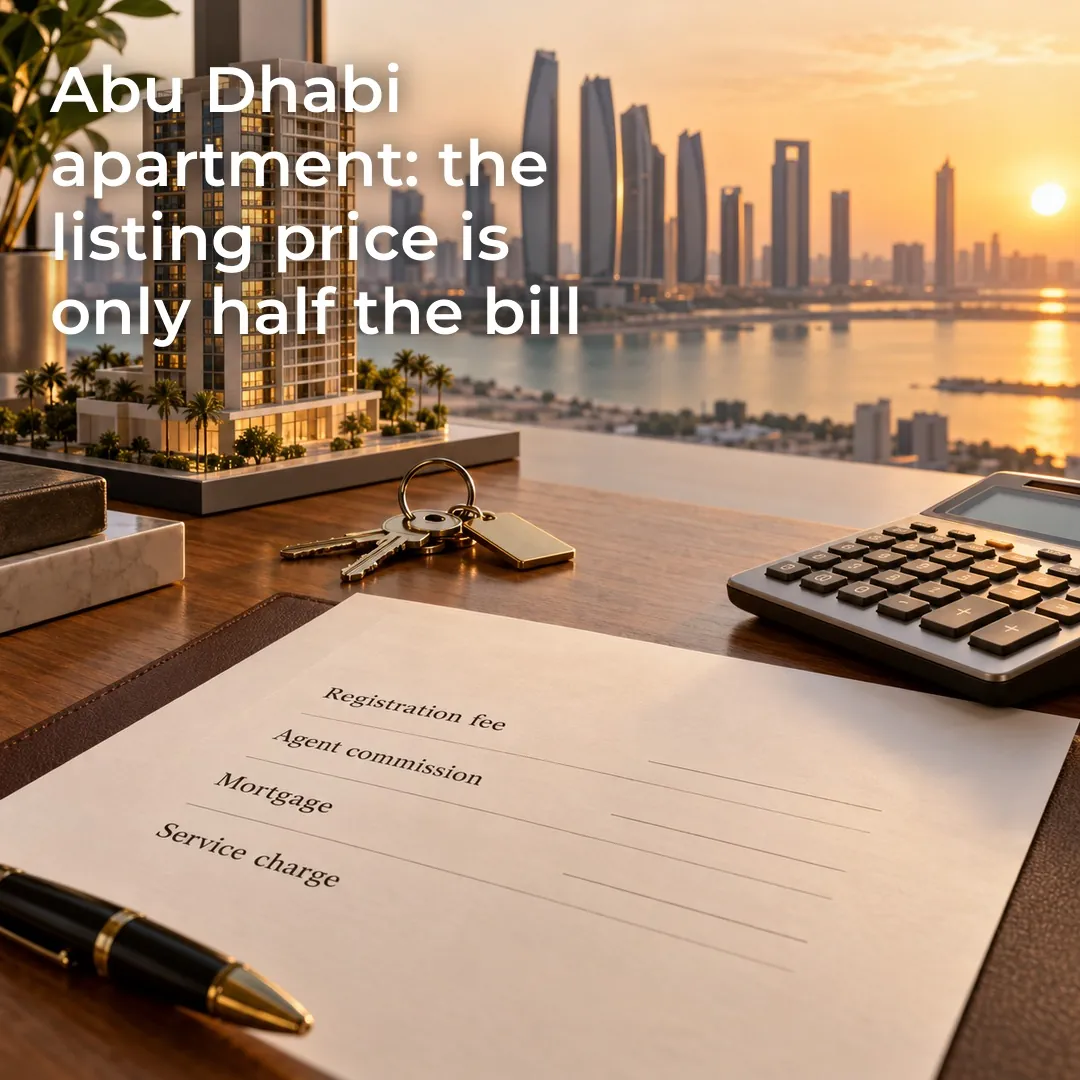
The sticker price is only the start of the budget. Costs around it fall into a few groups, and each has an official schedule that changes over time, so we give them as categories here and tell buyers to confirm the current rate with the RAK Land Department on the day of signing.
Registration and transfer fees. The Land Department charges for title registration or the registration of an off-plan sale. Who pays, buyer or seller or a split, is negotiated and should be written into the agreement.
Agency commission. This is agreed with the brokerage and is separate from the property price. Ask for it in writing before the reservation.
Mortgage costs, if you finance. Banks charge arrangement and valuation fees, some requiring life and property insurance. A bank valuation can come in below the agreed price, changing how much cash you need.
Annual running costs. Service charges at owners' associations, community fees, cooling charges where district cooling applies, and utilities. Resort-style buildings with large amenities carry higher service charges than simple blocks, and those charges continue whether the unit is occupied or not.
Furnishing and handover costs. A bare unit needs to be made rentable, a real line in an investment budget.
Building the budget from these categories, with current figures from the authorities, avoids the common surprise of a purchase affordable at signing but stretched at move-in.
Which district fits which buyer?
RAK is not one market. Three districts cover most of what international buyers consider, and they attract different people.
District | Character | Typical buyer | Main trade-off Al Marjan Island | Man-made island, resort and apartment towers, beach access | Investor, holiday-home owner | Heavy construction activity, supply concentrated in one place Mina Al Arab | Lagoon-front community with mixed apartments and townhouses | Family, long-stay resident | Fewer resort amenities, quieter evenings Al Hamra Village | Established master community with marina, golf and villas | Villa buyer, end user | Older stock in places, higher maintenance on larger homes
Source: uae-prop team analysis based on RAK Land Department and RAK Municipality project records, October 2026.
Al Marjan Island
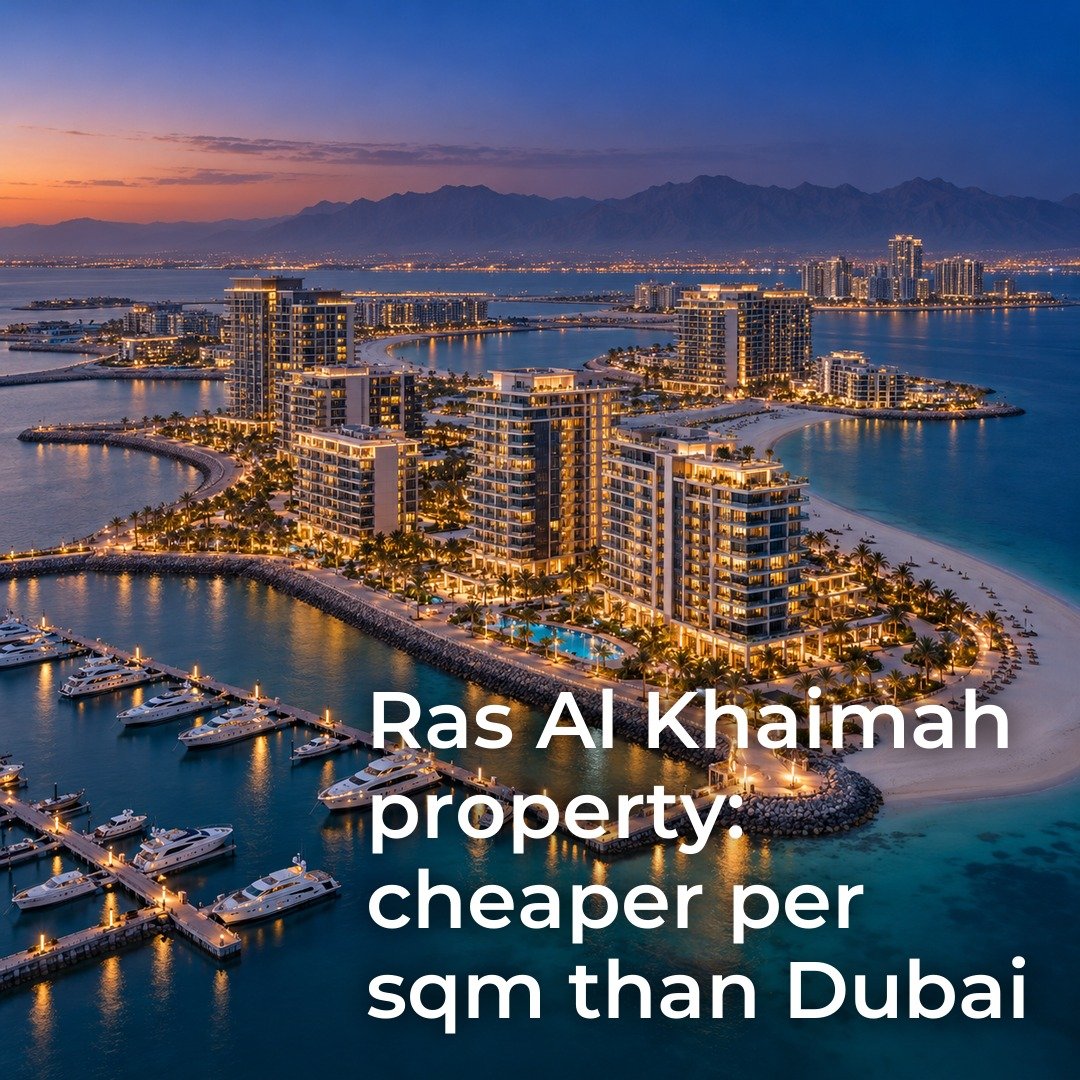
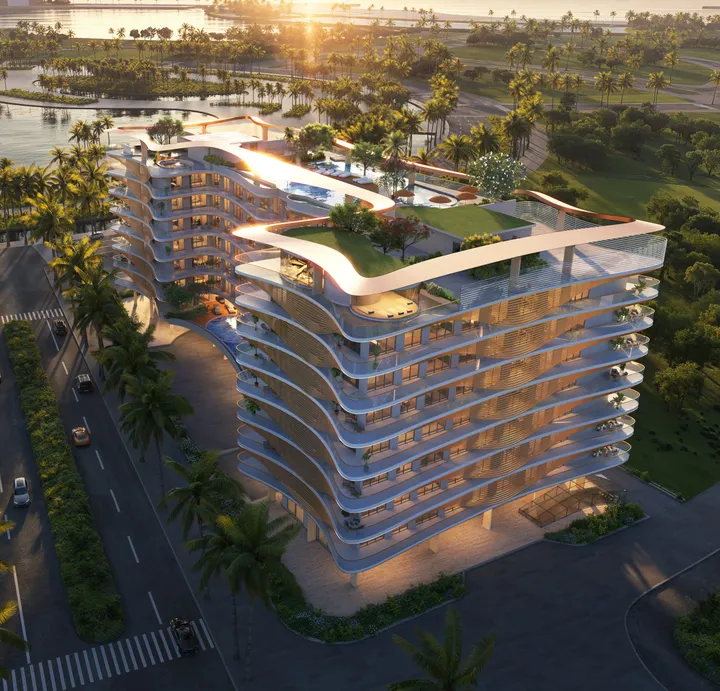
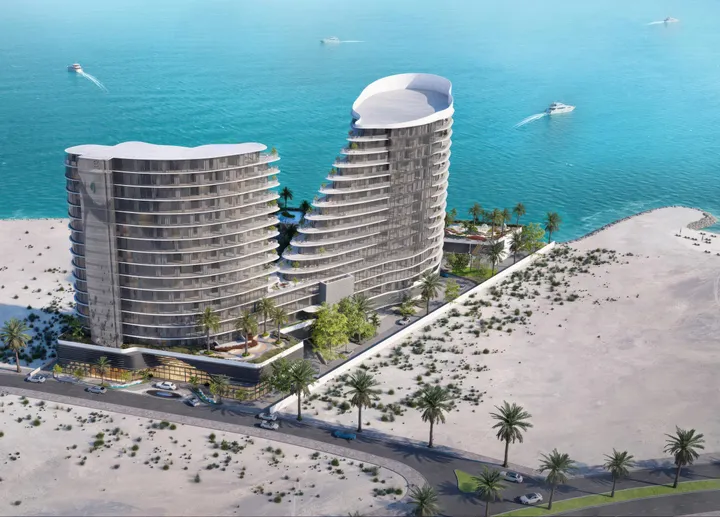
Al Marjan Island is the district most people picture when they search for Al Marjan Island property. Built on reclaimed land with a long waterfront, it holds a large share of new supply. The appeal is clear: sea views, a resort setting, and a tourism and hospitality story that developers and the emirate both promote.
The downside is just as clear. Concentrated supply means a buyer in one tower competes with sellers and renters in the next, and construction continues around early residents. If you plan to rent out, ask the developer and the managing agent how many units in the building are already on the rental market, and how management handles short-term lets.
Mina Al Arab
Mina Al Arab is a lagoon community with a calmer feel. Residents here tend to be families and long-stay owners, and the product mix includes townhouses alongside apartments. It suits a buyer who values daily routine over resort atmosphere. For investors, tenant demand comes mostly from residents, not holiday guests, meaning longer leases and steadier occupancy but a narrower pool.
Al Hamra Village
Al Hamra Village is the older, established master community, with a marina, a golf course and a large stock of villas and apartments. A buyer here gets a lived-in neighborhood with mature landscaping and a known service-charge history, which makes due diligence easier than in a project still under construction. Some buildings show their age, and larger villas carry maintenance costs that scale with plot size. We tell villa buyers to inspect cooling systems, roofs and pools with an independent engineer.
Ready property or off-plan?
Ready property gives a known unit, a visible neighborhood and a rental history you can ask for. The risk sits in the unit's condition and the service charges you inherit. Price negotiation is possible, and the seller's motivation tells you a lot.
Off-plan gives a payment plan, a newer product and often a lower entry point. The risk shifts to delivery: timing, specification changes and the developer's financial position. Completion dates and promised amenities are the developer's statements until the building is handed over. Escrow rules offer protection, but protecting funds does not guarantee the finished product matches the brochure.
We suggest off-plan only to buyers who can wait through delays without financial stress and who have checked the developer's previous deliveries on the ground. For a first purchase in the emirate, a ready unit in an established community removes several unknowns at once.
Who rents, and how easy is it to resell?
Rental demand in RAK comes from several groups: residents who work in the emirate, families who chose RAK for space and quieter living, commuters working elsewhere in the UAE, and holiday guests drawn by the resort offer. Each group wants a different product. A beach-front one-bedroom suits a short-stay guest. A townhouse near schools suits a family on a long lease.
Liquidity is where RAK differs most from Dubai. The market is smaller, so fewer buyers are looking at any given time, and an unusual layout or an unfavorable location can take longer to sell. Prime waterfront stock with a recognized developer name moves more easily than peripheral stock. We advise buyers to think of their exit before the purchase: who would buy this from me, and why.
A local agent's written view on how comparable units have actually traded, not how they are listed, is worth more than any headline growth claim.
What do gaming and resort projects change?
A large gaming and hospitality resort is under development on Al Marjan Island, shaping much of the conversation about prices in the emirate. We separate what is confirmed from what is expectation.
Confirmed: the project has been announced by its developers and the emirate, licensing arrangements have been publicly discussed, and construction activity is visible on the island. Announced timelines are statements by the developers.
Expectation: that the opening lifts nearby prices, brings tourist flows and raises rental demand. These are plausible, and already partly reflected in asking prices. Buyers who purchase on the strength of an opening date carry the risk that the date moves, or that the effect is smaller than marketed.
Our approach is to value a unit as if the resort did not exist, then treat any uplift as a bonus. A property that only makes sense with the resort operating is a bet on one project, a thin base for a long-term holding. We also note proximity to a gaming resort suits some residents and puts off others, so its effect on family demand and resale is not uniform.
How does RAK compare with Dubai and Abu Dhabi?
The cleanest way to describe it: Dubai is deep and liquid, Abu Dhabi is institutional and steady, and RAK is smaller and more tied to its resort and lifestyle story. For a detailed side-by-side we keep a separate comparison in our insights section, linked at the end of this article.
In RAK, buyers usually find more space and sea frontage for the money, a slower pace and less traffic. In Dubai, buyers find a larger tenant pool, a deeper resale market, more transaction data and wider choice in every segment. Abu Dhabi sits between them on liquidity, attracting buyers who value stability and government-linked employment.
When RAK does not suit a buyer:
You need fast resale. The smaller market makes quick exits harder.
You rely on a large tenant pool. Many similar units competing for a limited set of renters will pressure rents.
You want a city lifestyle. Restaurants, offices, universities and cultural life are concentrated elsewhere, and RAK is quieter by design.
You commute to Dubai daily. The drive is possible, but it is a daily commitment, and traffic on the main road affects timing.
You want to buy on the strength of one announced project. As above, this concentrates risk.
What is daily life like?
Life in RAK suits people who like space, beaches and mountains within reach. Families should check school options early, since places and curricula vary by community and not every district has a school nearby. Visit schools, ask about waiting lists, and measure the commute at school hours.
The road to the airport matters for frequent travelers. RAK has its own airport, and Dubai's airports are reachable by road. Test the drive at the times you would actually travel, since an off-peak trip tells you little about a Monday morning.
Cost of living in RAK is generally lower than in Dubai for housing and some services, but it depends heavily on lifestyle, on whether you drive daily to Dubai, and on the service charges of your building. We advise buyers to compare their real monthly spending, not average figures online.
Risks to check before you buy
Title and zone: confirm the freehold zone status and title type on the Land Department's records.
Developer record: look at what the developer has delivered before, in person if you can, and read the escrow and completion terms.
Service charges: ask for the last service charge statement and the reserve fund status in resale buildings.
Supply pipeline: ask what else is being built within sight of your unit. New towers next door change views, noise and rents.
Exit: identify the buyer or tenant group for your unit and check how similar units have traded.
Financing: confirm the bank's valuation and the final mortgage terms before you commit non-refundable money.
Rules and fees: confirm current fee schedules and ownership rules with the Land Department, because they change.
Frequently asked questions
Can foreigners buy property in Ras Al Khaimah?
Yes, in designated freehold or long-lease zones defined by the RAK Land Department. Al Marjan Island, Mina Al Arab and Al Hamra Village are the best known. Check the zone and title type of the exact unit before paying a deposit, since eligibility depends on the plot, not the emirate as a whole.
What is the cost of living in Ras Al Khaimah compared with Dubai?
Housing and many everyday services cost less in RAK, though the result depends on your habits. Service charges, school fees, cooling and fuel for a daily commute to Dubai change the total quickly. Build a monthly budget from real quotes with dated figures, since prices move.
Is Ras Al Khaimah property for sale cheap?
Entry prices are often lower than in comparable Dubai waterfront areas, but a lower price comes with a smaller market and a narrower resale pool. Cheap units far from amenities or in crowded towers can be harder to rent or sell. Compare the total cost of ownership and the exit path, not just the headline price.
Where to go next
Our team keeps a live selection of units across the districts described above. Browse the RAK catalog to see what is currently available, and read the related material below for comparisons and area detail.
Related reading: /emirate/ras-al-khaimah/ and /insights/dubai-vs-rak-property-investment-comparison-2026/
Sources
- RAK Land Department. Rules and registers for foreign ownership and freehold zones. Current edition. Official portal of the publisher. Accessed October 26, 2026.
- RAK Municipality. Planning and project approval records. Current edition. Official portal of the publisher. Accessed October 26, 2026.
- ValuStrat. RAK residential market valuation data. Latest available period. Publisher's official reports. Accessed October 26, 2026.