
Deira Before the Skyline: The Dubai That Never Rebuilt Itself
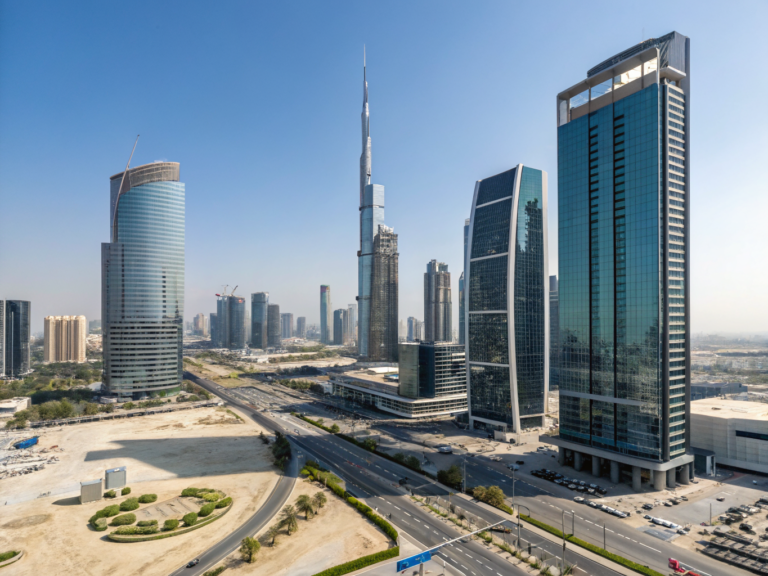
There is a version of Dubai every visitor sees within an hour of landing. Glass towers arranged like a skyline built for a postcard, a mall with an aquarium in it, a promenade lit for photographs. Deira is the other version. It sits directly across Dubai Creek from the modern city, and it has spent the last three decades quietly declining to become part of the skyline story.
Our team spends a lot of time walking clients through Deira not because it is charming, though it is, but because it teaches something the towers cannot: what Dubai actually traded when it decided to build vertical. Deira is what got left behind, and what got left behind turns out to be the part worth understanding.
What the creek separates
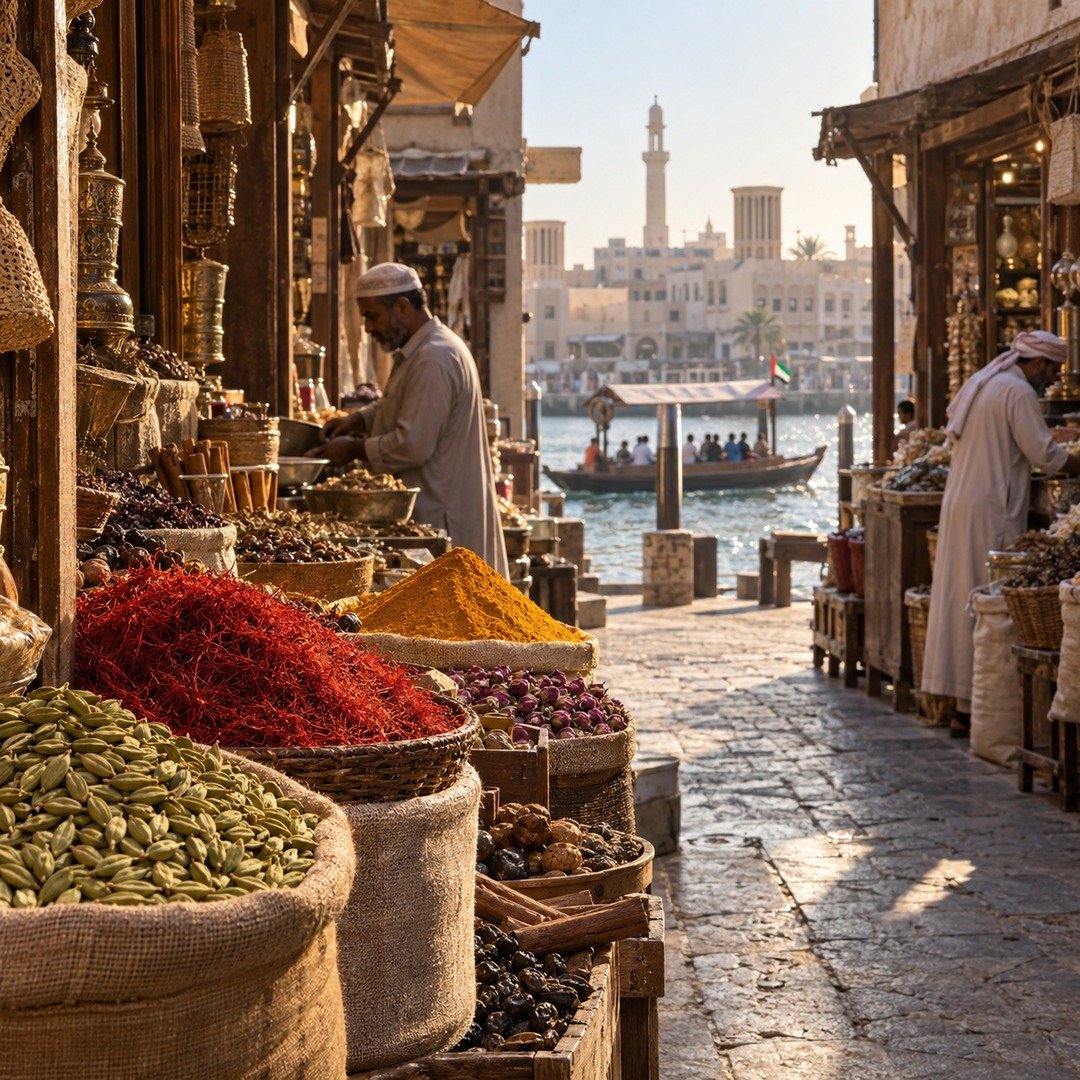
Dubai Creek is a saltwater inlet, and it splits the old city into two trading halves that have functioned this way for well over a century. Deira sits on the northern bank. Bur Dubai sits on the southern one. Long before either bank had a bridge or a tunnel connecting it to the other, abras, small wooden ferries, carried people and cargo across the water for a fare that barely registers as a transaction. They still do. The abra crossing is one of the only places left in the city where the method of getting somewhere hasn't been redesigned since the trade routes that built the port economy were still active.
Stand at the abra dock in the late afternoon and the boats fill the way public transit fills anywhere: commuters, not tourists, moving between two halves of a working city. That is the detail that separates Deira from a heritage district. Heritage districts are curated. Deira is used.
Gold and spice as the original economy
Two markets define the neighborhood's commercial identity, and neither one is decorative.
The Gold Souk is a covered market of narrow lanes lined with shopfronts, and the volume of gold on display in a single afternoon walk is not staged for photographs, it is inventory. Dubai's position as a regional gold trading hub did not start with sovereign wealth funds or free zones. It started with merchants who moved precious metal through this port because the geography favored it: a natural creek harbor positioned between South Asia, East Africa, and the rest of the Gulf.
A few streets over, the Spice Souk runs on a different sensory register entirely. Saffron, cardamom, dried lime, frankincense, sold from burlap sacks and stacked tins, priced by negotiation rather than a fixed tag. Bargaining here is not a tourist performance. It is how the market has set prices for generations, and it rewards patience over confidence.
Both markets share a structural feature worth noting: they were built for merchants, not for shoppers. The layout, the density, the absence of climate-controlled comfort, all of it reflects a commercial logic that predates retail as an experience category.
Why this matters beyond nostalgia
It would be easy to file Deira under "atmospheric old quarter" and move on. Our team resists that framing, and here is the practical reason why.
Understanding how Dubai actually built its economy, port trade, gold arbitrage, spice routes, merchant families operating across the Indian Ocean, reframes everything that came after. The free zones, the real estate booms, the aviation hub status: none of it appeared from nothing. It sits on top of a trading infrastructure that Deira still physically embodies. The creek was the original free zone. The abra was the original logistics network. The souk was the original marketplace before the word got redefined to mean a shopping mall with a theme.
For anyone trying to read this city with any depth, Deira functions as a control group. It shows what Dubai looked like when it was optimizing for trade volume rather than skyline height, and the comparison clarifies both eras rather than romanticizing either one.
A neighborhood that resisted the rebuild
Almost every other district in Dubai has been through at least one complete redevelopment cycle in the last twenty-five years. Deira largely has not, and that is not an oversight. The creek-front markets remain functionally intact because the trade they support, particularly gold and spice wholesale, still runs through them at meaningful volume. Redevelopment would disrupt an economy that is still active, not preserve a museum piece.
That distinction matters. A preserved district freezes a moment in time for display. A working district keeps operating on its own logic, indifferent to whether anyone finds it picturesque. Deira has stayed the second kind, and that is precisely why it reads as more honest than almost anywhere else in the city.
FAQ
Is Deira safe to visit for tourists? Yes. Deira is a dense, active commercial district with heavy foot traffic throughout the day, which in practice makes it comfortable to walk. Standard city awareness applies, as it would in any crowded market district.
What is an abra and how much does it cost to ride one? An abra is a small traditional wooden ferry that crosses Dubai Creek between Deira and Bur Dubai. It has operated as public transport for generations and remains one of the cheapest ways to move between the two banks.
Is the Gold Souk actually cheaper than buying gold elsewhere in Dubai? Pricing in the Gold Souk is negotiable and tied to the day's gold rate plus a making charge that varies by shop. It is worth comparing a few stalls before buying, since bargaining is the norm rather than the exception.
How is Deira different from Bur Dubai? Both sit on opposite banks of the same creek and share the abra crossing. Deira leans more heavily into wholesale trade, gold and spice markets. Bur Dubai carries more of the historic residential architecture and museum-style heritage sites. They read as complementary halves of the same old city rather than competing districts.
Is the Spice Souk worth visiting if I'm not planning to buy anything? Yes. The market functions as a working sensory environment, not just a retail stop, and walking through it costs nothing beyond the time.
Can you still see original architecture in Deira, or has it all been replaced? A meaningful amount of the original low-rise, wind-tower architecture along the creek front has survived, particularly around the souk areas and the historic Al Ras and Al Shindagha-adjacent stretches. It has not been preserved as a museum exhibit. It is still in commercial use, which is a large part of why it still stands.