
Dubai Tests Driverless Pods at Bluewaters: What Buyers Can Read From a Four-Week Trial
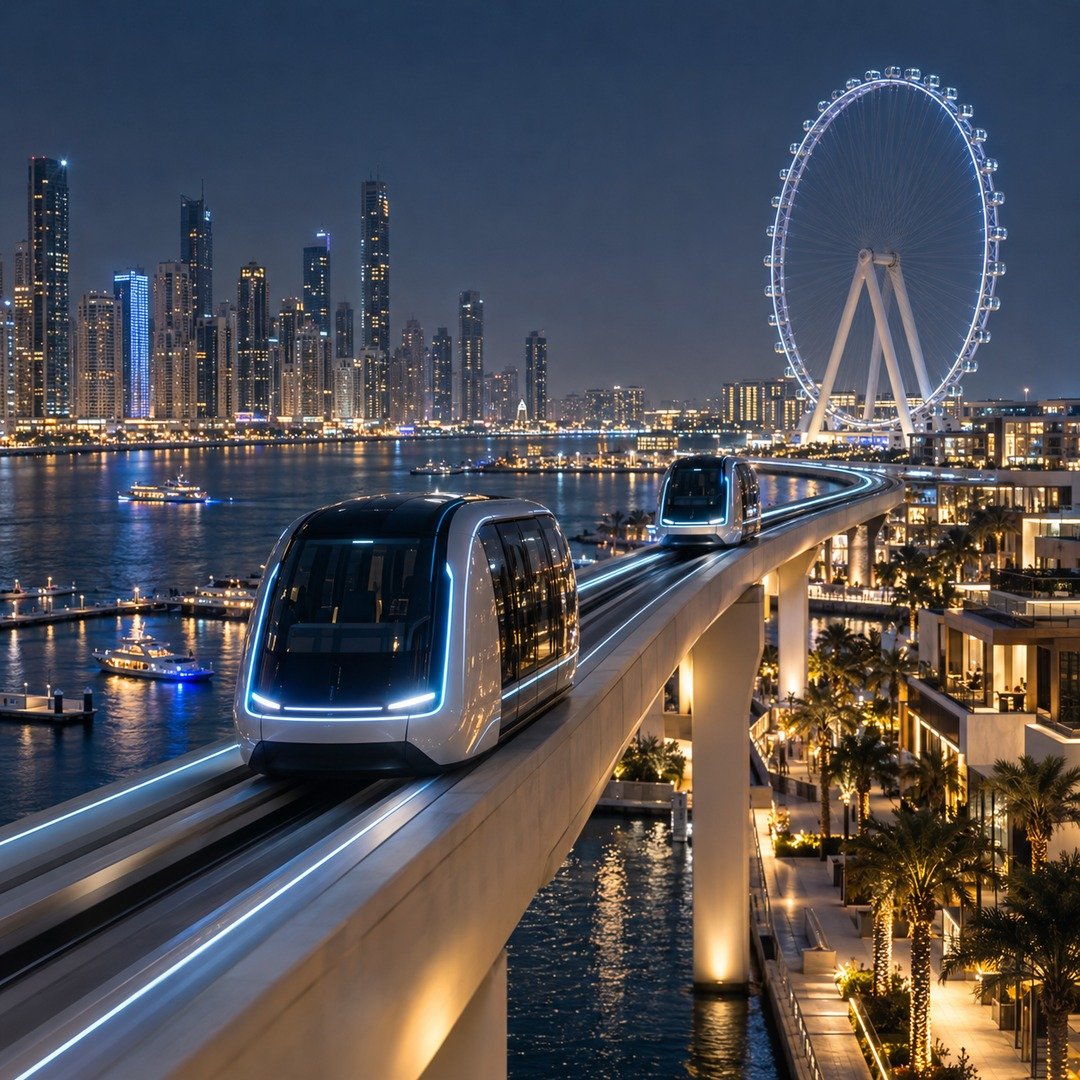
Dubai's Roads and Transport Authority has started a four-week trial of the Glydways automated transit system at Bluewaters Island. Small autonomous electric pods run on dedicated guideways, physically separated from ordinary road traffic. The trial tests one short corridor under controlled conditions, and wider service has not been announced.
For property buyers the useful question is how much weight a transport pilot deserves in a purchase decision. Our team's answer is that it deserves attention as a planning signal and no weight as a pricing factor until routes, funding and timelines are confirmed.
What is actually running
The pods carry four to six passengers, reach up to 50 km/h and have a reported range of up to 250 km per charge. Those figures describe the vehicles. They are specifications, and the trial exists to test whether they hold up in daily operation.
The authority has named its assessment criteria: vehicle and technical-system performance, autonomous driving readiness, safety, reliability, journey times, operational efficiency and passenger experience. Results have not been published. A four-week window is long enough to collect operating data on a single corridor and short enough that it cannot settle questions about peak-season demand, maintenance cycles or integration with the wider network.
The project sits inside a longer programme. In February 2026 the authority signed an agreement with Glydways to launch an automated transit network programme, and the Bluewaters test is being delivered with Dubai Holding, which reportedly provides infrastructure and operational support. Dubai also has a stated target that 25% of transportation trips will be smart and driverless by 2030. Against that target, a pod trial is one of several tools the city is testing.
What is proposed and what is confirmed
The authority has considered a 2.8 km route linking a Metro station with Bluewaters. It has also looked at potential routes serving Jumeirah Village Circle, Dubai Festival City, Business Bay and Mohammed Bin Rashid City. Each of these is a proposal under consideration. None is an approved or operating route.
That distinction decides how a buyer should use the news. A transport concept, a trial, an approved route and a funded, scheduled service are four different stages, and property value responds to the last one. A district named in a feasibility discussion has no confirmed station, no delivery date and no budget line attached to it.
Developers behind the system have said capital costs could be up to 90% lower and operating costs up to 70% lower than comparable transport modes. These are claims from the people building the technology. They do not amount to independently verified project economics, and they say nothing about fares or about what happens to rents and prices around a station.
How first and last mile links affect property
The mechanism behind the interest is straightforward. Many Dubai residential districts sit a few kilometres from a Metro station, which is too far to walk in summer and too short to justify a car trip that ends in a parking search. A small, frequent, driverless shuttle on its own guideway could close that gap. A tenant who can reach a Metro platform in six or seven minutes without a car values the home differently from one who cannot.
Dedicated guideways matter here because they remove exposure to road congestion. A pod that shares a road with traffic inherits its delays. A pod on its own track keeps a predictable journey time, and predictability is what commuters pay for.
Rental demand is where this shows up first. Tenants who commute without a car can widen their search area, and districts with weaker access see a different pool of applicants. Capital values follow only after the connection exists, runs reliably and appears in the daily habits of residents. That sequence takes years, and the property market usually prices it in only once service is visible.
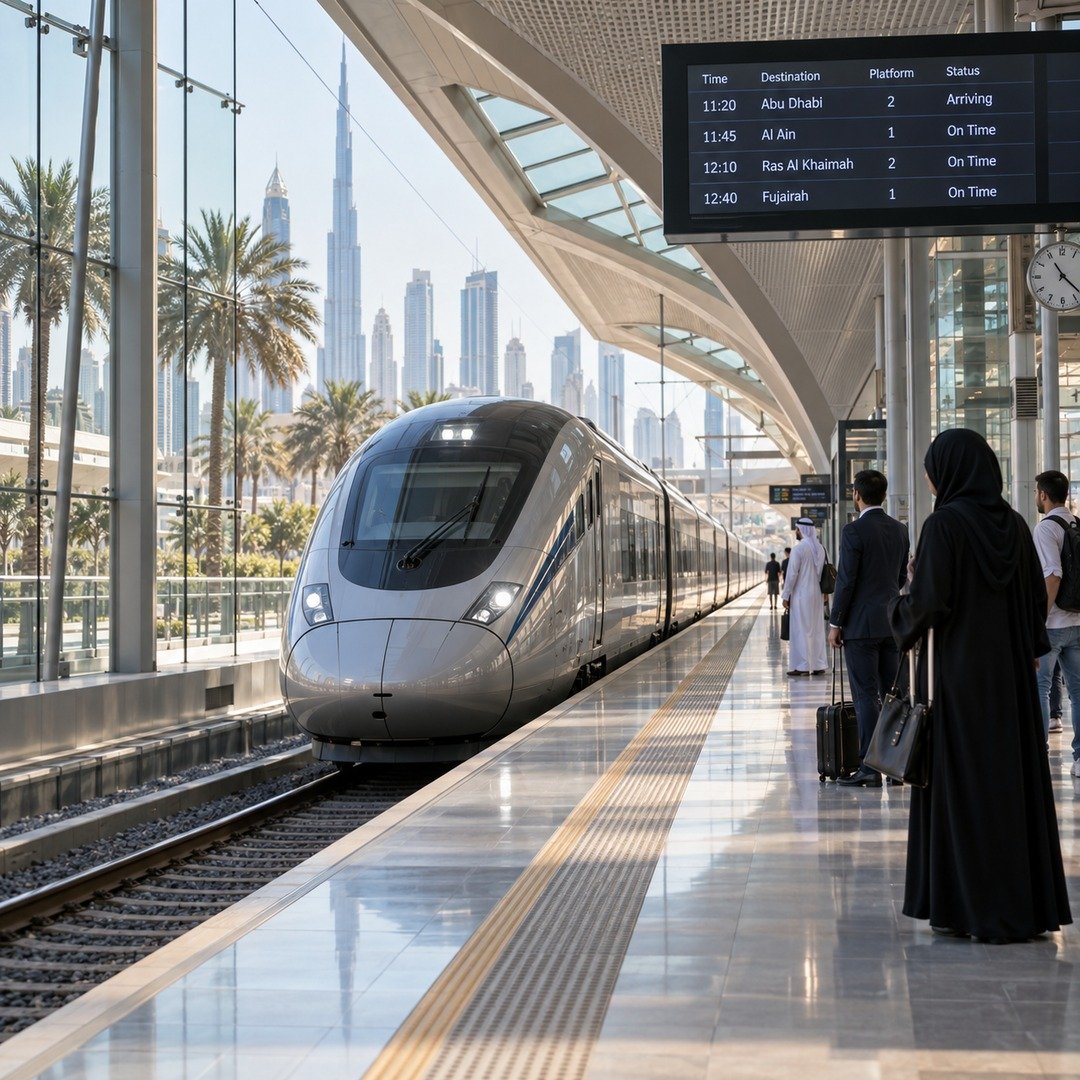
A comparison with the Metro helps frame the scale. Dubai Metro is a high-capacity backbone that the authority itself describes as a self-driving public transport system. Glydways pods operate at a much smaller scale and are designed to supply flexible links around that backbone. The open question for reporting and for buyers is integration, meaning whether passengers can transfer from pod to train in a few minutes on a single payment system, and whether the service keeps its reliability when demand peaks.
How different buyers should read it
Off-plan buyers face the most direct temptation. A brochure may mention future transport links, and a pod network now gives sales teams a new phrase to use. Our advice is to ask for the approved plan, the funding source and the delivery date for any connection a developer cites, and to avoid paying a connectivity premium for a route that exists only as a proposal. If a developer cannot point to an authority document, the premium has no support.
Golden Visa holders and long-term residents can read the story as part of Dubai's mobility and liveability direction. It strengthens the case that daily life in the city is becoming less dependent on private cars. It has no effect on visa eligibility, residency rights or investment thresholds.
Dubai investors get a practical watchlist from this trial. Bluewaters is the test site, and the named corridors give a short list of areas where future planning announcements would deserve a closer look. The near-term signal is strategic intent, and the effect on occupancy, rents or prices remains unproven.
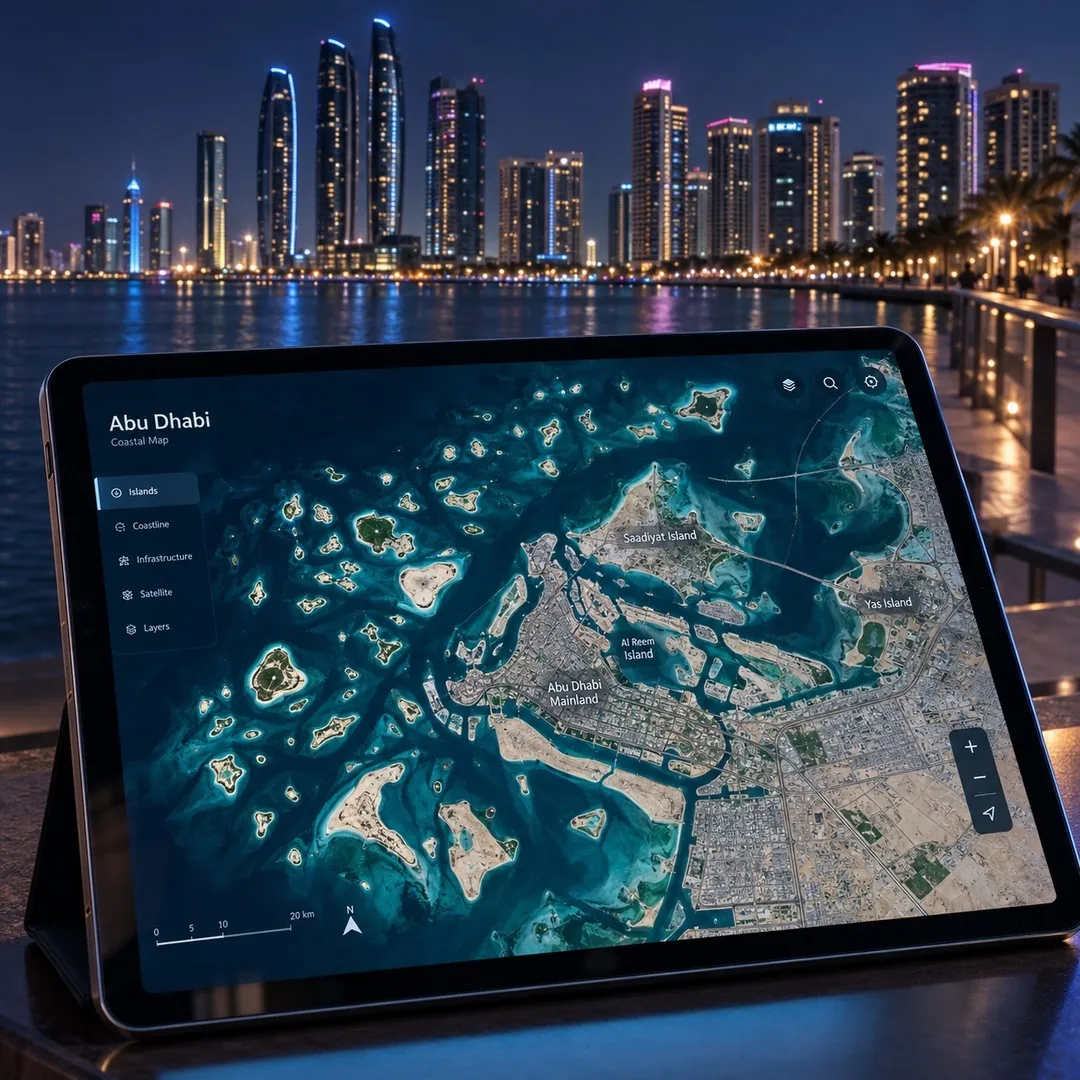
Abu Dhabi and Ras Al Khaimah investors can treat the trial as an indicator of UAE-wide appetite for autonomous, low-emission urban mobility and infrastructure-led placemaking. Nothing in the published material says the same system or routes are planned for either emirate, so extrapolating Dubai's project directly to those markets would go beyond the evidence.
What evidence to wait for
Our team tracks a simple sequence for any transport story of this kind. The trial comes first and its published results second. Route approvals follow, then funding, and finally a construction and delivery timeline. Each step narrows uncertainty, and each is a point at which a buyer's risk assessment can change. The Bluewaters trial sits at the very start of that sequence.
For buyers evaluating a purchase near any of the named corridors, we suggest three checks. First, whether the route appears in an official authority document or only in press commentary. Second, whether the developer's marketing makes claims about transport that the authority has not made. Third, whether the price already reflects a connection that has no delivery date. A property that is attractive without the pod network is a sound purchase, and any future connection becomes an addition to the buyer's return.
FAQ
Is the Glydways system open to the public across Dubai? No. It is a four-week trial at Bluewaters Island, run by the Roads and Transport Authority with Dubai Holding. Wider deployment is under consideration and has no confirmed routes or dates.
Will driverless pods raise property prices near the proposed routes? There is no evidence yet. The proposed routes have not been approved or funded, and the trial has not published results. Buyers should treat any price uplift claim tied to these routes as speculation until service is confirmed and operating.
Does this affect Golden Visa eligibility or investment requirements? No. The trial has no bearing on visa rules, residency rights or investment thresholds. Its relevance is limited to Dubai's long-term mobility and liveability picture.
Our team at uae-prop works with buyers who want transport, delivery and pricing assumptions checked against official documents before they commit. Four weeks from now the Bluewaters operating data will give the first real basis for that conversation.