
Focus keyword: office in dubai free zone
Updated: November 12, 2026
Many company owners in the UAE discover the same detail late. The license, the address and the desk are three separate things, and a free zone authority can issue the first two without ever requiring you to own the third. A license can sit on a shared desk, a leased unit or a purchased floor, and each of those carries different costs, different rights and different exit options. Before comparing square meters, it helps to know which of the three your business actually needs.
Why a business needs its own office
A license holder in the UAE usually needs a registered address that the licensing authority accepts. Some authorities accept a flexible desk or a virtual arrangement. Others require a physical unit of a minimum size, and some require it only for certain activities, such as trading with stock or hosting client meetings on site.
Beyond the regulator, there are practical reasons to want a space. Banks often review the registered address during account opening. Staff visas can depend on the office meeting a capacity rule. Clients in finance, law and commodities tend to expect a recognizable building. Our team sees these three motives mixed together in most conversations, and separating them is the first useful step, because only one of them may be a legal requirement.
What is an office in Dubai free zone?
An office in a Dubai free zone is a unit located inside a territory run by a dedicated authority, which issues licenses, sets the rules for the premises and often owns or controls the buildings. The best known Dubai examples are Dubai Multi Commodities Centre (DMCC), Dubai International Financial Centre (DIFC) and the Jebel Ali Free Zone (JAFZA). In Abu Dhabi, the comparable financial territory is Abu Dhabi Global Market (ADGM).
In plain terms, a free zone works like a small jurisdiction inside the city. The authority that licenses your company is the same body that regulates your premises, so the question "can I use this unit for my license?" is answered by one counterparty. That convenience is real. The trade-off is that the zone's rulebook applies to you, including limits on where your company may operate commercially and what its premises may be used for.
Free zone and mainland in simple words
Mainland means the territory outside the free zones. A mainland company is licensed by the emirate's economic department, such as the Department of Economy and Tourism in Dubai, and its premises follow the rules of that department and the local property regime.
For an office owner, the practical differences come down to four questions. Who issues the license and approves the premises? Who can own the unit, and under what title? What is the lease or ownership structure, and does the authority control it? And can the company trade directly with the local market, or does it need a distributor or a second license?
The table below summarizes how these questions usually look, as a starting frame only. Each authority publishes its own conditions, and they change.
Aspect | Free zone | Mainland Licensing body | Zone authority | Emirate economic department Premises approval | Often by the same authority | Economic department and landlord Ownership of the unit | Depends on the zone and the building | Depends on the freehold area Local market access | Check the license wording | Generally direct
Source: uae-prop analysis of publicly available authority guidance, summarized for orientation, November 2026.
Two points to keep from the table. First, ownership and licensing are decided by different rules, so a freehold unit in a freehold area is not automatically a valid license address. Second, "generally direct" and "check the license wording" are phrases that hide a lot of detail, which is exactly why written confirmation matters later in this article.
What DMCC, DIFC and ADGM allow
Here we have to be careful. The three authorities differ in how they treat ownership, leasing and the type of premises, and the conditions are published and updated on their own websites. We do not quote figures or terms here because they must be read on the date you decide.
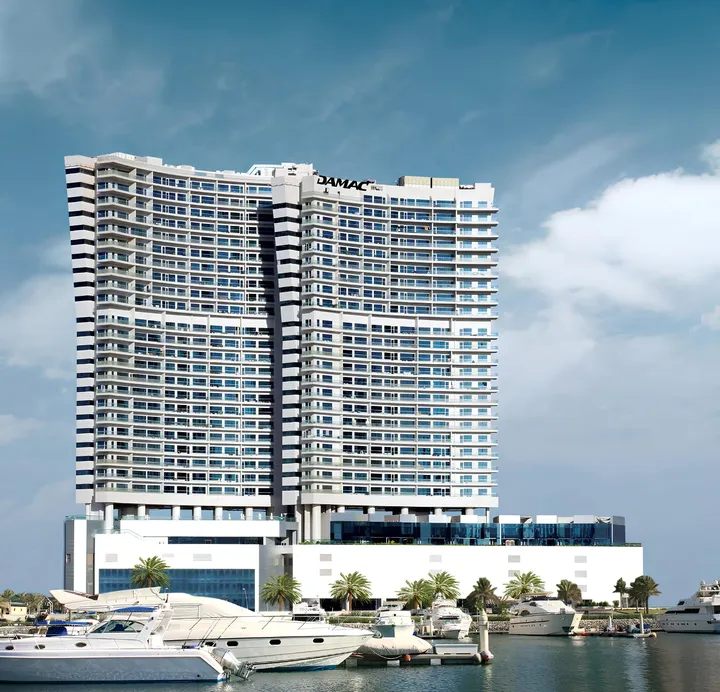
DMCC is a commodities and trade-oriented zone in Jumeirah Lakes Towers, with a large number of towers and a mix of leased and privately owned units. In DMCC buildings, the license address and the unit are usually linked through the authority's own product list. A buyer looking at an office for sale in DMCC Dubai should check whether the specific unit can serve as a license address for the intended activity.
DIFC is a financial and legal center with its own regulator and its own courts. Premises there are largely controlled by the authority and its affiliates, and the supply of units for outright purchase is narrow compared with leasing. Anyone searching for an office for sale in DIFC Dubai should expect fewer options and should ask early whether the unit is available under a title that the authority recognizes for licensing.
ADGM covers Al Maryah Island and Al Reem Island in Abu Dhabi and works under its own framework based on English common law. Commercial property rules in ADGM differ from those in the Dubai zones, and foreign ownership in Abu Dhabi depends on the investment zone designation of the area. Our earlier overview, Abu Dhabi investment zones and where foreigners can buy property, explains how those designations shape ownership, and it is a useful companion before reading ADGM's own documents.
JAFZA deserves a separate note. It is an industrial and logistics zone, and an office there often goes with warehousing or light industrial use. Buyers who want a pure desk-based setup usually find that other zones fit better.
Why no universal instruction exists
It is tempting to look for one checklist that covers every zone. There is none, and the reason is structural. Each authority sets its own conditions for premises, and these depend on the license category, the activity, the number of visas and sometimes the legal form of the company. A rule that works for a consultancy in one zone may fail for a trading company in the same zone.
The rules also move. Authorities update their requirements, introduce new license types and change how flexible desks are treated. An article, including this one, describes the structure of the decision. The binding answer comes only from the authority, in writing, for your specific license and unit.
We therefore treat any claim of the type "this unit is fine for a license" as unverified until the authority confirms it. That includes claims from brokers, landlords and developers, ours included.
When a rented address is enough
A leased or flexible address often covers the need in several situations. A company that works remotely, sells services and meets clients elsewhere may need only a registered address. A holding or investment structure that issues invoices and holds contracts but employs few people can run for years on a minimal setup. A business that is testing the market also benefits from a short commitment that it can close without selling property.
A lease also keeps capital free. An owner of a unit ties money to one building and one zone. If the company later changes activity or moves to another authority, a leased desk is simple to leave, while a purchased unit has to be sold or re-let.
Our view is straightforward. If the authority accepts a flexible address for your license and you do not need the space for staff or clients, renting is usually the calmer choice, and we say this even though buying is what some readers came to us to explore.
When your own office makes sense
Ownership starts to make sense when several conditions line up. The authority or the activity requires a physical unit of a particular size. The company has staff who sit there every day. The business expects to stay in the same zone for years, and the owner values holding a real asset instead of paying rent. A buyer in this position may also see the unit as a part of the company's balance sheet, which can matter when the company deals with banks or partners.
Ownership is a worse fit when the business is young, when the activity may change, or when the zone is likely to restrict how the unit can be used. It is also a poor fit when the main goal is investment yield. A unit chosen to satisfy a license rarely competes well on rental returns against units chosen for location and tenant demand, so the two goals should be evaluated separately.
Questions to ask the authority before buying
The most useful step is a written list sent to the licensing authority, or to its approved service provider, before any deposit is paid. We suggest asking the following.
Does this specific unit, by its title or plot number, qualify as a registered address for my license category and activity? Is there a minimum size or a fixed number of visas linked to it? Are there restrictions on resale, subletting or change of use? Does the authority require its own tenancy or sublease documents even if I own the unit? What annual or service charges does the authority or the master developer apply, as published on the date of the answer? What happens to the license if I sell the unit?
Request the answer by email or on the authority's letterhead and keep it with the sale documents. A verbal answer at a counter is not evidence. If the authority declines to confirm in writing, treat that as information, not as a delay.
Mistakes we see most often
The most expensive mistake is buying an office that does not fit the activity. A unit sold as "commercial" may still be classified for a use that the licensing authority does not accept for your category, and the buyer finds out after the transfer. Another frequent one is assuming that a unit in a free zone tower automatically carries a license address. The tower is in the zone, but the unit's classification, and sometimes the developer's own arrangement with the authority, decides the outcome.
A third mistake is treating a flexible desk and an owned unit as interchangeable on the bank side. Some banks review the physical presence of the company more closely than others, and the account opening process may ask for a tenancy contract or title deed. A fourth is skipping the exit analysis. Before buying, a buyer should understand who the likely next tenant or buyer is, in which zone, and how many such units are already on the market.
Finally, buyers sometimes confuse an office for investment with an office for operation. Mixing the two goals leads to a purchase that is too large for a small team and too specific for a tenant.
How we help buyers
Our team works on the buyer's side. In practice, that means we ask the authority the questions above, read the title and service charge documents, compare the unit with alternatives in the same zone and in a neighboring one, and tell you plainly when renting is the better answer. If you are choosing between Dubai and Abu Dhabi, we map the licensing and ownership conditions of both before looking at any specific building. The CTA below leads to our office selection service for license holders.
Request an office search for your license
FAQ
Is there dubai free zone office space for sale, or only for lease?
Both exist, but the balance differs by zone. Some Dubai free zones have buildings with privately owned units, and others keep premises under the authority's control and offer mostly leases. Availability also changes with the license category. Check the specific zone's current premises policy and ask the authority whether a given unit qualifies.
How much does an office in free zone Dubai cost?
The price depends on the zone, the building, the unit size, and whether you rent or buy. Add the authority's license and premises charges and the building's service charges on top. We do not quote a single figure because the published fees change, so we recommend reading the current fee schedule on the authority's website and requesting a written quotation for the exact unit.
Can I open a branch office in a Dubai free zone?
Many free zone authorities license branches of foreign or UAE companies, and some distinguish a branch from a new subsidiary with its own set of documents and premises rules. Whether your parent company qualifies depends on its jurisdiction, activity and the zone's current requirements. Confirm with the authority in writing before committing to a unit.
Sources
- DMCC. Official website, company setup and premises information. Current version. https://www.dmcc.ae. Accessed November 12, 2026.
- DIFC Authority. Official website, licensing and real estate information. Current version. https://www.difc.ae. Accessed November 12, 2026.
- ADGM. Official website, registration and commercial premises information. Current version. https://www.adgm.com. Accessed November 12, 2026.
- Dubai Department of Economy and Tourism. Business licensing for mainland companies. Current version. https://www.det.gov.ae. Accessed November 12, 2026.