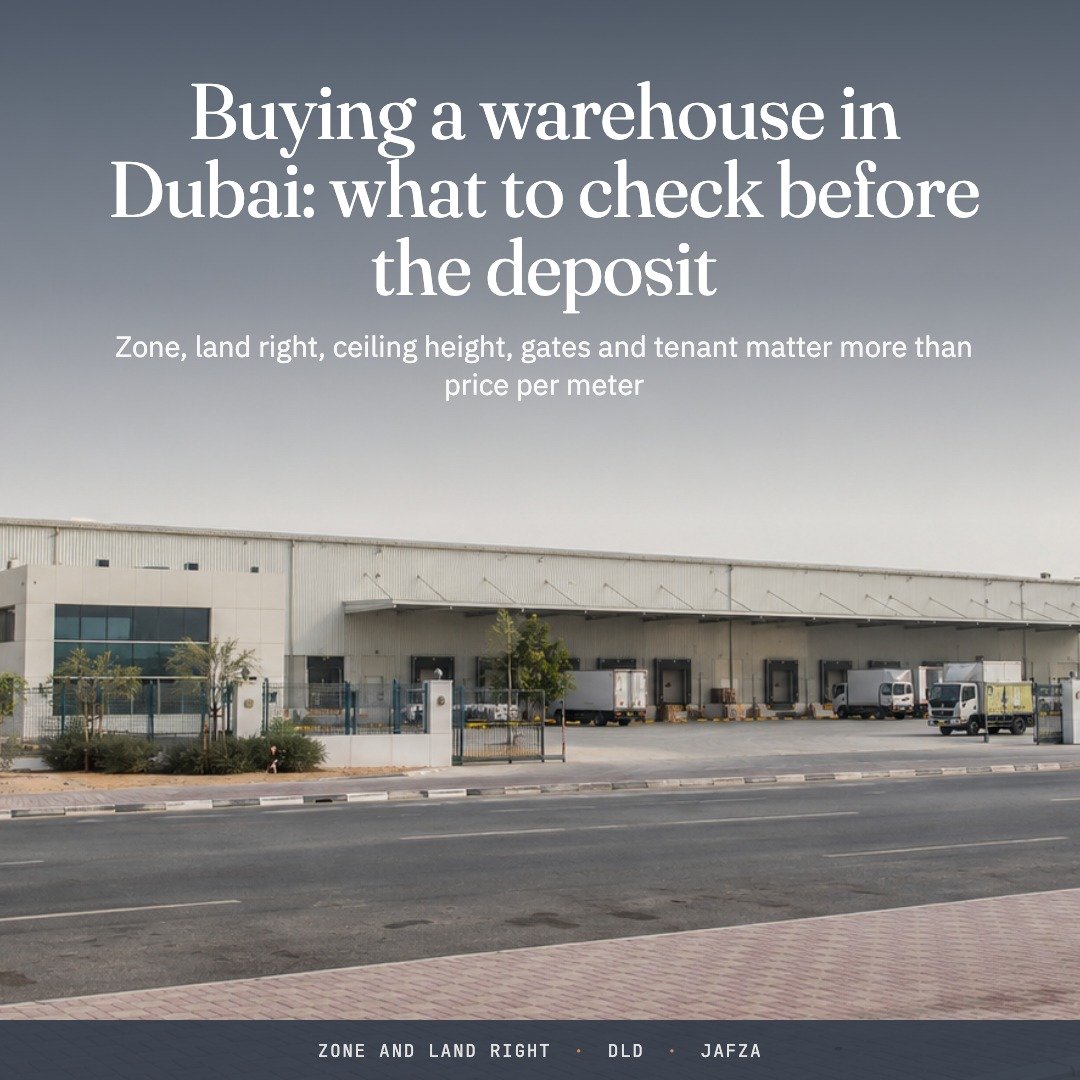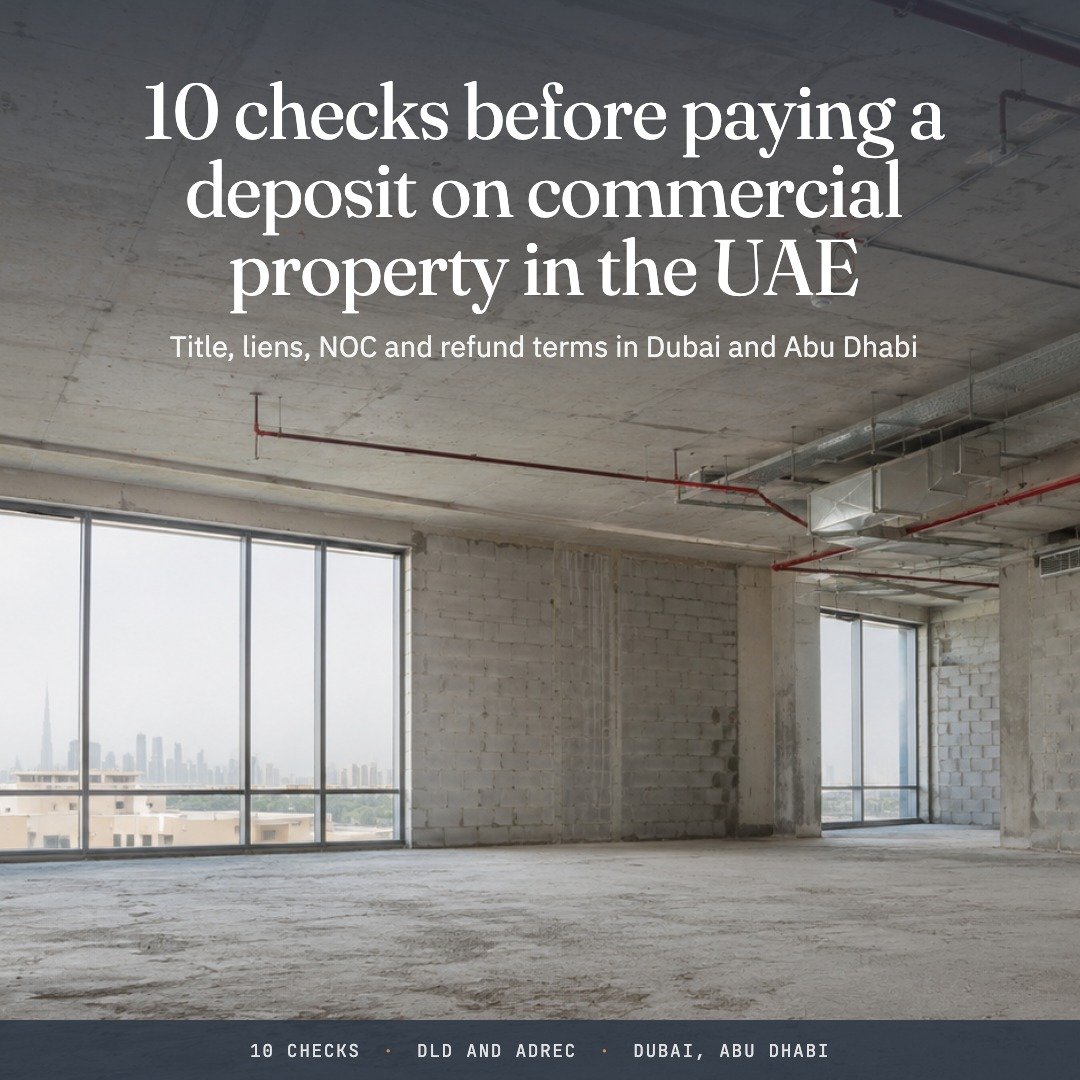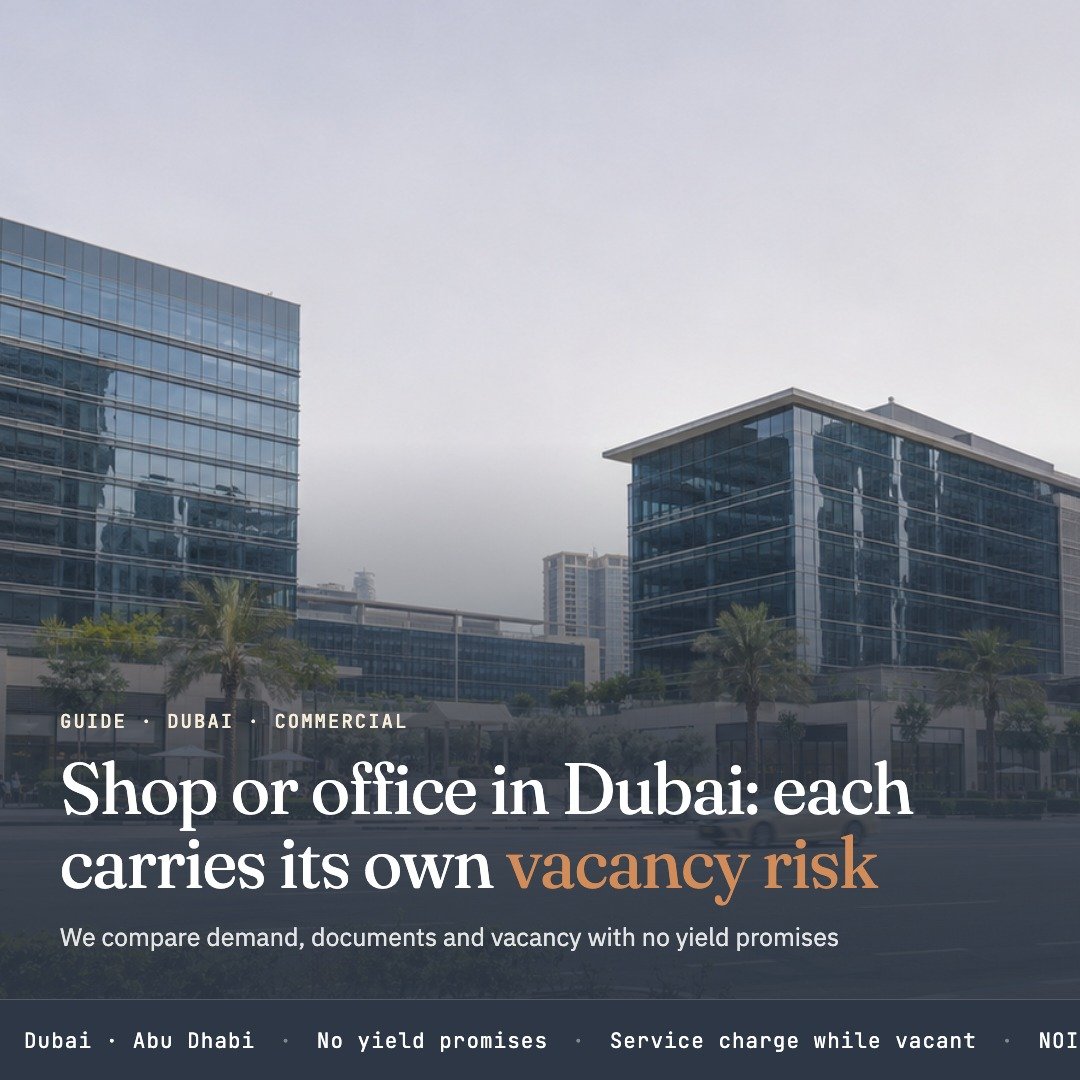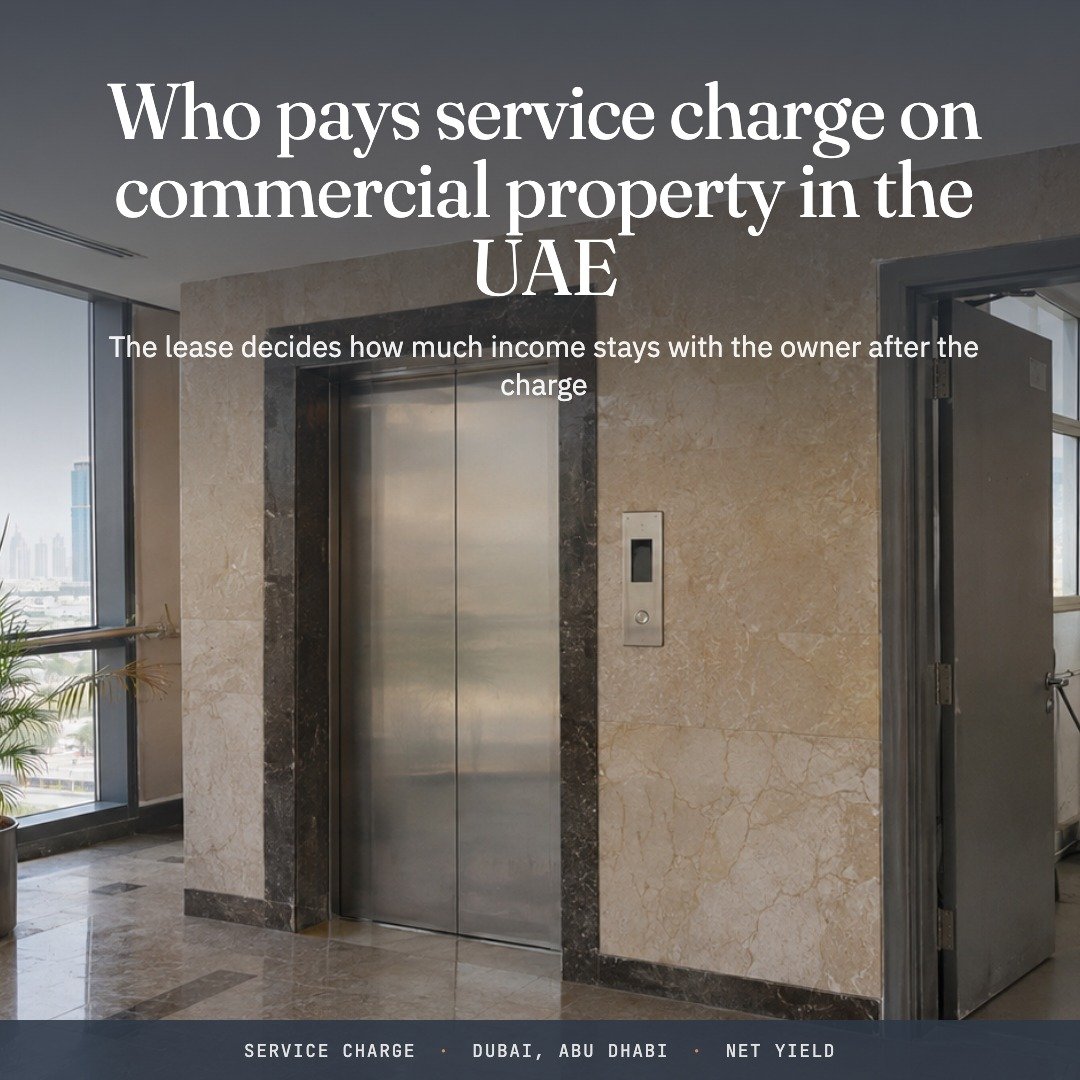

A Dubai warehouse can pass every check an office would fail, and fail the ones an office never faces. An office buyer looks at the view, the lobby and the service charge. A warehouse buyer looks at a door, a floor slab and a line in a permit. Two units a few hundred meters apart can sit under different ownership regimes, different rules on activity and different expectations from the landlord of the land beneath them. We start from that gap, because it decides most of what follows.
We write as a buyer-side team, and we quote only figures that come from the pages of the Dubai Land Department (DLD), the UAE Government portal or the zone authority. We have no confirmed market data on warehouse prices or yields, so we do not quote any.
Who can buy a warehouse for sale in Dubai, and on what right?
The first question is price only in second place. First comes the regime of the land. Dubai has industrial and logistics areas, free zones and mixed commercial districts, and each works under its own rules.
According to the UAE Government portal, under Dubai's Real Estate Registration Law, UAE and GCC nationals, and companies they wholly own, may own property across all areas of Dubai, while foreign ownership is limited to freehold areas. For a foreign buyer this is the first filter: a unit outside freehold areas needs a different structure or a different unit.
Land under a warehouse is often held as a right of use. The DLD states that a usufruct or long-term lease right in Dubai can run for up to 99 years, and a musataha right (a right to build on land owned by another party) for up to 50 years. A term has an end, and the end shapes resale and bank appetite. If a listing states a term, ask for the document that states it.
One example from zone practice shows how listings can mislead. Jafza offers industrial plots on lease only, with a minimum plot of 5,000 square metres, on short-term and long-term terms. Its pre-built warehouses are thermally insulated units, also offered for rent, ranging from 313 to 1,110 square metres. A listing that says "warehouse" may be a lease offer, and the legal difference is large.
Can you buy a warehouse in Dubai without a license?
Buyers often ask this in a form close to "warehouse for sale dubai license". The honest split is between owning and operating. Owning a unit as an asset and running a business inside it are separate questions. In some zones, a company must hold a license from that zone to occupy or use the space. In others, the owner can lease to a licensed tenant and never operate. The risk sits in the gap: a buyer who assumes ownership implies the right to operate may discover that the zone requires a license, a registered entity or an approved activity before the premises can be used.
Our practical rule: before paying a deposit, get written confirmation from the relevant authority of two things. First, whether the buyer, in its legal form, can hold this unit. Second, whether the intended tenant or user can legally run its activity there.
How is a warehouse different from an office?
An office is priced and judged on location, floor, view, building quality and service charge. A warehouse is a working machine, and its value is tied to what it allows a business to do. Four differences matter most:
- Title and land. Office towers usually sit in districts with a familiar freehold structure. Industrial and free zone land often does not, and a time-limited or conditional right to the land shapes resale and financing.
- Permitted activity. An office is rarely restricted beyond "commercial use". A warehouse has a permitted use: storage, light assembly, food handling, chemicals, e-commerce fulfillment. Each may need a different approval, and a unit approved for dry storage does not automatically accept a food-grade operation.
- Recurring costs. A service charge (the periodic fee for common areas and maintenance) exists in office towers and in many industrial areas, but the structure differs: zone fees, land charges, security, upkeep of access roads. Ask for the current schedule in writing and the history of changes.
- The buyer. An office is chosen for staff, a warehouse for cargo flow, so you need someone who knows the logistics of the intended tenant.
Purchase costs also differ with the form of the right. The DLD pages list separate registration fees for a sale, for the issue of a title deed, for a long-term lease (shared between owner and tenant) and for a musataha right. The actual set of charges depends on the type of right, so check it against the current DLD fee schedule for that specific right and the document you are signing.
What should you inspect before the deal?
A warehouse inspection is physical, and the physical details carry the value. Our checklist, in the order we would walk a unit:
- Ceiling height: the clear height under the lowest obstruction, as opposed to the nominal height in the brochure. It decides whether pallet racking can go three, four or five levels, and so how much storage the same floor area really holds.
- Gates and loading doors: count them, measure them and check how many trucks can dock at once. A wide unit with one door is a bottleneck.
- Access and approach: turning radius, queueing space, shared yard, one-way rules and distance to the main road all affect daily operating cost. A good address on paper can mean a poor approach in practice.
- Floor load: ask for the documented rating. Heavy racking and machinery need slab strength that a light-use unit may not have, and an unknown number is a risk to price in.
- Utilities: electrical capacity, cooling, water, drainage, fire protection and connectivity. Check what is installed, what is approved and what is only promised.
- Permitted activity: match the activity written in the permit to the activity of the intended tenant, and ask to see the document, not a summary.
- Condition and age. For a used warehouse for sale Dubai buyers should look at roof, floor cracks, door mechanisms and past alterations, and ask whether those alterations were approved. An unapproved mezzanine can turn into a cost at handover or resale.
Who is the tenant, and on what contract?
If the unit comes with a tenant, the tenant is part of the asset. We read three things: the lease document, the identity and standing of the tenant, and the match between what the lease allows and what the zone allows. A long lease with a weak tenant offers less comfort than it seems, and a short lease with a strong operator can be easier to renew than to replace.
Check who pays what. Under some leases the owner carries service charges and maintenance of the structure, under others the tenant does. Check the rent review clause, the break rights, and whether the lease is registered. A vacant unit has its own question: how long does a unit of this specification and zone take to let, and who in the market actually needs it? An agent saying "demand is strong" is not evidence.
How do you calculate costs and returns?
Return on a warehouse is the net income over the full price paid, and the asking rent over the asking price tells little. Net income is rent minus service charges, zone fees, insurance, maintenance, vacancy periods and any cost of re-licensing a new tenant. Purchase costs sit on the other side: registration, agency and any transfer charges. Take the numbers from the documents of the specific unit.
Run the arithmetic three times: with the current rent, with a vacancy period, and with a lower rent. If the deal only works in the first scenario, it depends on one tenant and says little about the unit. Questions such as "how much does a warehouse cost in Dubai" and "warehouse price in Dubai" have no honest single answer for the same reason: price follows zone, land right, condition and specification. Where a developer or seller supplies projections, we label them as the seller's claim.
Which zone mistakes cost buyers the most?
Industrial city, free zone, investment park: the labels sound similar and the legal substance differs. Searches such as "warehouse for sale in Dubai Industrial City", "warehouse for sale in Dubai free zone" or "warehouse for sale in Dubai Investment Park" lead buyers to listings in places with different ownership logic. The mistakes we see most often:
- Buying for the address and discovering the activity is restricted. The location suits the business plan, the permit does not.
- Assuming freehold. A buyer treats the unit as a conventional property, then finds the land right has an end date or needs the zone's consent to transfer.
- Skipping the zone's own approvals. A signed sale agreement does not replace a registration step with the authority.
- Ignoring the tenant's licensing. A tenant moved in under a license that does not match the premises, and the owner's asset inherits the problem.
- Treating a developer's brochure as a specification. Clear height, floor load and power are stated claims until a certificate or a handover document backs them.
- Paying before the conditions are checked. Deposits become hard to recover when the issue is discovered after the contract is signed.
Who should not buy a warehouse?
We say this directly, because it saves buyers time. A warehouse is a poor fit for someone who wants a passive asset with no operating knowledge: tenants are fewer than for apartments, void periods can be long, and the specification of the unit narrows the pool further. It is also a poor fit for a buyer who needs easy resale on short notice, and for anyone who cannot verify the land regime, because the whole value rests on that fact.
It can suit an operator who needs the space for its own business and has checked the permit, or an investor with a documented tenant, a clear lease and a verified ownership structure.
A short sequence we use
First, identify the zone and the land regime from official sources. Second, confirm in writing the buyer's eligibility and the use permitted. Third, inspect the physical points above with a measuring tape in hand. Fourth, read the lease and check the tenant. Fifth, build the cost model with current documented fees. Only then negotiate price.
Frequently asked questions
How much does a warehouse cost in Dubai?
It depends on the zone, the size, the land right and the specification, and we do not quote a figure because we have no confirmed official price data for warehouses. Compare listed prices only against documented fees, the type of land right and the unit's condition, and treat any seller's price per area as an opening position.
Can you buy in a Dubai free zone, and do you need a license?
Rules differ by zone. Some zones allow ownership by eligible buyers, some operate on long leases, and many require a zone license for the business that uses the space. Confirm both ownership eligibility and operating requirements with the zone authority before any payment.
Is it worth buying a used warehouse in Dubai for investment?
It can be, when the title, permitted activity, tenant and condition are all documented. A used unit may offer an existing lease, but it also brings alterations, wear and approval history to check. If these cannot be verified, the discount on the price may not cover the risk.
If you are comparing units, write to us through the contact form on the site, and our team will help shortlist warehouses and check the zone regime, permit and lease before the deposit.